2 Best Hiking Boots for Beginners Who Want to Go the Extra Mile
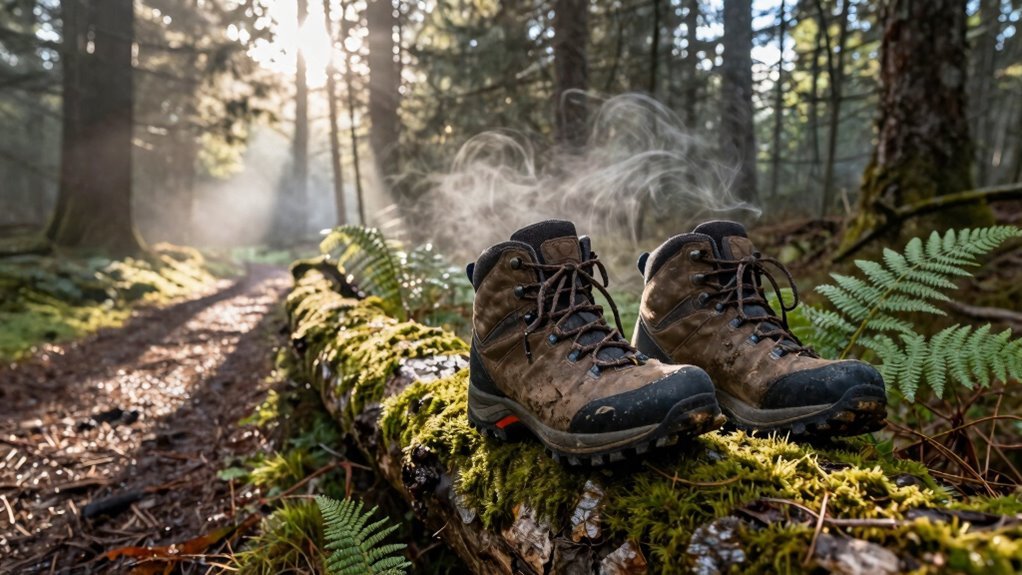
Isn’t it ironic that the right pair of hiking boots could make or break your first real trail adventure? When you’re just starting out, choosing the best hiking boots for beginners is crucial to staying comfortable and safe on the trail.
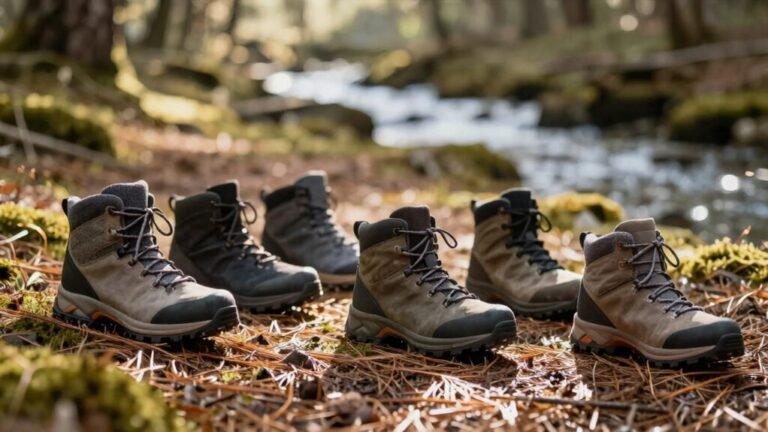
You want durability without the drag—something around 2.8 pounds that won’t drain your energy by mile three. Waterproof uppers, grippy lugs, and ankle support matter more than you might think—especially when mud throws its first punch.
And let’s be honest, nobody plans to get caught in a downpour with soggy socks. So, what exactly should you prioritize when your comfort and safety hang in the balance?
| Columbia Women’s Transverse Hike Waterproof Hiking Boots |  | Best for Comfort | Purpose: Trail hiking and outdoor protection | Closure Type: Lace-up | Outsole Material: Rubber (implied by traction focus) | VIEW LATEST PRICE | Read Our Analysis |
| Avalanche Boys Hiking Boots for Kids |  | Top Kids’ Pick | Purpose: Outdoor trekking and daily wear | Closure Type: Lace-up | Outsole Material: Sturdy rubber | VIEW LATEST PRICE | Read Our Analysis |
More Details on Our Top Picks
Columbia Women’s Transverse Hike Waterproof Hiking Boots
If you’re just dipping your boots into the hiking world—maybe you’ve traded city sidewalks for dirt trails and realized your sneakers aren’t cutting it—the Columbia Women’s Transverse Hike Waterproof Hiking Boots might be your new trail partner. They’re ideal if you value gear that balances protection, cushioning, and solid grip without demanding a steep learning curve.
You get a lightweight, durable leather upper that won’t weigh you down after three miles—yes, even uphill. The waterproof-breathable membrane keeps your feet dry without turning them into steam rooms, a win most entry-level boots fumble.
Responsive cushioning supports your arches mile after mile, helping you stay comfortable on longer walks. The outsole bites into loose gravel and wet roots without drama, giving you reliable traction on uneven terrain.
Need variety? They come in multiple colors and sizes—because who says function can’t flirt with style? Sure, they aren’t built for Everest, but for weekend scrambles and steady forest paths, they’ve got you.
- Purpose:Trail hiking and outdoor protection
- Closure Type:Lace-up
- Outsole Material:Rubber (implied by traction focus)
- Cushioning:Responsive cushioning
- Boot Height:Ankle-high (implied by hiking boot design)
- Color Options:Multiple colors
- Additional Feature:Waterproof-breathable construction
- Additional Feature:Lightweight durable leather build
- Additional Feature:Responsive cushioning all-day comfort
Avalanche Boys Hiking Boots for Kids
When your kid’s feet are pounding trails, playgrounds, or schoolyard paths, the Avalanche Boys Hiking Boots rise to the occasion. They offer ankle-high support, a rugged lace-up build, and a sturdy rubber outsole that grips surfaces like it means business—which it does.
You’ll appreciate the cushioned insole that keeps their feet comfy all day. Whether they’re scrambling on rocks, sprinting across the blacktop, or standing in line at school, these boots handle it all.
Designed for hiking, daily wear, or weekend adventures, these boots handle rough use without screaming “high-maintenance.” They’re built tough but don’t come with a hefty price tag or a clunky look.
Available in Little Kid sizes 11–13 and Big Kid 1–5, they come in neutral-to-bright color options. Yes, even ones that sort of match uniforms—balancing style, protection, and practicality where durability matters most.
- Purpose:Outdoor trekking and daily wear
- Closure Type:Lace-up
- Outsole Material:Sturdy rubber
- Cushioning:Cushioned insole
- Boot Height:Ankle-high
- Color Options:Versatile color options
- Additional Feature:Sturdy rubber outsole traction
- Additional Feature:Cushioned insole all-day comfort
- Additional Feature:Rugged support for active use
Factors to Consider When Choosing Hiking Boots for Beginners
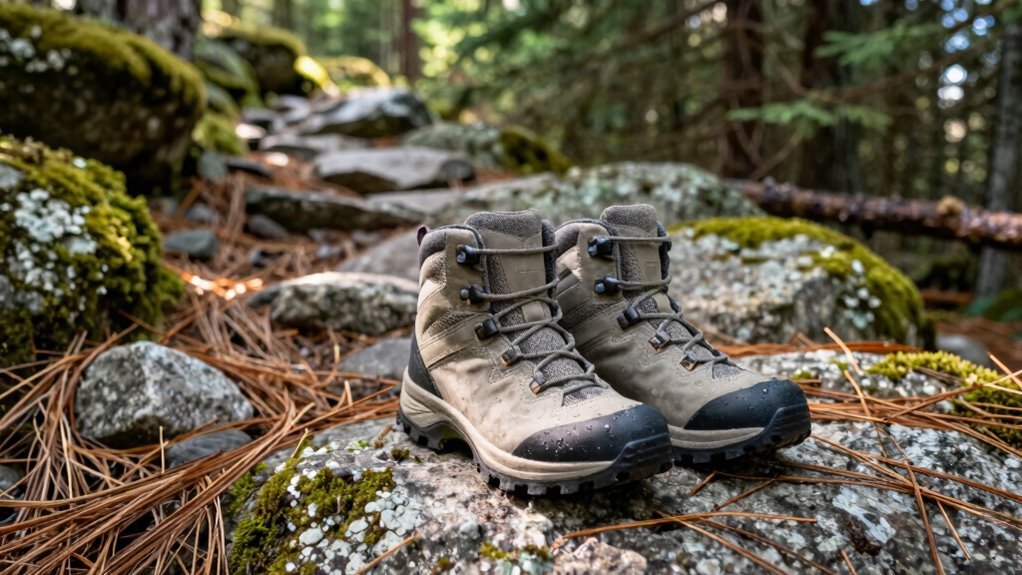
You’ll want to nail the fit first—too tight and you’ll risk blisters, too loose and you’re begging for a twisted ankle—so aim for a thumb’s width (about ½ inch) between your longest toe and the boot’s end. Waterproofing? Great if you’re trudging through streams or snow, but skip it if you mostly hike dry trails, since non-waterproof models breathe better and dry faster—nobody likes soggy socks. And don’t overlook ankle support, traction, and material durability, because a boot with poor grip or flimsy uppers might save cash upfront but could cost you miles (and comfort) down the trail.
Fit and Sizing
What’s the secret to happy hikes? It’s fit—plain and simple. You’ll want a snug heel with almost no slippage when you lace up, especially if you’re trudging uphill or side-sloping loose rock.
Try boots on with the actual hiking socks you’ll wear—thin liners won’t cut it if you’re planning on medium-cushion merinos. Leave about a thumb’s width (roughly ½ inch) between your longest toe and the toe box when standing flat, preventing painful jams on descents.
Got wide feet? Or narrow? Many brands offer narrow, medium, and wide widths—don’t force a square peg into a round hole. If your foot’s in between sizes, go for half sizes or tweak the fit with removable insoles.
Adjust lacing tension across the midfoot to lock things down, and make sure the ankle collar supports without pinching. A well-fitted boot hikes *with* you—not against you.
Waterproofing Needs
A solid fit keeps your feet happy mile after mile, but even the best-fitting boot can leave you miserable if it’s not ready for wet terrain—so let’s talk about whether you actually need waterproofing.
If you’re hiking through rain, mud, or shallow streams, a waterproof membrane (like Gore-Tex) blocks water from sneaking in through seams, uppers, or the sole, keeping your socks dry—though it won’t help if water pours over the top.
These breathable linings let sweat escape, reducing soggy feet from the inside, but they’re not magic. Taped seams and sealed construction boost protection at weak points.
Ask yourself—do you trek in damp Pacific Northwest forests or dry Southwest trails? The former needs full waterproofing; the latter might not.
And remember, durability fades—flexing, abrasion, and punctures wear down protection over 6–12 months of heavy use. Reproofing or upgrading later isn’t overkill, it’s just realistic.
Ankle Support
When trekking rugged trails, high-cut hiking boots typically extend 3–4 inches above the ankle, offering noticeable support by limiting lateral roll—especially useful on steep or loose terrain where twists happen fast. You’ll want that extra stability if you’re new to uneven ground.
A snug ankle collar and properly laced upper can reduce heel slippage, a common annoyance that sometimes leads to sprains. Stiffer midsoles and reinforced uppers add rigidity, which boosts protection but may mean a longer break-in period.
You might experience some initial discomfort or hot spots until the boot molds to your foot. If you’ve had ankle issues before, pairing a supportive boot with a brace or wrap isn’t overkill—it’s smart.
On flat, well-groomed paths, that high-cut design might feel bulky, even unnecessary. So ask yourself: are you hiking *up* rocky slopes or strolling a paved loop? Your answer guides your boot height.
Traction Performance
Why do some boots grip slickrock like glue while others skitter on damp stone? It comes down to the outsole—specifically, lug depth (5–8mm is ideal) and spacing that bites into loose dirt without clogging.
You’ll want a sticky rubber compound for wet rocks, though it wears faster on gritty trails. Look for multi-directional lug patterns: they help you brake downhill, corner sharply, and shed mud better than flat treads.
The sole’s contact area and flexibility matter too—a flexier boot grips uneven shelves by conforming to the terrain. Keep in mind, no single outsole dominates all conditions; a knobby tread excels on scree but may feel clunky on pavement.
Choose based on your usual hikes—muddy forests need aggressive lugs, while alpine rock favors precision soles. Traction’s not magic—it’s physics, design, and smart rubber working together.
Material Durability
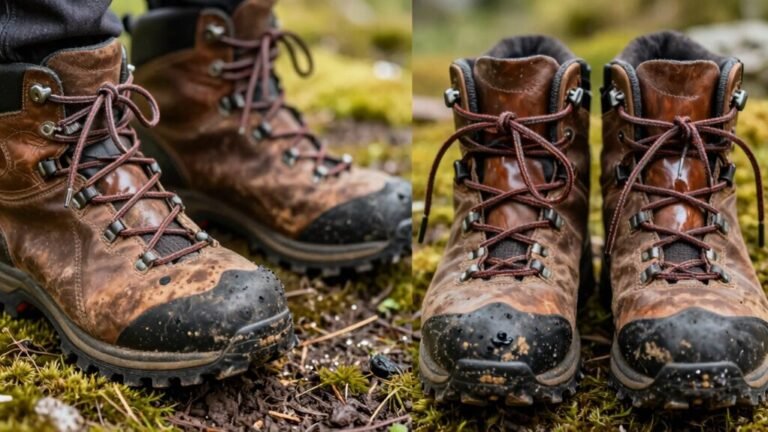
That grip you just read about? It means nothing if your boots fall apart mid-hike. You need materials that hold up—like full-grain leather uppers, which shrug off scrapes, resist tears, and last 400+ trail miles with proper care.
Look for waterproof-breathable membranes (think Gore-Tex or similar) bonded tightly inside; they don’t just keep your feet dry—they shield the boot’s core from rot and breakdown over time. Durable rubber outsoles, especially Vibram or carbon-black-infused compounds, offer aggressive lugs that wear slowly—losing just 0.5mm of tread per 100 rugged miles, on average.
Reinforced stitching at stress points (hello, toe box and heel collar) prevents seams from splitting when you’re scrambling over sharp rocks. And while lighter synthetics save weight, they often sacrifice longevity—so aim for a smart blend: strong enough to endure, light enough to not drag you down.
After all, durability isn’t just toughness—it’s lasting performance without the bulk.
Cushioning Comfort
Let’s talk about the hidden hero of every long trail day—your boot’s cushioning, the unsung layer between blistering fatigue and breezy miles. You want responsive padding that absorbs impact on rocky switchbacks or muddy descents.
Look for EVA or foam-based midsoles—they compress just enough (typically 20–30% on impact) to soften blows without bottoming out. A well-designed insole supports arches and heels over five, ten, even fifteen-hour days, cradling your feet like a firm handshake rather than a limp noodle.
And yes, lightweight cushioning matters—not because you’re racing, but because every ounce saved means less energy wasted. Give your boots a solid week (about 20–30 break-in miles), letting the foam conform naturally; otherwise, you might as well be walking on slightly angry marshmallows.
Smart cushioning isn’t about plushness—it’s strategic comfort that lasts mile after mile.
Weight Consideration
You’ve already felt how smart cushioning cradles your foot over long miles, but now consider what that comfort weighs—because every ounce adds up when you’re grinding uphill or chasing sunset on a ten-mile ridge.
Lightweight boots, often under 2.5 pounds per pair, cut fatigue and heat, especially on day hikes where agility beats armor. But here’s the trade-off: heavier models, usually above 3 pounds, wrap your ankles in stiffer support and tougher leather—great for rocky descents or a packed multi-day haul, yet they’ll drain your stamina faster.
Synthetic uppers and streamlined soles can trim weight by 10–15% without wobbling under load, while a well-foamed midsole keeps bounce in your step. So ask yourself: are you sprinting a sunrise summit or plodding through mud with a full pack?
For most beginners, midweight boots (around 2.8 lbs) strike the sweet spot—durable enough for rough trails, light enough to keep you nimble.
Frequently Asked Questions
Can I Wear Hiking Boots for Everyday Walking?
Yeah, you can wear hiking boots for everyday walking if they’re broken in and comfy. Just know they might feel heavy or stiff on pavement, and the soles could wear down faster than regular shoes.
How Do I Break in New Hiking Boots?
You ease into them like mornings, wearing them first around the house. Then, walk short outdoor stretches, letting the leather soften and molds to your feet—no blisters, just bond. You’re building miles of trust with every step.
Are Expensive Hiking Boots Worth the Price?
Yes, they’re worth it if you hike often. They last longer, support your feet better, and handle tough terrain without giving out on you. Cheaper ones might save cash now but cost more in blisters and replacements later.
How Often Should I Replace My Hiking Boots?
You should replace your hiking boots every 500 miles or when you notice worn treads, loose stitching, or reduced support. They’ll lose cushioning over time, so don’t wait until they fall apart—your feet and trails deserve better protection out there.
Can I Wash Hiking Boots in a Washing Machine?
You shouldn’t wash hiking boots in a washing machine—it’ll wreck the glue, foam, and structure. Instead, hand wash them with mild soap, then air dry away from heat. That way, you’ll keep them sturdy and ready for every trail you crush.
Conclusion
You’ve got better things to do than wrestle stiff, clumsy boots—so why settle for anything less than a 2.8-pound sweet spot that nails cushioning, traction, and waterproofing? These two models—light enough to dance in, tough enough to survive a thousand miles—turn brutal ascents into mere annoyances. Sure, they’ll need a week to mold to your feet (no instant magic here), but once broken in? You’re not just walking—you’re gliding.