5 Best Ultralight Tents for Backpackers Who Count Every Ounce
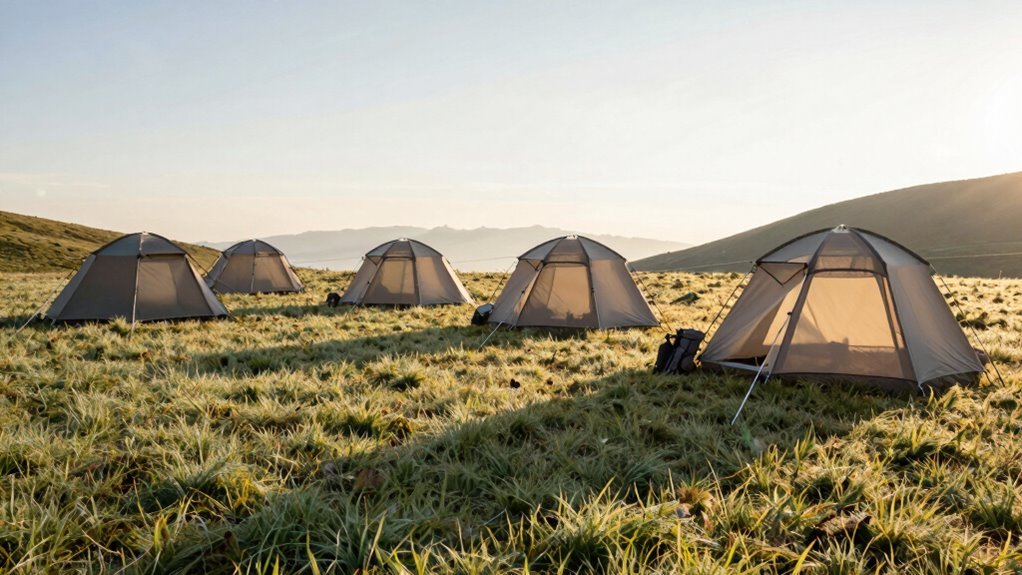
You’re hiking the Wind River Range at 10,000 feet, wind whipping your rainfly, and suddenly that extra 8 ounces on your back feels like a backpack full of bricks.
So why carry more than you need when every ounce counts?
These ultralight tents slash weight without sacrificing storm resistance or headroom.
They balance grams saved against comfort earned—and yes, even a little sanity on long backpacking trips.
| Night Cat Backpacking Tent for 1-2 Persons | Lightest Pick | Capacity: 1-2 Person | Weight: 2 kg (4.4 lb) | Packed Size: 42 × 12 × 12 cm (16.5 × 4.7 × 4.7 in) | VIEW LATEST PRICE | Read Our Analysis | |
| Clostnature Lightweight 1-6 Person Camping Tent | Best Family Value | Capacity: 1-6 Person | Weight: 5.29 lbs (2.4 kg) | Packed Size: 16.5 x 5.9 x 5.9 in (42 x 15 x 15 cm) | VIEW LATEST PRICE | Read Our Analysis | |
| Clostnature Lightweight 1-4 Person Backpacking Tent | Best for Backpacking | Capacity: 1-4 Person | Weight: 4 lbs (1.8 kg) | Packed Size: 15×5.1×5.1 inches (38x13x13 cm) | VIEW LATEST PRICE | Read Our Analysis | |
| Clostnature Lightweight 2-Person Backpacking Tent | Most Durable Option | Capacity: 2 Person | Weight: 6.28 lb (2.85 kg) | Packed Size: 16.5 x 5.9 x 5.9 in (42 x 15 x 15 cm) | VIEW LATEST PRICE | Read Our Analysis | |
| Naturehike Cloud-Up 2 Person Tent | Best Overall | Capacity: 2 Person | Weight: 3.97 lbs (~1.8 kg) | Packed Size: 17.7” x 4.7” x 4.7” | VIEW LATEST PRICE | Read Our Analysis |
More Details on Our Top Picks
Night Cat Backpacking Tent for 1-2 Persons
If you’re a solo backpacker—or a parent packing light for a weekend hike with your kid—the Night Cat Backpacking Tent (ZP-10) is your go-to choice for cutting weight without sacrificing comfort. Weighing just 2 kg (4.4 lb) and packing down to 42 × 12 cm, it’s ultralight and roomy at 7.0 × 3.8 ft—perfect for one, cozy for two (if one’s under 10).
The 190T nylon and PU 3000 mm coating shrug off rain, while sealed seams and mesh ventilation (door and roof) cut condensation without inviting bugs. Setup? Two poles slide into sleeves—done in 1–2 minutes.
Sure, it’s a basic dome, but for scouts, teens, or casual backpackers, is that a flaw—or just simplicity working?
- Capacity:1-2 Person
- Weight:2 kg (4.4 lb)
- Packed Size:42 × 12 × 12 cm (16.5 × 4.7 × 4.7 in)
- Waterproof Rating:PU 3000 mm
- Setup Time:1–2 minutes
- Frame Material:Upgraded fiberglass
- Additional Feature:Protection case guards hands
- Additional Feature:Fits adult + child
- Additional Feature:Large mesh roof window
Clostnature Lightweight 1-6 Person Camping Tent
Clostnature’s 1–6 person ultralight tent isn’t just another piece of gear—it’s your weekend warrior’s secret weapon, especially when you’re hauling gear over miles and every ounce counts. You’re getting a freestanding 3-season shelter with dual aluminum poles that pitches fast—seriously, one person can set it up solo in under 5 minutes.
With a 5.29-lb total weight (2.4 kg), a PU 5000 coating, and factory-sealed seams, you’ve got weather resistance without the bulk. The 73 x 411 x 310 in (220 x 150 x 115 cm) space fits crowds, yet the packed size (16.5 x 5.9 x 5.9 in) slips into your pack.
Got two people? The 2-person config drops to 4.52 lbs—pretty efficient. Two D-doors and vestibules mean storage and airflow aren’t afterthoughts, and the mesh interior slashes condensation.
You’re covered by a 1-year guarantee, but if you’re expecting true alpine performance in winter storms, well—this isn’t that tent, right?
- Capacity:1-6 Person
- Weight:5.29 lbs (2.4 kg)
- Packed Size:16.5 x 5.9 x 5.9 in (42 x 15 x 15 cm)
- Waterproof Rating:PU 5000 coating
- Setup Time:Fast pitching
- Frame Material:Aluminum poles
- Additional Feature:Two side vestibules
- Additional Feature:Pole repair kit included
- Additional Feature:Freestanding aluminum frame
Clostnature Lightweight 1-4 Person Backpacking Tent
You’re looking at a tent that strikes a smart balance between weight, space, and weather readiness. The Clostnature Lightweight 1-4 Person Backpacking Tent isn’t the absolute lightest on the market, but at just 4 lbs (1.8 kg), it’s light enough to earn its place on serious thru-hikes without sacrificing the roomy comfort that solo travelers or small groups actually want.
Its freestanding aluminum pole design pitches easily—really, even if you’ve never done it before. The D-door and wide vestibule add convenience and storage, making entry and gear access simple in tight spaces.
Mesh walls boost airflow, significantly reducing condensation during cooler nights. Meanwhile, the PU 5000 fly and sealed seams effectively shrug off rain, keeping you dry in steady downpours.
You get a full gear sack, repair kit, and a year of warranty. That’s a solid package for backpackers who value reliability and preparedness.
- Capacity:1-4 Person
- Weight:4 lbs (1.8 kg)
- Packed Size:15×5.1×5.1 inches (38x13x13 cm)
- Waterproof Rating:PU 5000 coating
- Setup Time:Easy setup
- Frame Material:Aluminum poles
- Additional Feature:Extra-wide gear vestibule
- Additional Feature:Reinforced wind-resistant frame
- Additional Feature:Adjustable guy lines
Clostnature Lightweight 2-Person Backpacking Tent
Who says a four-season tent has to weigh you down like a sack of bricks? The Clostnature Lightweight 2-Person Backpacking Tent proves you can have serious weather protection—factory-sealed seams, PU 5000 coating, snow flaps—without the bulk, tipping the scales at just 6.28 lb (2.85 kg). Its trail weight drops to 5.33 lb (2.42 kg) when you stash the stakes.
You’ll fit two people comfortably (220 x 150 x 115 cm), a small dog, or gear in the dual vestibules. Setup’s a breeze solo thanks to two sturdy aluminum poles.
Sure, it’s not the lightest on the market, but for cold-weather reliability, freestanding design, and included repairs, this tent stands out. Packed size is under 17 inches, making it a smart, no-nonsense choice for backpackers.
- Capacity:2 Person
- Weight:6.28 lb (2.85 kg)
- Packed Size:16.5 x 5.9 x 5.9 in (42 x 15 x 15 cm)
- Waterproof Rating:PU 5000 coating
- Setup Time:Fast pitching
- Frame Material:Aluminum poles
- Additional Feature:Snow flaps seal spindrift
- Additional Feature:Double-layer mesh doors
- Additional Feature:4-season performance
Naturehike Cloud-Up 2 Person Tent
If you’re after a reliable shelter that doesn’t weigh you down on multi-day treks, the Naturehike Cloud-Up 2 Person Tent stands out as a smart pick. It offers solid weather protection and quick setup without premium brand pricing.
You’ll get a full 42 sq ft of floor space, two doors, a vestibule, and 3.97 lbs of lightweight 3-season durability. This is achieved through 7001 aluminum poles, PU4000mm coating, and taped seams for reliable waterproofing.
The tent pitches in under two minutes, though your first setup might take closer to five. Its user-friendly design makes it ideal for both beginners and experienced backpackers.
With B3 mesh, YKK zippers, and a snow skirt, it handles wind, rain, and bugs effectively. Performance like this challenges the notion that ultralight means flimsy.
- Capacity:2 Person
- Weight:3.97 lbs (~1.8 kg)
- Packed Size:17.7” x 4.7” x 4.7”
- Waterproof Rating:4000mm
- Setup Time:Under 2 minutes
- Frame Material:7001 aluminum alloy poles
- Additional Feature:Includes footprint
- Additional Feature:Pre-bent durable poles
- Additional Feature:Interior light hook
Factors to Consider When Choosing Ultralight Tents for Backpacking
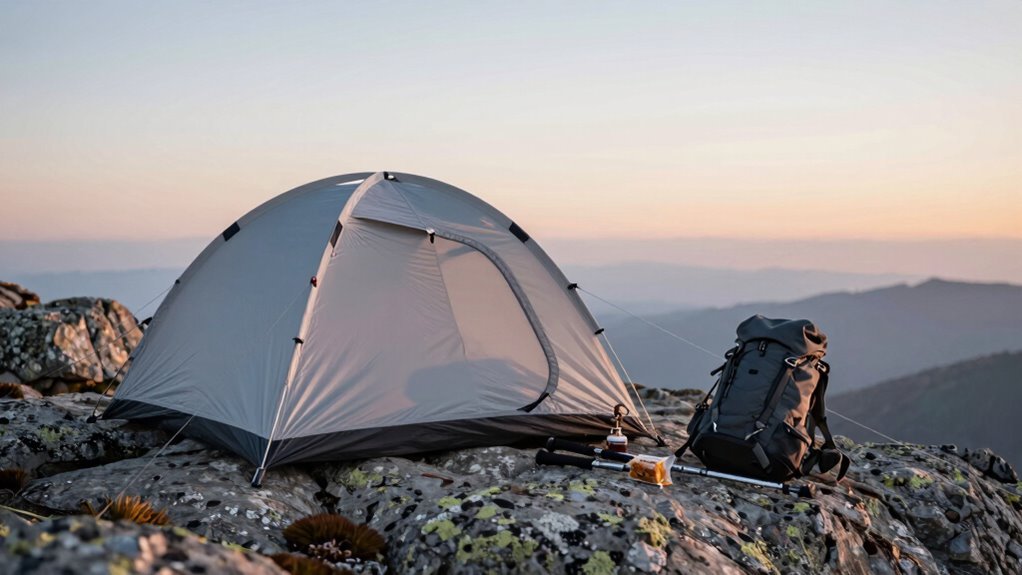
When you’re sizing up ultralight tents, weight and packability usually come first—after all, who *wouldn’t* want to shave 2 pounds off their base weight and gain an extra 300 cubic inches of pack space? You’ll also need to balance capacity and fit (a “2-person” tent at 85 inches long might leave taller hikers sleeping diagonally) with real-world performance in wind, rain (look for 1200mm+ waterproof ratings), and how fast you can pitch it with one hand in the dark. And let’s not forget ventilation—because nothing kills post-hike satisfaction faster than waking up in a dew-covered cocoon, no matter how sleek the setup.
Weight and Packability
You’ll want to keep an eye on both total weight and packed size when picking an ultralight tent—after all, nothing saps your stride like a 2.4 kg (5.3 lb) load dragging you down mile after grueling mile. Most ultralight models target 1.8–2.4 kg (4–5.3 lb), with 2-person versions often starting around 2.0–2.5 kg (4.4–5.5 lb) for trail weight.
Well, yes, especially when they use skinny aluminum poles and shed excess fabric without trashing durability. And don’t forget packed size: most squish down to roughly 4.7–6.0 inches in diameter and 16–18 inches long, slipping neatly into a daypack’s side pocket.
If you’re solo or doubling up, staying under 2 kg while keeping it under 18 inches long makes hauling way more efficient—why carry more than you have to? Every ounce counts, but so does fitting it all in without a wrestling match.
Capacity and Fit
How much room do you really need under the stars—enough to sprawl like you’re claiming territory or just enough to stay dry and keep your backpack off the damp ground? You’re not alone if you’ve second-guessed your tent size after squeezing into a 73x28x3 inch footprint—typical for a solo ultralight—and realizing every inch matters when you’re six feet tall.
Most 1-person tents weigh around 2 kg and pack to about 18 inches long, but bump up to a 2- or 3-person model (like one measuring 220x150x115 cm), and you’ll gain space for gear or a partner—though weight climbs to 2.5–3.5 kg. Floor area and vestibule size directly affect comfort; more room means a larger packed size, but clever designs keep cross-sections to just 5–6 inches.
Choose based on how you use space—cramped efficiency or breathable comfort—knowing capacity shapes every part of the experience.
Weather Resistance
Though you might not plan on storm-chasing, your tent’s ability to handle surprise downpours or wind-blown sleet makes all the difference. Start with a waterproof rating of at least PU 3000 mm, but aim for 5000 mm if you’re trekking through persistently wet climates, since that extra assurance keeps both you and your down sleeping bag dry when rain hammers the canopy for hours.
You’ll also want factory-sealed seams or fully taped construction; otherwise, those tiny stitch holes can turn into leaky messes by dawn. Double-wall designs—the kind with a separate mesh inner and waterproof fly—boost ventilation, slash condensation, and still shrug off storms like champs.
If you’re eyeing alpine zones or shoulder-season trips, consider snow flaps over zippers and a built-in snow skirt to block wind-driven flurries from sneaking under the walls. Reinforced poles and guy-out points? Non-negotiable for gusty ridgelines.
Let’s be real—nobody enjoys sitting out a squall, but with a tent that actually fights back, you won’t have to.
Setup Ease
After surviving sideways rain and wind that tests your patience—and your shelter’s mettle—the last thing you want is a fiddly setup at dusk with cold fingers struggling to clip poles at 80% efficiency. You’ll appreciate tents designed for one-person setup, some claiming assembly in just 1–2 minutes—because who hasn’t cursed a tangled pole sleeve at mile 18?
Freestanding models with two lightweight aluminum poles let you pitch quickly, even on rock or snow, without relying on stakes right away. Look for pre-attached poles or diagonal sleeve systems that cut steps and reduce frustrating guesswork—because yes, that one oddly bent joint *does* go there.
Simplified frames mean fewer parts to lose and quicker starts when weather turns. But ask yourself: is shaving 30 seconds worth a less stable structure?
Many ultralights balance speed with smart engineering, but speed only matters if it doesn’t compromise reliability when you’re too tired to care.
Ventilation and Condensation
When you’re zipped into a cramped shelter after a sweaty climb and your breath starts fogging the tent walls, you’ll wish you’d prioritized ventilation—because no one enjoys waking up soaked in condensation that mimics a light rainstorm inside their sleeping bag.
You can cut that risk by choosing tents with interior mesh walls, which boost airflow and slash moisture buildup by up to 60% compared to solid-walled models. Double-layer designs—with a breathable inner and a taut fly—create a chimney effect, letting humid air escape while keeping rain out.
Look for freestanding setups with two D-shaped doors; they aren’t just for easy entry, they enable cross-ventilation that disperses warm pockets overnight. Large roof mesh panels or full-door screens let you sleep with vents open, even in buggy dusk conditions—no, bugs won’t swarm, not with no-see-um mesh.
Just make sure sealed seams and coated fabrics don’t sacrifice breathability for weather resistance—balance is key.
Material Durability
You just avoided waking up in a dew-soaked sleeping bag by maximizing airflow through smart vent placement—now let’s talk about what keeps that tent standing mile after tough mile: material durability. You’re counting on fabrics like 190T or 20D nylon, right?
When they’re paired with PU coatings, they resist abrasion way better—so that rocky alpine floor won’t shred your floor by mile fifty. Factory-taped seams aren’t just about keeping rain out; they prevent fraying over time, which means fewer leaks and longer life.
Double-layer designs? They’re smarter than they look—separating the inner tent from the fly reduces stress and lets you vent without sacrificing strength. And let’s not forget the frame: aluminum poles (or high-strength fiberglass) with reinforced joints laugh at wind gusts and won’t snap during a mid-storm guylines adjustment.
Bathtub-style floors with coated seams keep moisture out and endure ground drag. Is ultralight always indestructible? No—but smart materials get you close.
Interior Space and Features
A well-designed interior turns an ultralight tent from a rain-shelter into a livable space. It should balance tight dimensions with smart features that make every inch count—like a footprint offering 73 x 28 inches of sleep space, tall enough to shrug into a puffy at shoulder level but not quite sit upright without ducking.
You’ll want mesh walls or large panels for airflow without bug bites, especially on sticky summer nights. After all, who really enjoys swatting mosquitoes at 2 a.m.?
Dual D-shaped doors with side vestibules mean easier entry and room for boots, packs, or even a camp chair if you’re feeling fancy. Extra-wide vestibules—say, 7 sq. ft. per side—keep gear dry and organized.
Inside, small touches matter: a few stretch-mesh pockets, a gear loft attachment, or a simple hook for a light. These features can make your evenings feel less cramped and more comfortable, even in a tent that weighs just 2 lbs.
Frequently Asked Questions
Can I Use These Tents in Winter Conditions?
no, you can’t use these tents in winter conditions. they’re not built to handle heavy snow or strong winds. you’ll need a four-season tent with stronger poles and more durable fabric to stay safe and warm in winter.
Are Replacement Poles Available for These Models?
Yes, you can get replacement poles—they’re the backbone of your shelter, after all. Manufacturers know you depend on them, so they sell extras. Just check the brand’s site or contact support. You won’t be left in the storm without a way to mend it.
How Easy Are They to Set up in the Dark?
You’ll find them easy to set up in the dark—color-coded clips, intuitive pole sleeves, and minimalist stakes speed things up. Just practice once, and you’re good. No fumbling, no frustration, just quick shelter when you need it most.
Do These Tents Come With a Footprint?
No, they don’t always come with a footprint—you’ll usually need to buy one separately. Check the specs before buying. If you want extra floor protection, pack weight matters, and durability’s key, grabbing a footprint makes sense. It’s a smart add-on.
Are They Resistant to Strong Winds and Rain?
You’re covered—these tents handle strong winds and rain well thanks to durable fabrics, sturdy poles, and taped seams. You’ll stay dry and secure even when storms roll in, as long as you pitch them correctly and use guylines.
Conclusion
You’re hiking lighter than a 19th-century mail coach with these tents—2.85 kg max, most under 2.4—and still getting two doors, freestanding frames, and storm-ready fabrics. Sure, they’re not palaces (your elbows’ll brush the walls), but at under 3 kg, who’s really complaining? Setup’s under 5 minutes with two poles, and for 1–2 people, that’s efficiency that’d make even a Roman centurion jealous.