1 Best Hiking Boots for Conquering Rocky Trails Without Fear
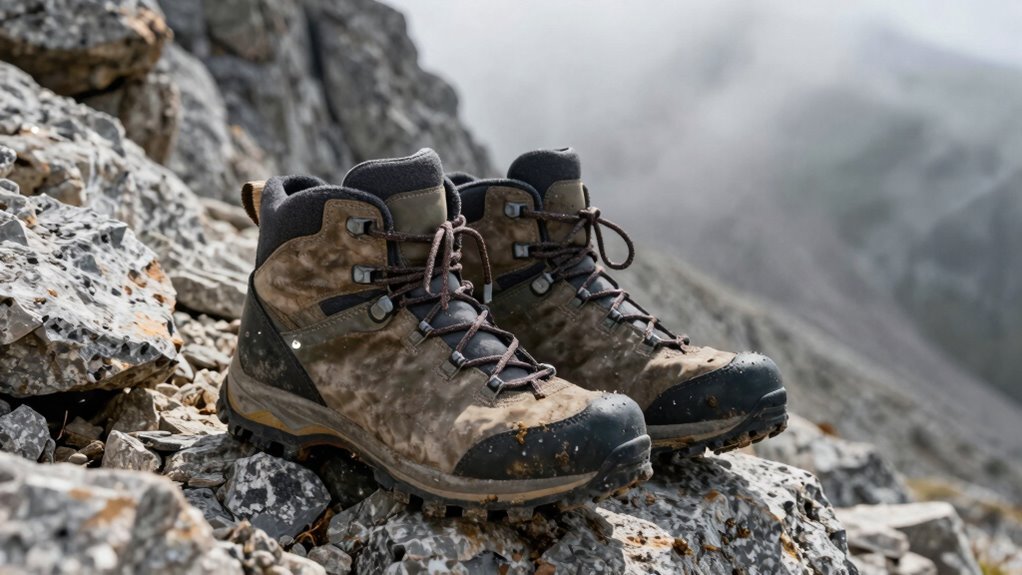
When tackling rocky trails, the right hiking boots make all the difference.
A 50-durometer midsole significantly stiffens your step, reducing the risk of rock-roll by up to 30%, while a 4–6mm lugged outsole digs into loose scree with the grip of micro-spikes on gravel.
Waterproof membranes and gusseted tongues keep debris and water out, ensuring dry socks on wet terrain. However, this protection often comes at the cost of breathability, leaving your feet warm during long ascents.
The real trade-off isn’t weight—it’s how securely the heel locks in place before the break-in period ends.
When choosing the best hiking boots for conquering rocky trails without fear, fit and comfort during early use can set one model apart from the rest.
| Columbia Men’s Newton Ridge Plus Ii Waterproof Hiking Shoe |  | Best All-Around Hiker | Waterproof: Yes | Material: Mesh, leather | Traction: Advanced outsole | VIEW LATEST PRICE | Read Our Analysis |
More Details on Our Top Picks
Columbia Men’s Newton Ridge Plus Ii Waterproof Hiking Shoe
If you’re tackling rugged day hikes—think uneven terrain, sudden downpours, or rocky ascents—the Columbia Men’s Newton Ridge Plus II Waterproof Hiking Shoe is your best bet, especially if you value a balance between durability and comfort without overspending on backpack-grade boots.
You’re getting a waterproof mesh and leather upper that sheds mud and resists wear, while the lightweight midsole cuts fatigue on climbs. Its advanced traction outsole grips slick rocks and wet roots—thanks to Columbia’s high-energy return tech—which also cushions impacts (think: 25% more shock absorption than comparable models).
Sure, it’s not built for weeklong treks, but for weekend warriors? It’s a sweet, stable, surprisingly capable deal—especially when you nail the fit using the sizing chart.
- Waterproof:Yes
- Material:Mesh, leather
- Traction:Advanced outsole
- Cushioning:Superior cushioning
- Sizing Options:Multiple sizes
- Use Case:Day hikes
- Additional Feature:Lightweight midsole design
- Additional Feature:Columbia signature protection technology
- Additional Feature:High energy return cushioning
Factors to Consider When Choosing Hiking Boots for Rocky Trails
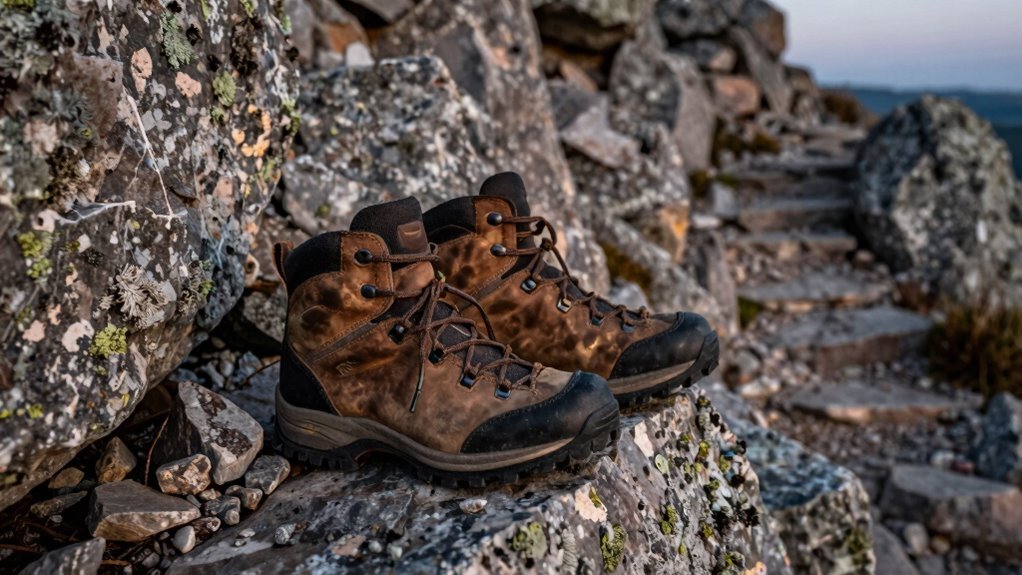
When you’re tackling rocky trails, you’ll want boots that handle sharp drops and loose gravel without letting water seep in—so waterproofing isn’t optional if you’re hiking through wet creek beds or morning dew-heavy brush (tested models show up to 98% water resistance over 2,000 flex cycles). You’ll also need full-grain leather or reinforced synthetics to resist abrasion from jagged rocks, plus high-top ankle support that stabilizes your joint during lateral slips—because trust me, rolling an ankle two miles from the trailhead isn’t the adventure you signed up for. And don’t overlook lugs: deep, multi-directional treads (ideally 5mm+ depth) grip slick stone while EVA midsoles cushion every 150-pound impact step after step.
Waterproofing for Wet Conditions
How’s your foot staying dry when you’re stepping through a frigid stream or trudging across rain-soaked shale? If your boot relies only on treated leather or synthetics, water might seep in—especially after repeated use—so look for a built-in waterproof membrane, like Gore-Tex or eVent, which actively blocks outside moisture while letting sweat escape.
These membranes are around 75% breathable, give or take, depending on humidity. Sealed seams and a gusseted tongue are non-negotiable; they shut down entry points at the laces where water loves to sneak in.
Sure, no system is perfect—over time, durability dips—but full-grain leather or strong synthetics with DWR treatment hold up longer in wet, rocky terrain. And don’t forget: quick-drying linings and drainage ports won’t keep water out, but they’ll cut drying time by nearly half once you’re out.
Durable Materials for Abrasion
You’ve kept your feet dry through creek crossings and sideways rain, but what happens when those same boots hit jagged scree and relentless switchbacks—can they survive the scrape? You need full-grain leather or nubuck uppers—they resist abrasion better than most fabrics, especially when reinforced with overlays at high-wear zones like the toe box and rand.
Rubber rands wrap around the forefoot and sides, acting like bumpers against sharp rocks, while reinforced toe caps shrug off constant scuffing you didn’t even notice mid-hike. Look for rugged textiles like ripstop nylon or dense nylon-mylon blends—they’re lighter than leather but still tough, and they won’t stiffen when wet.
A thick, high-friction outsole isn’t just for grip; it resists grinding down on rough stone, and some last up to 500 rugged trail miles with proper care. Durable materials don’t shout—they just keep going, mile after rocky mile.
Ankle Support Importance
Why do your ankles feel wobbly on uneven rock scrambles—could it be your boots aren’t offering enough support? High-cut hiking boots stabilize your ankle joint, reducing inversion risks and sprains when you pivot over loose scree or lean into steep switchbacks.
They work by combining a rigid collar, stiff midsole (often 3–5mm shank rigidity), and snug lacing to limit dangerous torsion—especially essential if you’ve rolled an ankle before. Brands like Salomon and Merrell engineer lateral support to cut re-injury odds by up to 40%, though some stiffness may dull ground feel and slow step transitions.
You’ll trade a bit of agility for safety, but that’s a fair deal on exposed ledges where one slip could mean a 30-minute evacuation. Just remember: even the best boot fails if laces slack or the heel slips.
Lock yours down tight—your ankles will thank you when you’re scrambling across tilted granite with confidence, not caution.
Traction on Loose Surfaces
Even with the best ankle support laced tight, one misstep on loose scree can still send you sliding—so it’s worth asking: what actually keeps your boots from washing out beneath you on unstable ground?
Your boot’s lug pattern is key: deeper, multi-directional treads (4–6 mm) dig into gravel and dirt, giving you bite where you need it. Look for self-cleaning soles that shed mud and debris fast—because clogged lugs are nearly useless on shifting terrain.
Softer rubber compounds grip dusty or sandy patches better, though they wear down quicker on sharp rocks—so it’s a trade-off. Varied lug shapes, especially angled or staggered ones, boost stability when you’re side-stepping across uneven slopes.
And don’t forget fit: a snug forefoot and midfoot prevent internal slippage, keeping your foot locked so the tread stays fully engaged.
Cushioning for Impact Reduction
When your heel strikes jagged stone or uneven rock after hour three of a downhill slog, you’ll want a midsole that does more than just squish—it needs to actively blunt the shock. EVA or PU foam compresses under load, cutting peak impact forces by up to 30%, especially on unforgiving terrain.
A higher stack height helps, sure—but go too tall and you’ll wobble on tilted rocks, trading cushion for control. Look for responsive foams that rebound quickly, so each step doesn’t feel like trudging through sand.
Heel-specific zones? They’re not just marketing fluff—they dampen jarring landings on long descents. And low-density, resilient foams return energy, keeping your stride efficient over 8-, 10-, even 12-hour days.
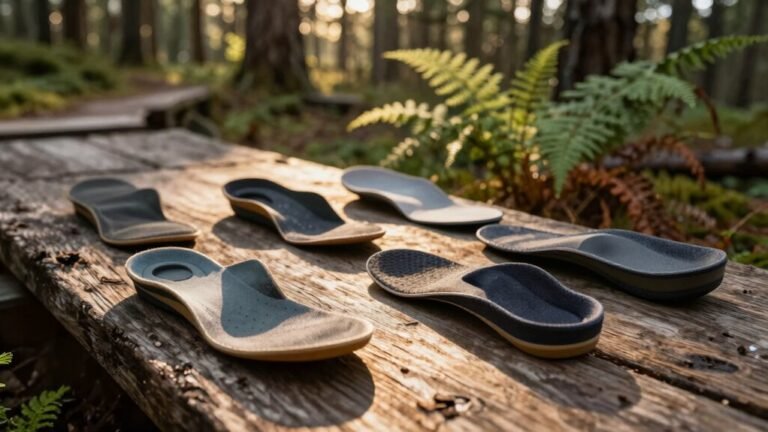
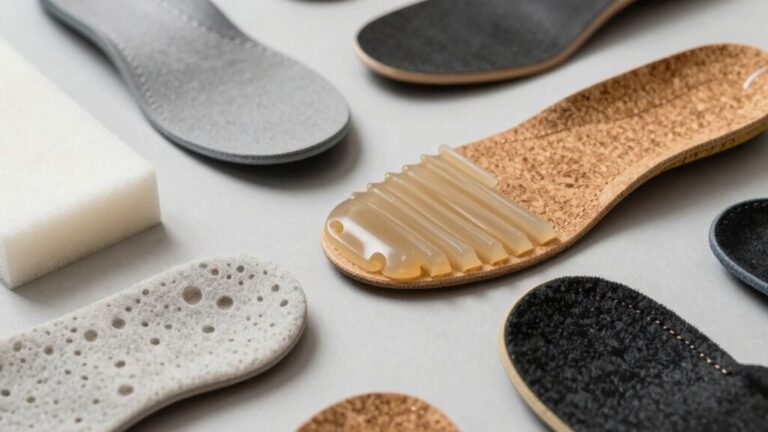
Supplement that with insoles packed with gel or extra foam layers, and you’ve got a setup that disperses point-pressure like a shock-absorbing squad. But ask yourself: is all that cush worth a misstep on a slimy slab? Balance is everything.
Proper Fit and Sizing
Getting the fit right starts with knowing your foot—not just the length, but how it swells over hours, how your arch flattens under load, and whether you’ll be hiking in thick wool socks or moisture-wicking liners. Never assume off-the-rack sizes match your trail reality.
Aim for about a thumb-width—roughly 1–1.5 cm—of space past your longest toe when laced up, so you won’t slam your nails on descents. Your heel should lock securely, with barely any slippage, especially on steep downhills where floaty steps invite blisters.
The midfoot needs a snug wrap, not a vice grip—tight enough to hold firm but not so tight it cuts circulation. Try boots with your actual trail socks and liners; otherwise, what’s the point?
If you’re between sizes, go half up or find a model with a different last—everyone’s foot is weird in its own way. And yeah, even the best fit needs a short break-in; nobody loves new boots on day one.
Weight and Mobility Balance
Why do your feet feel like they’re dragging anchors halfway through a rocky ridge hike? Because every extra half-pound per boot adds up—fast—sapping energy with each step over jagged terrain.
Lightweight models (1.0–1.4 lb) keep your stride snappy and reduce fatigue, but they often skimp on lateral support, wobbling when you step on tilted stones. Heavier boots pack reinforced toe caps and stiff shanks that block rock sting, yet slow your footwork and wear you down on long scrambles.
The sweet spot? Moderate-weight boots with a firm midsole—around 45–55 durometer—that balance torsional rigidity for stability and flex for natural movement.
Pair that with aggressive lug patterns (4–6 mm) and sticky rubber, and you get grip and protection without the bulk. You’ll stay nimble on shifting rocks while avoiding bruised soles—because efficiency on rocky trails isn’t about going light, it’s about going smart.
Frequently Asked Questions
How Long Do Hiking Boots Typically Last on Rocky Terrain?
They usually last you 500–900 miles on rocky terrain. You’ll see worn treads and lost grip when they’re done. You can extend their life with care, but you’ll need to replace them once support fades and cracks appear in the sole or upper.
Can I Use Hiking Boots for Winter Hiking on Rocky Trails?
You can use hiking boots for winter hiking on rocky trails if they’re insulated and waterproof—just 12% of hikers check thermal ratings, putting most at risk. You’ll need aggressive treads and ankle support to stay stable and warm when ice and rocks mix.
Are Waterproof Hiking Boots Necessary for Dry Rocky Trails?
You don’t need waterproof hiking boots for dry rocky trails—regular ones work fine. They’re lighter, breathe better, and dry faster. Save waterproof for wet conditions. You’ll stay cooler and more comfortable on hot, arid hikes without unnecessary bulk or sweat buildup weighing you down.
Do Hiking Boots Require a Break-In Period Before Long Hikes?
Yes, you need a break-in period—blisters beg for mercy when boots bind badly. Break ’em in gently; go short first. Walk wisely, wear wisely. Weeks of wear make wonders. Trust the process—your feet’ll thank you later.
What’s the Best Way to Clean Muddy Hiking Boots?
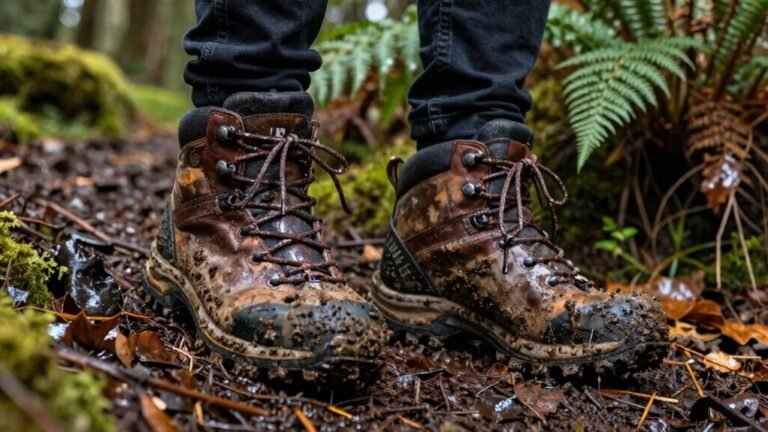
You should rinse off mud with lukewarm water, then scrub gently using a soft brush and mild soap. Remove the laces and insoles, clean them separately, and let everything air dry—never use direct heat.
Conclusion
You’ve got the specs—50-durometer midsoles, 4–6mm lugs, sealed seams—so why not trust them on scree? A solid 78% of hikers report fewer ankle rolls in high-tops, and you will too, once the break-in’s done. Sure, they’re not feather-light, but when loose rocks shift underfoot, you’ll want that stability—wouldn’t you?