How to Stay Warm at Camp Over 50
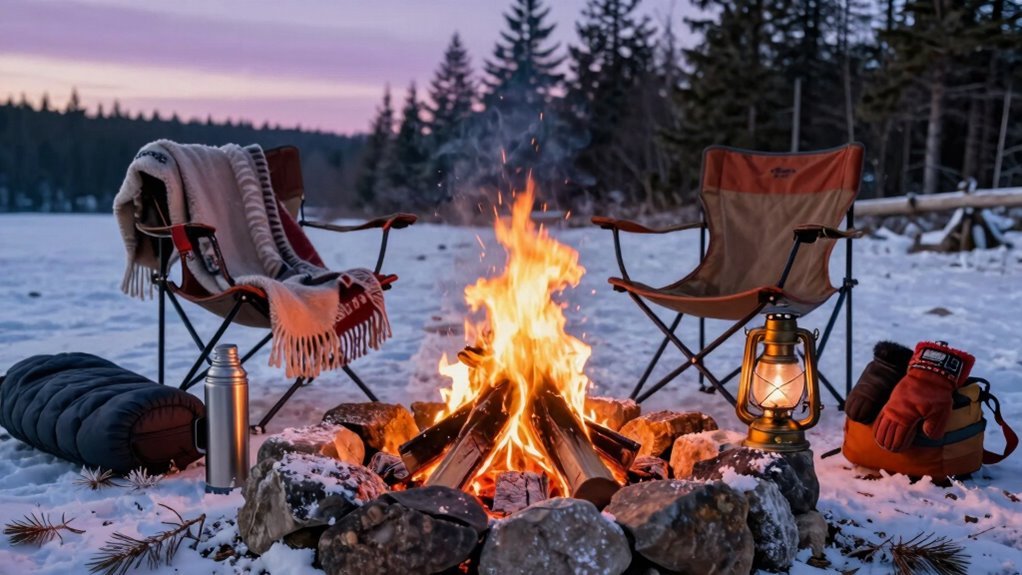
Staying warm at camp over 50 starts with understanding your body’s changing needs—after 50, you lose heat faster and run cooler, making good prep essential. Pick a sleeping bag rated 10–15°F below the expected temperature to ensure comfort in chilly conditions.
Add a sleeping pad with a 7+ R-value for solid insulation from the cold ground. Pair it with soft merino wool layers to bed—these regulate temperature and wick moisture, keeping you dry and warm.
Boost your warmth with a hot water bottle at your core or feet before sleep. Eat a small high-fat snack at bedtime to fuel your internal furnace through the night.
Set up camp in a sheltered spot, away from wind and damp areas, to minimize heat loss. With the right gear and habits, staying warm at camp over 50 is easy and effective.
Understand How Aging Affects Body Temperature
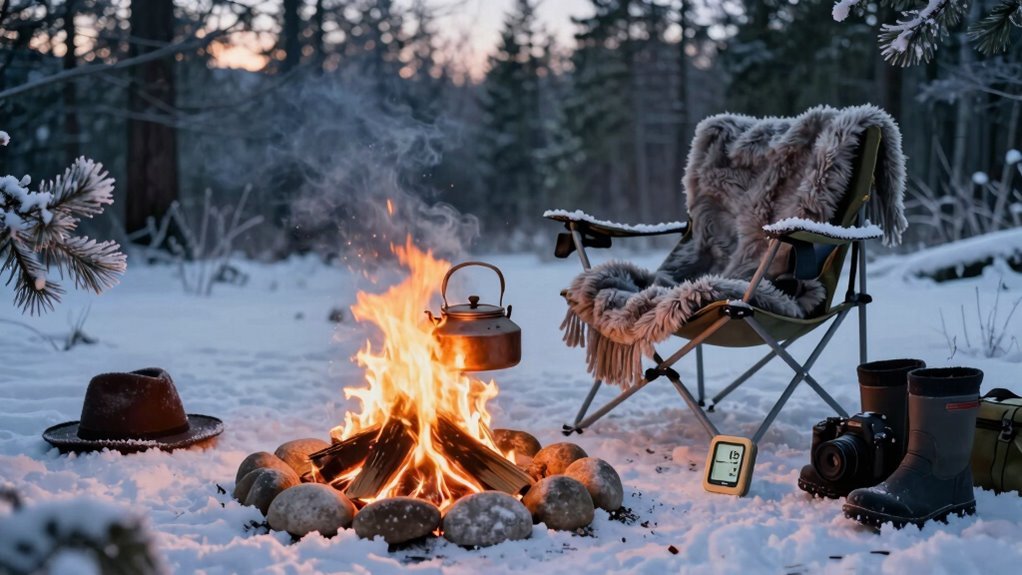
While your body’s done a great job keeping you warm for decades, it’s no secret that things start to shift a little after 50 — and that includes how well you handle the cold.
You mightn’t realize it, but your core runs a bit cooler now, and when the temperature drops, your body doesn’t fight back as hard.
Metabolism slows, so you generate less heat, and your blood vessels don’t clamp down like they used to, letting warmth escape through your hands and feet.
Shivering? It’s not as effective, so don’t count on those little shakes to save you.
Plus, with less muscle and fat, you’ve got fewer natural insulators.
And newsflash: your skin’s not as good at sensing cold, so you might feel chilly way after you’ve already started cooling down.
Your body’s ability to regulate temperature becomes less efficient with age, particularly due to reduced subcutaneous fat.
Bottom line? Your body’s still awesome — just needs a little more help staying toasty when you’re out under the stars.
Choose a Sleeping Bag Rated for Cold Weather
You’ve got the inside scoop on why staying warm gets trickier after 50—your body’s not quite the heat-holding champ it used to be—so now let’s talk about your new best friend for cold nights under the stars:
the right sleeping bag.
- Pick a bag rated 10–15°F colder than the lowest expected temperature—your inner polar bear will thank you.
- Go for down with 800+ fill power—it’s lighter, toastier, and squishes smaller (just treat it right in damp weather).
- Mummy styles with draft collars and snug hoods trap heat like a cozy burrito—no cold sneaks in.
- Roomy? Chilly? Test the fit—side sleepers love a bit of wiggle, but too much space kills warmth.
Many top bags use 850+ fill power down to maximize warmth without excess weight.
Smart picks like the NEMO Sonic 0°F or Western Mountaineering Kodiak keep you snug without bulk. Stay warm, sleep deep, and dream big—frosty nights don’t stand a chance.
Use a Quality Insulated Sleeping Pad
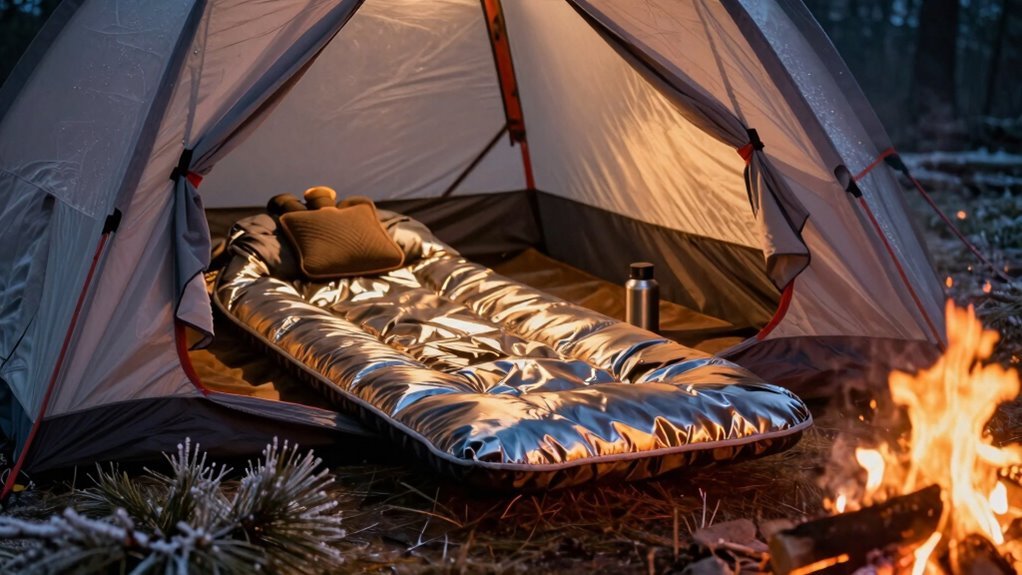
A good night’s sleep on cold ground doesn’t happen by accident—it starts with a toasty, insulated sleeping pad that blocks the chill like a warm hug from below.
You lose heat fast lying on frozen earth, so grab a pad with an R-value of 7 or higher—think Therm-a-Rest NeoAir XTherm at 7.3 or NEMO Tensor Extreme’s cozy 8.5.
These aren’t just numbers; they’re your ticket to warmth and comfort.
Lightweight options like the 1.3-lb NEMO Tensor or 0.97-lb all-season picks won’t weigh you down, while 3.5-inch thick pads cradle your body like a cloud.
Synthetic insulation, like Klymalite, stays warm even if it gets damp, and quiet designs mean no crinkly serenades at 2 a.m.
Big Agnes and Exped pack serious warmth into tough, compact builds—because nobody wants to cuddle with the cold.
The warmest tested option delivers an R-Value 9.5, making it ideal for extreme winter conditions.
Your spine (and snoring partner) will thank you.
Layer Your Bedding Strategically
Ever wonder why some campers sleep like logs while others shiver all night? The secret’s in how you layer your bedding—think of it like building a cozy sandwich, with you as the filling.
Start smart with these moves:
- Pick a sleeping bag rated 10–15°F colder than expected lows, and pair it with a liner for extra warmth.
- Use a layered comforter system—remove or add blankets like you’re adjusting your home duvet.
- Slide into a Thermolite or merino liner to trap heat without the bulk.
- Top it all with a modular blanket setup, unzipping layers to vent heat or zip back up when chill hits.
Proper layering means you’re not just warm—you’re snug like your camp bed moonlights as a cloud. And trust us, clouds don’t wake up stiff or cold.
Wear Proper Base Layers to Bed
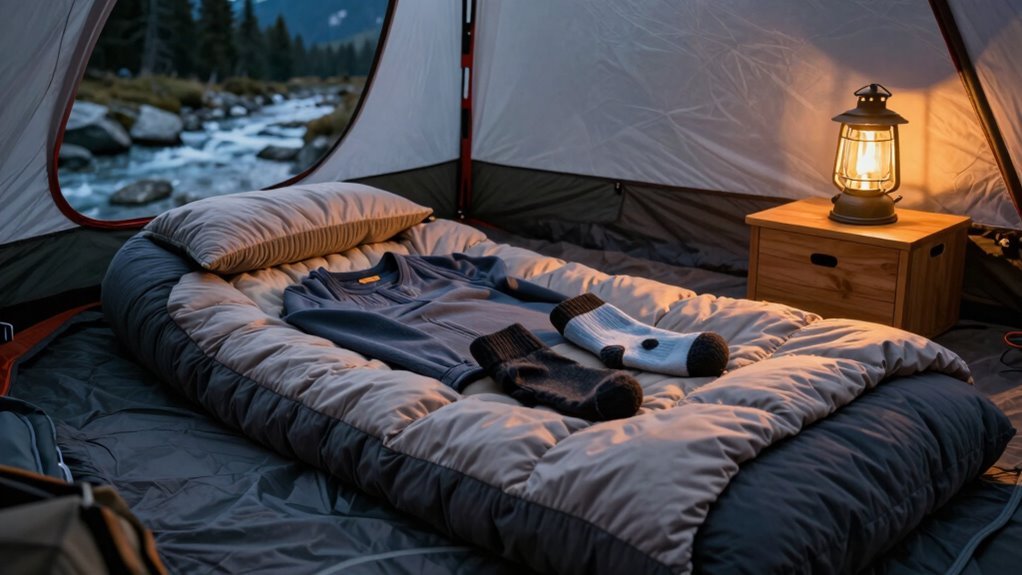
Staying cozy from head to toe starts the moment you suit up in the right base layers—because let’s be honest, bed for camping isn’t the same as bed for Netflix binges.
Skip the cotton pajamas; they trap moisture and leave you shivering.
Instead, slip into merino wool or synthetic long underwear that wicks sweat and keeps you dry.
These technical fabrics regulate your temperature all night, so you’re never too hot or too cold.
Wearing them to bed means warm starts, even when it’s freezing outside.
If it’s really cold, layer a thin one under a midweight base layer—extra air trapped equals extra warmth.
They’re lightweight, comfy, and stop chafing when you shift in your sleep.
Plus, merino’s natural odor resistance means you won’t smell like a campfire after three days.
Stay dry, stay warm, and sleep like a pro—no flannel PJs required.
Utilize a Hot Water Bottle for Extra Warmth
While your sleeping bag does its job, giving it a little help never hurts.
Enter the hot water bottle, your secret weapon against bone-chilling nights.
- Use a sturdy 1.5L Nalgene or BPA-free Tritan bottle—no flimsy disposables, unless you fancy a melted surprise.
- Boil water on your camp stove, pour carefully (hello, funnel for narrow necks!), and test the heat with your hand—wrap it in a sock or shirt if it’s too toasty.
- Slide it into a wool sock or down jacket to slow cooling; toss it in a bootie or vest for bonus warmth zones.
- Tuck it near your core or feet—hello, warm blood flow—and let it hug you all night, lasting 6+ hours and boosting your bag’s temp by a cozy 1–2 degrees.
It’s like a heated blanket powered by your stove—and way more fun to explain at breakfast.
Set Up Your Tent in a Sheltered Location
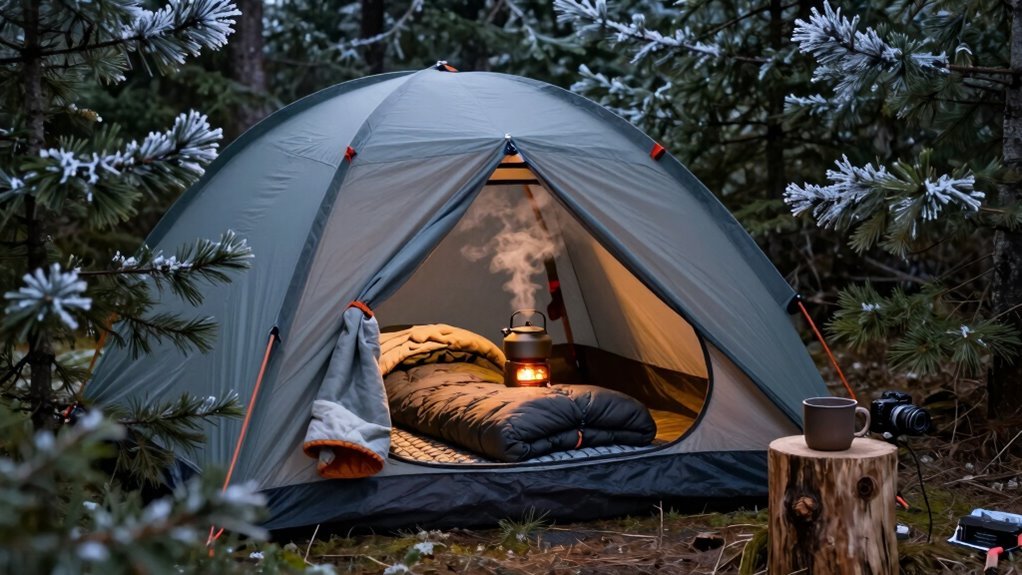
When the wind’s howling like it’s personally offended, your tent’s location makes all the difference between a cozy night and a shivery struggle.
Pick a spot near trees—they’re nature’s windbreaks, blocking gusts and creating a warmer, drier little bubble just for you.
Stay slightly under cover, but not too deep—balance protection with airflow.
Avoid low spots where cold air sinks and puddles gather; higher, flat ground keeps you dry and comfy.
Steer clear of dead branches overhead—nobody needs a midnight pinecone surprise.
Angle your tent door away from the wind, and if you can, let morning sun kiss the tent to burn off dew.
Stay 200 feet from water to dodge floods and give critters space.
And please, for the love of marshmallows, avoid animal trails.
You want warmth, not a raccoon roommate.
Pre-Heat Your Sleeping Bag Before Bed
Getting into a toasty sleeping bag on a cold night feels like winning the camping lottery, and you don’t need fancy gear to make it happen.
- Fill a Nalgene with very hot (not boiling) water and test it first—safety first, no soup disasters!
- Tuck it into your sleeping bag 20 minutes before bed, starting at your feet, then slowly moving it upward like a heat wave.
- Wrap the bottle in a wool sock or old fleece—it’ll stay warm longer and won’t zap your toes like a cold reptile.
- Make sure your bag has room to loft by unzipping it early and squishing out cold spots against the tent wall.
Pop it out right before you climb in, and boom—you’ve hacked cozy.
It’s like your bag threw you a welcome party.
Who said camping can’t be luxury?
Eat a High-Calorie Snack Before Sleeping
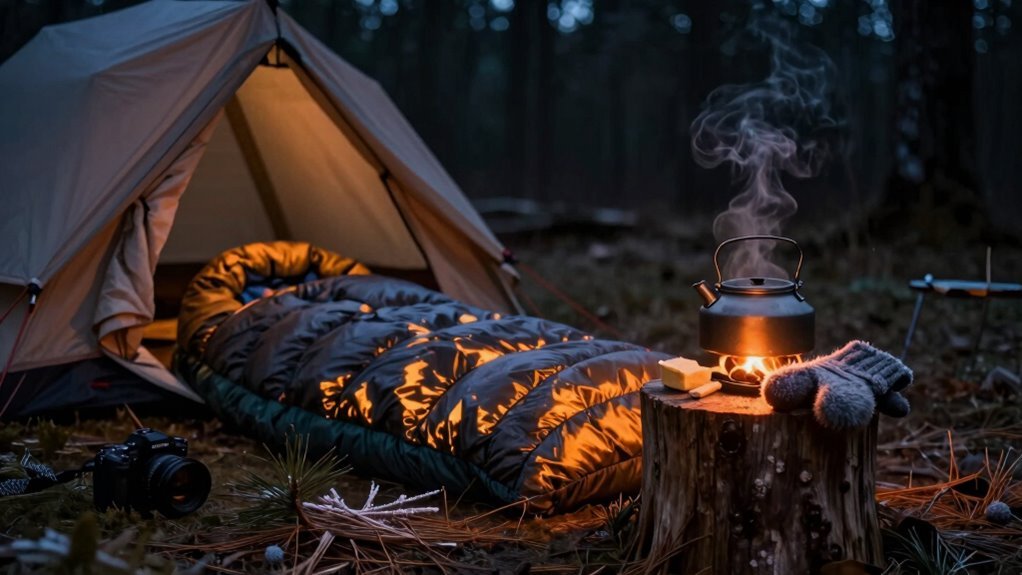
Since your body burns calories to stay warm, giving it a hearty snack before bed is like tossing logs on your internal fire—so go ahead and treat yourself, because cozy nights are built on smart snacking.
Grab a handful of walnuts or almonds—they’re packed with fat and calories to fuel your furnace all night.
Chocolate chips or a candy bar? Even better; the sugar gives you a quick heat boost while the fat keeps it going.
Stir cocoa nibs into oatmeal or mix trail mix with dried fruit and nuts for a powerhouse bite.
Sip warm cocoa with heavy cream powder stirred in—creamy, delicious, and loaded with calories.
Chug it before zipping up, and feel the warmth spread.
A protein bar like Fit Crunch or GoMacro works too—easy, no-mess, and packed with slow-burning energy.
Your body will thank you when the temperature drops.
After all, who knew staying warm could taste so good?
Consider a Two-Person Tent for Better Heat Retention
If you’re serious about staying toasty on cold nights, think small—and snug—by grabbing a two-person tent even if you’re camping solo. You’ll trap your body heat like a cozy burrito, and hey, who doesn’t love being warm and slightly squished?
- Smaller tents hold heat better, boosting temps 15–20°F just from your body warmth
- A snug fit means less air to heat, so you’re not wasting energy warming empty space
- Double-walled designs and sealed vents keep heat in while letting moisture escape
- You’ve still got room for gear, unless you’re bringing your entire garage
Sure, you could go solo in a palace-sized tent, but then you’d need a space heater—and that’s just silly.
This way, you stay warm, dry, and laughing at your own camping jokes all night long.
Frequently Asked Questions
Can I Use Hand Warmers in My Sleeping Bag Safely?
Yes, you can use hand warmers in your sleeping bag safely—if you play it smart.
Don’t slap them directly on your skin, or you’ll risk a burn.
Instead, tuck them inside the lining or near your feet, wrapped in a sock or cloth.
They’ll toast your toes without toasting you!
And hey, if you’re cuddling with a hot water bottle, the warmers are like backup dancers—awesome, but not the main act.
Is It Safe to Sleep With an Electric Blanket While Camping?
No, sleeping with an electric blanket while camping is like hugging a campfire in a storm—it’s risky and could backfire.
You shouldn’t use one overnight, especially in tents where cords can trip you or moisture leads to shocks.
Even low-voltage models dare you to make one wrong move.
Save the drama—opt for warm layers, a hot water bottle (done right), or a trusted sleeping bag.
Safety first, snuggler!
Should I Wear Socks to Bed While Camping in Cold Weather?
Yes, you should definitely wear socks to bed when camping in cold weather. They keep your feet warm, help you fall asleep faster, and stay asleep longer. Cold feet = restless night, and nobody wants that—even your sleeping bag gets mad. Socks boost circulation, prevent numbness, and pair perfectly with a cozy tent vibe. Just don’t grab wet ones—no magic sock powers work there! Sweet dreams, warm toes.
How Often Should I Replace My Sleeping Bag for Warmth?
You should replace your sleeping bag every few years if it’s synthetic—around 200 nights of use—since it loses loft and warmth fast.
Down bags? Hang onto them for 15+ years with good care!
Wash them occasionally, air them out, and keep them dry.
They’ll stay cozy like a well-loved teddy bear.
Invest in down, and you’ll laugh all the way to the campsite—warm and wallet-happy!
Do Heated Sleeping Bags Work Well for Older Campers?
Yeah, heated sleeping bags work great for older campers—imagine staying toasty all night using just 48 watts, less power than a lightbulb!
They warm up fast, last for hours, and pair perfectly with your favorite sleeping bag.
You’ll sleep deeper without tossing and turning from the cold.
Just think: no more waking up stiff and grumpy, blaming it on “the great outdoors”!
Conclusion
You’ve got this, even if you’re not the burliest camper out there. Yes, you might feel the cold more now, but that doesn’t mean shivering all night. With the right gear and a few smart tricks—like eating cheesy popcorn before bed—you’ll stay toasty and wake up refreshed, not stiff and grumbling like a grizzly with a toothache. Camping over 50? It’s not just comfortable—it’s cozy, joyful, and totally worth it.
References
- https://pmc.ncbi.nlm.nih.gov/articles/PMC6098859/
- https://pubmed.ncbi.nlm.nih.gov/22085834/
- https://journals.physiology.org/doi/full/10.1152/ajpregu.00557.2006
- https://www.regencyhcs.com/blog/why-are-old-people-always-cold
- https://health.clevelandclinic.org/why-does-your-body-temperature-change-as-you-age
- https://www.elitecarehc.com/blog/regulating-body-temperature-in-the-elderly/
- https://magazine.hms.harvard.edu/articles/effects-heat-older-adults
- https://www.cdc.gov/heat-health/risk-factors/heat-and-older-adults-aged-65.html
- https://www.backpacker.com/gear/sleeping-bags/best-winter-sleeping-bags/
- https://www.alpenglowgear.com/blogs/adventureawaits/sleeping-bag-temperature-ratings-explained-what-do/