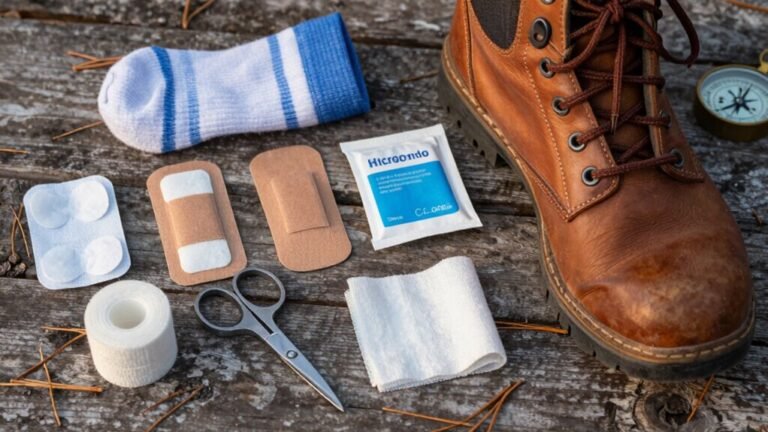
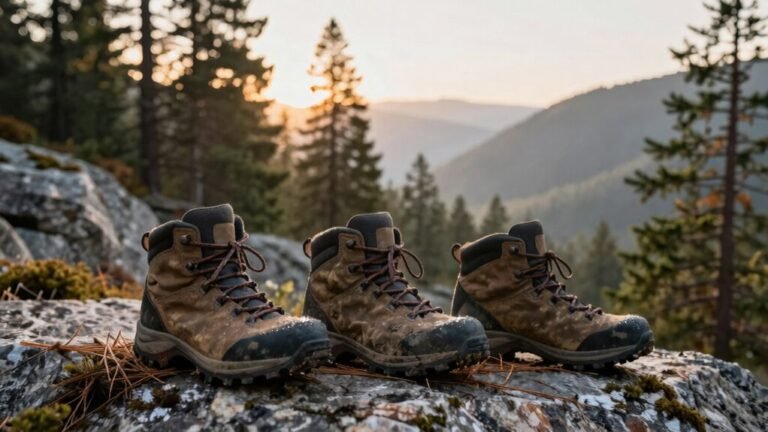
How to Keep Blister Care Working in Bad Weather
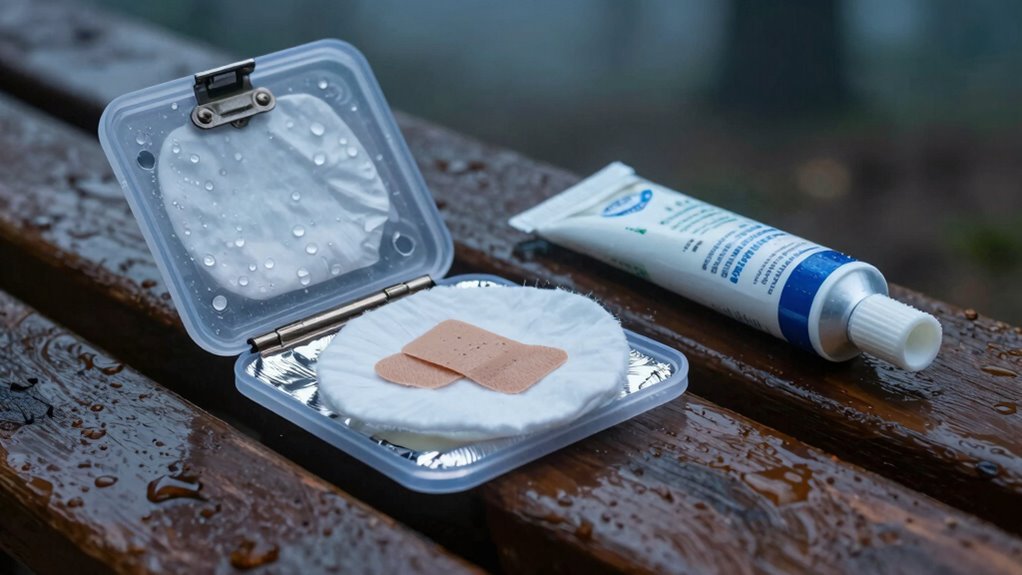
Keep your blister care working in lousy weather by using waterproof dressings that stay stuck, even when you’re sweating buckets. These reliable coverings ensure your feet stay protected despite wet or humid conditions.
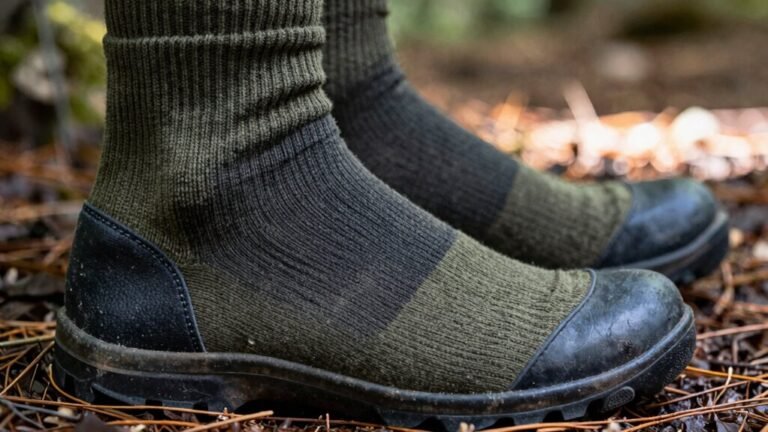
Pair waterproof dressings with moisture-wicking socks—never cotton—to reduce friction and keep feet dry. Lace up snug, weather-ready boots that offer support and help prevent hot spots from forming.
Add gaiters to block mud, water, and debris from entering your boots. This extra layer enhances your blister care by maintaining a cleaner, drier environment for your feet.
Carry a compact care kit with hydrogel pads, strong tape, and blister-blocking balms. Apply balms early and reapply as needed, especially before weather conditions worsen.
Check your feet regularly, dry them when possible, and monitor any developing blisters. With smart habits and the right gear, your blister care stays effective—rain or shine.
Choose Waterproof Dressings for Maximum Protection
Blister battles? You’re not going down without a fight!
Choose waterproof dressings for max protection and stay in the game, rain or shine.
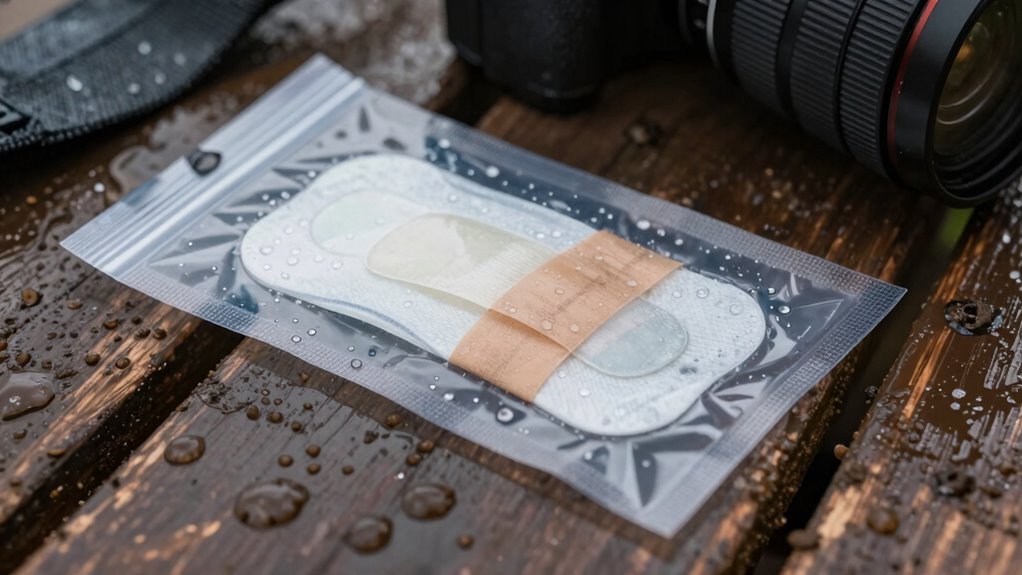
These smart shields lock in healing power while keeping water, dirt, and germs out—thanks to a tough 360-degree seal that sticks like glue, even on sweaty skin.
You can shower, swim, or stomp through puddles, and they’ll still hold strong.
The hydrocolloid gel cushions your blister, cuts pain, and creates a white bubble as it works—proof your skin’s healing fast!
Ultra-thin and nearly invisible, they move with you, never slowing you down.
Whether you’re hiking, working, or just surviving Monday, these dressings handle it all.
And guess what? They’re not just for blisters—grab one for scrapes or hot spots too.
They’re also not made with natural rubber latex, making them a safer choice for sensitive skin.
Stay protected, stay dry, and keep stepping strong!
Opt for Moisture-Wicking Socks to Reduce Friction
When your feet are sweating buckets inside your shoes, it’s not just uncomfortable—it’s a recipe for disaster.
But you’ve got a secret weapon: moisture-wicking socks.
They pull sweat away from your skin and spread it through the fabric, where it can evaporate (if your shoes let it).
Dry skin means less friction, and less friction means fewer blisters—boom!
Skip cotton; it holds moisture like a sponge, making things soggy and risky.
Instead, grab synthetics, merino wool, or smart blends—they keep your feet drier and happier.
Thick, padded acrylic socks? Even better, especially in rough conditions.
Just remember, even the best socks need breathable shoes to work their magic.
And while they’re not blister force fields, they’re definitely your foot’s best friend.
Think of them as PIT crews for your toes—always on duty, minus the tiny uniforms.
Fibre swelling significantly impacts moisture movement, and socks made with materials that resist swelling maintain better wicking performance under load, so opt for fibres with low swelling properties like acrylic or polypropylene.
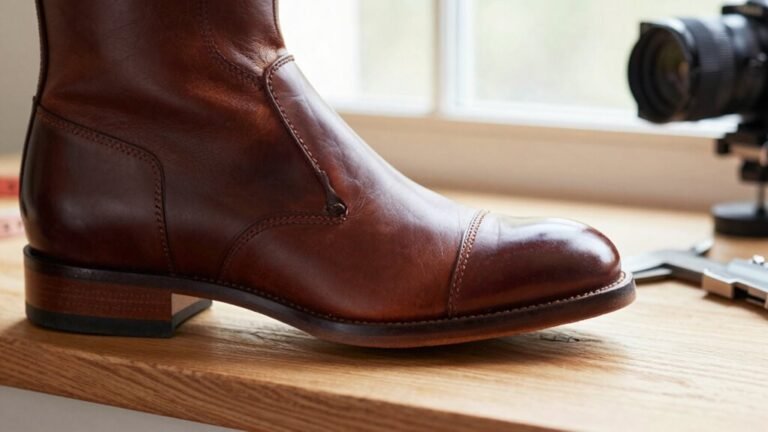
Wear Properly Fitted, Weather-Appropriate Footwear
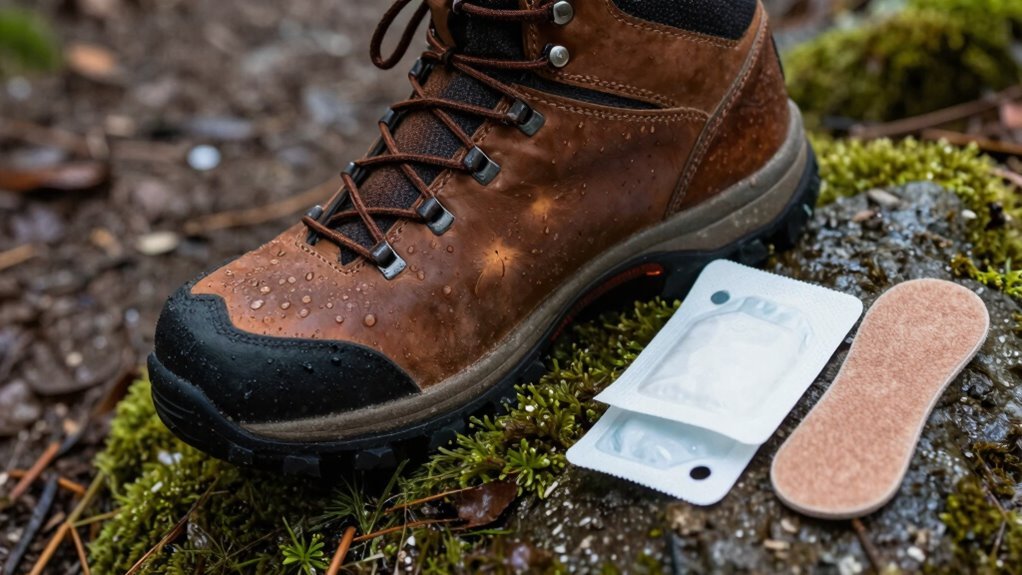
You’ve got your moisture-wicking socks on point—great call, by the way—but let’s not forget the other half of the dream team: your boots.
Snug, supportive footwear stops blisters before they start, while boots that are too tight or loose rub like an overzealous handshake.
Make sure there’s enough toe room—you’re not cramming for a concert—and break in new boots before hitting the trail, unless you enjoy surprise pain parties.
When it’s dry and warm, go for breathable mesh uppers; they dry fast and won’t turn into sweaty greenhouses.
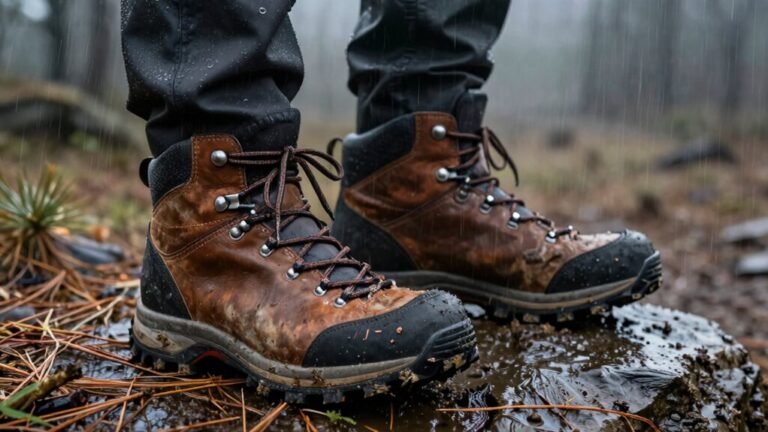
Facing streams or cold temps? Grab waterproof-breathable boots to keep things balanced.
And yeah, lace ’em right—tight enough to stay put, loose enough to let swollen feet breathe.
Adjust as you hike, because your feet will change more than your mood after bad Wi-Fi.
Choose footwear with proper break-in to prevent hot spots and blisters from forming in harsh conditions.
Use Gaiters to Keep Water and Debris Out
Step into the wild without inviting sand, gravel, or surprise twigs to hitch a ride in your boots—gaiters are your first line of defense.
Slide on ankle-high ones for light trails, or go full-length when snow, slush, and mud throw a tantrum.
They block debris with tight weaves and tough fabrics that laugh at burrs and stickers.
Plus, they keep your socks from turning into gritty swamps.
Waterproof models with DWR coatings shake off rain like a dog after a bath.
Breathable designs let your legs chill without soaking.
Got rocky scrambles or bushwhacking?
1000D Cordura and Hypalon straps take the beatings so your boots don’t have to.
Match your gaiters to your mission: light and airy for trail runs, rugged for winter hikes.
Adjust the straps snug, seal the gap, and laugh as nature’s junk stays exactly where it belongs—outside your boots.
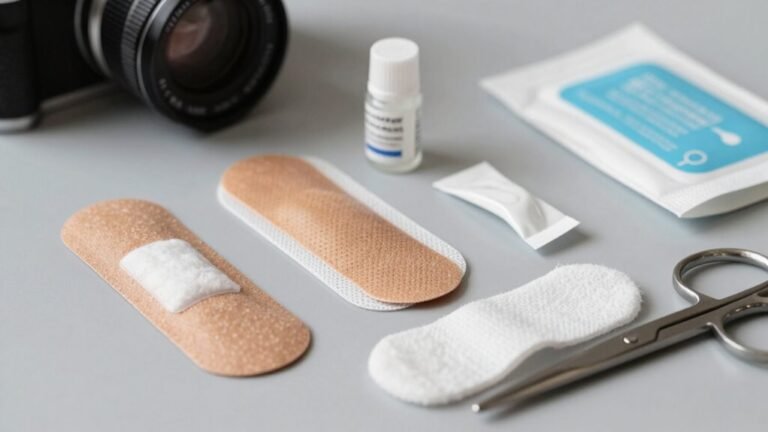
Keep a Blister Care Kit Handy in Wet Conditions
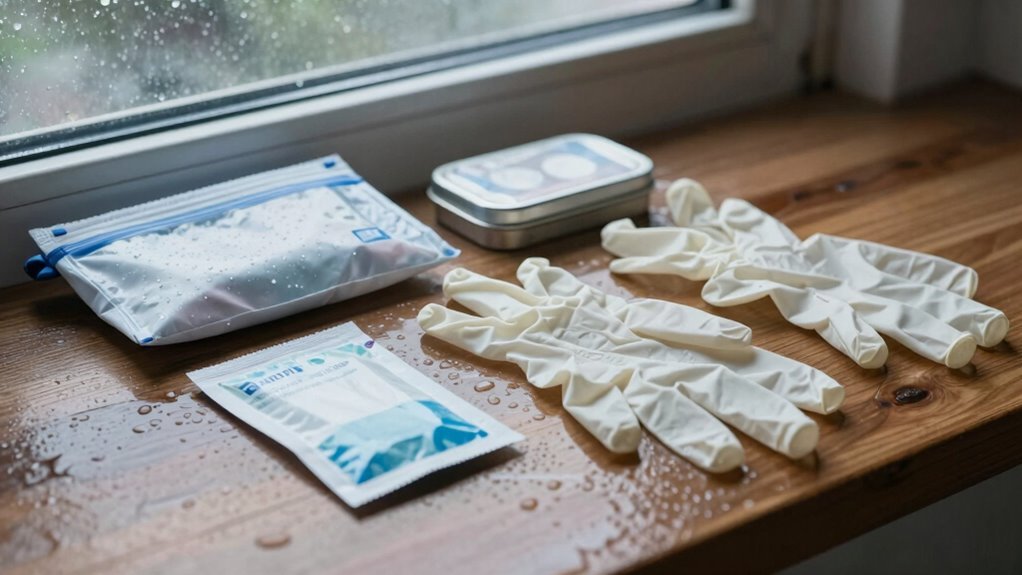
Right in the middle of a soggy trail, with mud sucking at your boots and rain sneaking into places it shouldn’t, the last thing you want is a blister throwing a wrench in your adventure—so keep a blister care kit close, like that one friend who always packs extra snacks.
Toss in waterproof bandages like Nexcare or BAND-AID Hydro Seal—they lock out water, dirt, and bacteria while hugging your skin like a tiny shield.
Drop in some Spenco 2nd Skin pads too; they’re loaded with soothing hydrogel that feels amazing on hot spots.
Don’t forget antiseptic wipes and benzoin swabs to clean and stick better, even when damp.
Wrap things up with Hypafix tape or kinetic tape that won’t quit when things get wet.
A solid kit means you’re ready to patch up fast and keep moving—because nobody’s got time for blisters, especially when nature’s throwing a pool party.
Dry Your Feet Regularly During Extended Exposure
When soggy trails turn your boots into makeshift water balloons, your feet deserve more than just a shrug and a prayer—so don’t wait for squishy socks to start staging a rebellion.
Ditch the damp ones and swap in dry socks at least once a day, or the second they feel wet.
Even a quick change every few hours works wonders.
Tuck extras in plastic bags so they stay dry and ready.
Go synthetic or merino—they wick moisture like magic, unlike cotton, which holds onto sweat like a sponge.
After river crossings or heavy rain, kick off your boots, dry your feet completely, and air them out.
At night, go sockless or wear dry liners to let skin breathe.
It’s not glamorous, but dry feet mean happy hikes—and way fewer blisters throwing a wrench in your adventure.
Prevent Blisters With Lubricants Before Bad Weather
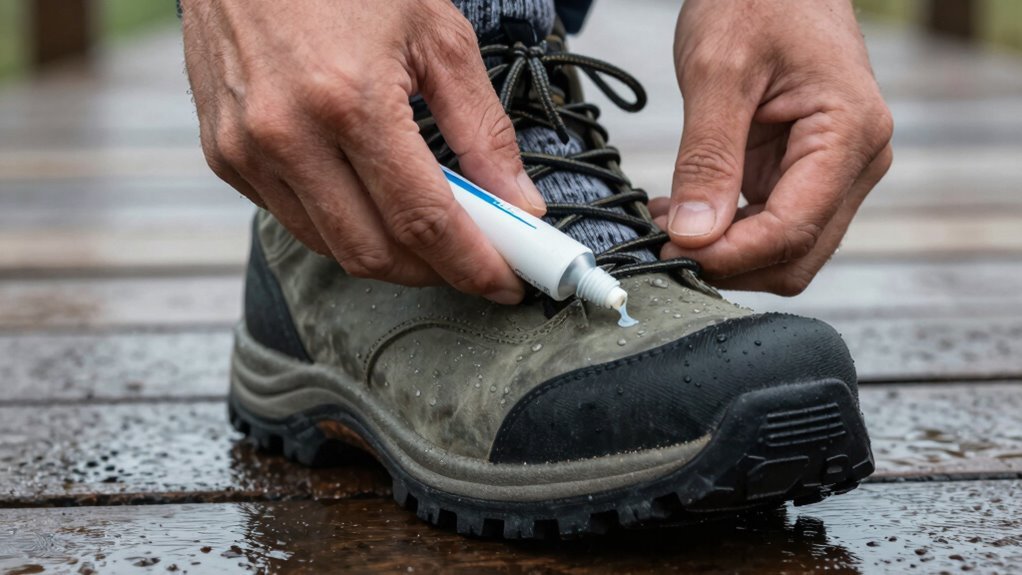
Ever wonder what’s standing between you and a blister-free trek through muggy trails or rainy city streets?
It’s simple: slathering on a smart lubricant before bad weather hits.
Rub petroleum jelly, Body Glide, or a plant-powered balm on your heels, toes, and arches—it’s like giving your feet a force field against friction.
These sweat-resistant warriors stay put, forming a dry, invisible shield that repels moisture and keeps hot spots at bay.
For extra credit, toss in talcum powder to wick sweat and keep things sleek.
Apply before socks, reapply every few hours, and carry a travel tube—because nobody’s got time for blisters.
Just mind the grit: some lubes attract dirt off-trail, and too much petroleum can backfire.
But nail the routine, and you’ll stride confidently, rain or shine, with happy, unbroken skin.
Your feet won’t just thank you—they’ll throw a dance party.
Monitor Healing Progress Despite the Elements
Even if the skies open up or you’re trudging through mud like a determined duck, keeping an eye on your healing blister doesn’t have to be a soggy science experiment.
Grab a pen and jot down the size, color, and feel of the area—tracking changes in centimeters helps you spot progress fast.
Use a visual pain scale (yeah, the 1-to-10 grimace test) during dressing changes to gauge healing comfort.
If it’s red, warm, or oozing, shout alarm—those are infection red flags.
Snap a photo with a digital tool or app; AI can measure healing without ruler drama.
Check exudate levels (none, light, moderate?) and keep that dressing intact like a good shield.
Bacterial cultures might sound fancy, but they’re key if things go south.
Healing takes 12–13 days on average, but scars keep improving for months.
Stay curious, stay dry, and keep that blister in check!
Frequently Asked Questions
How Long Should I Wait Before Reapplying Lubricant?
You should reapply lubricant every 3 to 4 hours, or every 90 minutes if you’re really pushing it.
Friction sneaks back fast—after just an hour, it’s already creeping up!
Skip a reapplication, and boom, you’re twice as likely to get blisters.
Light, frequent layers work better than a thick goop-fest (which can actually cause trouble).
Think of it like sunscreen: steady upkeep keeps you safe, happy, and blister-free!
Can I Reuse a Blister Dressing if It’s Still Sticky?
Cutting corners never pays off—don’t reuse that blister dressing, even if it’s still sticky.
Once it’s been on your skin, bacteria can hitch a ride, and you’re asking for trouble.
That stickiness fades fast, and you’ll lose protection when you need it most.
Plus, your skin’s counting on you to keep things clean.
Toss it and slap on a fresh one—your feet will thank you later, no soggy surprises!
Are There Blisters That Shouldn’T Get Drained?
Yep, some blisters shouldn’t get drained—especially small, unbroken ones.
You’re better off leaving them alone since they heal fast and the skin acts like a natural bubble wrap against germs.
Draining it? That’s just asking for trouble.
Think of it like popping a pimple in the worst spot ever.
Let your body do its thing, keep it clean, and back off the needle.
Your future self will thank you—no extra ouch!
Does Altitude Affect Blister Formation in Bad Weather?
Yeah, altitude totally messes with your feet more, especially when the weather turns nasty. You’re hiking higher, your feet swell, boots squeeze tighter, and moisture gets trapped—hello, friction city!
Cold, wet socks? Not fun.
Add wind and sweat, and your skin’s screaming for help.
Blisters pop up faster up there, buddy, so keep your feet dry, snug (not tight!), and check them like treasure—’cause avoiding pain is the real jackpot.
Can I Use Regular Tape Instead of Medical-Grade?
Yes, you can use regular tape instead of medical-grade—it’s like swapping a sports car for a trusty bike: less flash, but it’ll get you there.
Paper tape sticks well, won’t rip skin, and costs pennies.
It’s gentle, easy to tear, and works great in dry weather.
Just don’t bet on it surviving monsoon season.
For light hikes and fair skies, it’s your pocket-sized blister bodyguard—simple, smart, and totally chill.
Conclusion
You’ve got this! Did you know nearly 30% of hikers deal with blisters in wet conditions? That’s why waterproof dressings, moisture-wicking socks, and gaiters are your best friends. Keep your blister kit close, dry your feet often, and don’t skip lubricants—they’re like ninja shields for skin. With the right moves, you can laugh in the face of rain and mud. Happy trails, dry toes!
References
- https://www.nexcare.com/3M/en_US/p/d/b00016465/?bvstate=pg:26/ct:r
- https://www.band-aid.com/products/blisters-footcare/hydro-seal-blister-cushion-bandages-heels
- https://www.exmed.net/waterproof-bandages
- https://www.strobelssupply.com/nexcare-blister-waterproof-bandages-bwb-06-one-size/
- https://order.midwayos.com/Product/MMM/BWB06/1025881496
- https://www.pavilions.com/shop/product-details.960180117.html
- https://www.walmart.com/ip/Nexcare-Blister-Waterproof-Bandages-Gel-Pad-Latex-Free-Materials-One-Size-6-Count/34762585
- https://www.healthwarehouse.com/nexcare-waterproof-blister-bandage-6ct
- https://www.blister-prevention.com/blogs/products/moisture-wicking-socks
- https://www.blister-prevention.com/blogs/prevention/blister-prevention-socks