Boot Fit Vs Boots: Which Should You Pick?
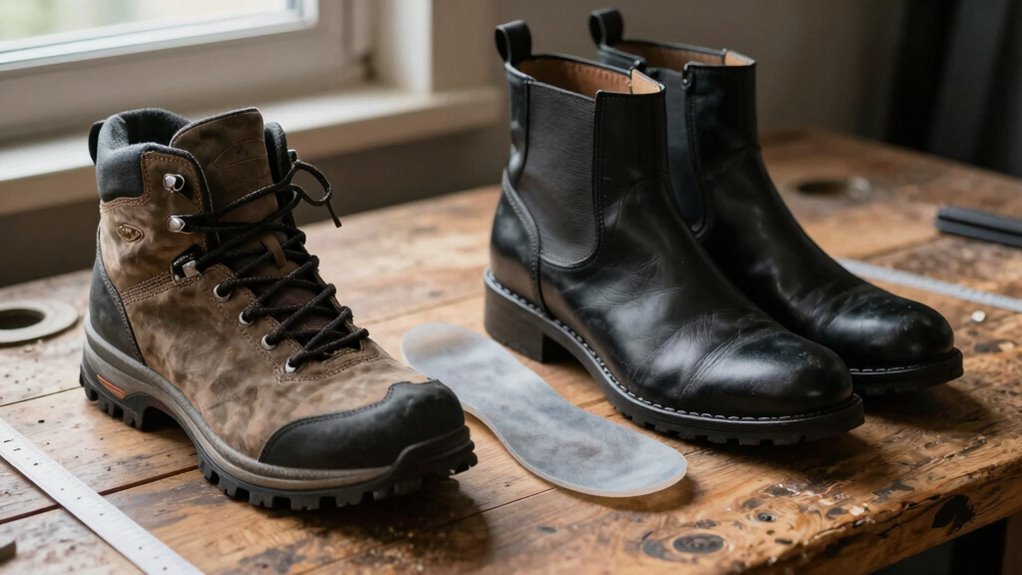
You’re not just picking boots—you’re choosing comfort, control, and your whole mountain experience. Boot fit is everything: too tight and your toes throw a mutiny, too loose and you’ll wobble like a newborn deer.
Full boots with a proper fit hug your feet, mold over time, and keep you stable, warm, and happy all day. Skip the shin-bang and snow-filled regret—get it right from the start, and you’ll wonder why you ever settled for less.
There’s a sweet spot out there with your name on it. Stick around and find the boot fit that transforms your ride.
Understanding the Difference Between Boot Fit and Full Boots
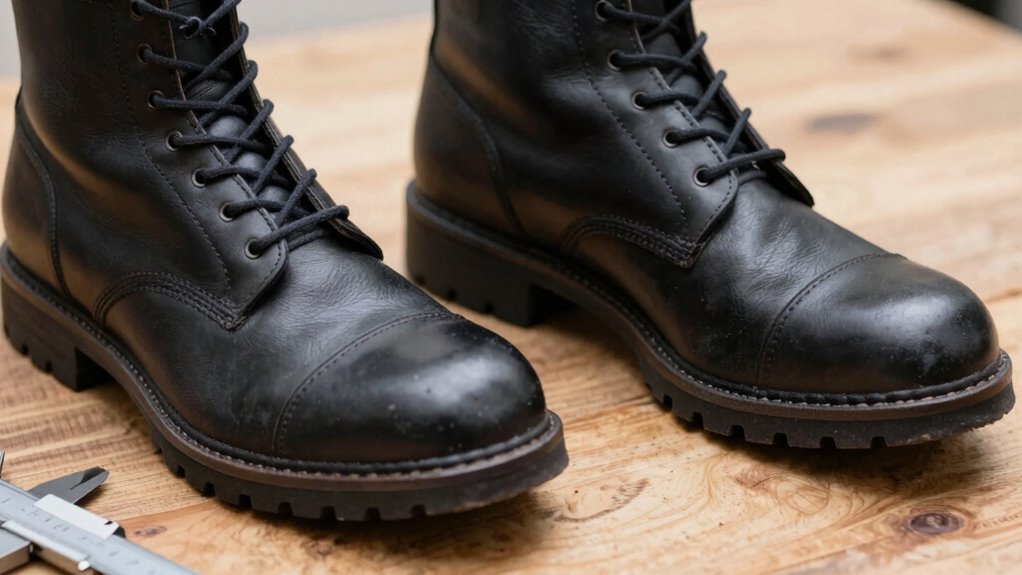
Ever wondered why your boots feel like torture devices after just an hour? It’s probably because you’re focusing on full boots instead of proper boot fit.
See, “full boots” just means the complete shoe—you know, laces, soles, maybe even those cool zippers—but fit? That’s where the magic happens.
You can have the baddest-looking boots on the block, but if the width’s off, your toes are staging a revolt.
Widths range from extra narrow (B) to triple wide (EEE), and yeah, your foot probably doesn’t fall neatly into “regular” (D).
And don’t forget: longer ≠ wider.
A size too long just means heel slippage city.
Fit affects comfort, stability, and whether you’re limping by lunch.
So measure both feet (yes, they’re likely different), mind the flex point and instep, and remember—snug now, glory later.
Your feet will thank you, probably with a happy dance.
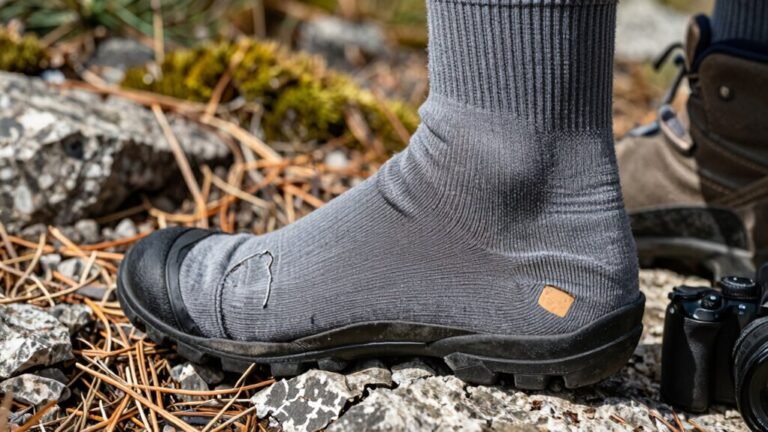
Improper fit over time can lead to visible shoe deformation, a sign you might need wide-fit boots.
When Precision Matters: The Case for Boot Fit
You’ve picked the boots, you know your size, but hold up—fit is where the real decision happens.
Precision isn’t just nice; it’s non-negotiable.
If the flex point doesn’t match your foot’s natural bend, you’ll wobble like a newborn deer.
No deal.
Width matters just as much—too narrow and your toes throw a mutiny, especially with thick socks.
Measure both feet, always go with the bigger one, and check that instep snugness; it should feel secure, not like a vise.
Pull-on boots? They’re zero-tolerance—no laces to save you.
Materials help: leather molds, synthetics don’t, so size right from the start.
And hey, calf size counts for tall styles—measure first, cry later if you skip this.
A precise fit means control, comfort, and no hotspots.
It’s not just wearing boots—it’s owning the ground you walk on.
Now that’s power.
Standard widths like D (regular) provide a baseline for most foot types, but your true fit depends on accurate width measurement and brand-specific variations.
Benefits of Full Boots for Extended Wear and Support
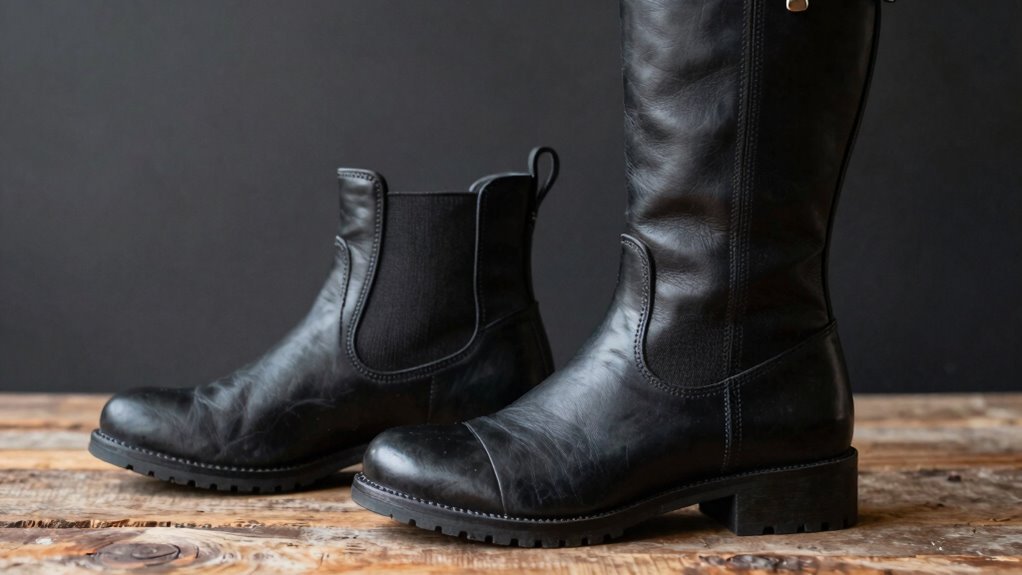
Even if you’re not scaling mountains or chasing storms, your feet still deserve a first-class seat to the daily grind—and that’s where full boots step in like the unsung heroes of all-day comfort.
Crafted from full-grain leather, they’re tough enough to outlast your to-do list and breathable enough to keep your feet happy in any weather.
As they mold to your feet, you’ll get a glove-like fit that only gets better—talk about a personal foot hug!
Built-in arch support fights fatigue, while reinforced shanks stand strong, so your arches don’t cave under pressure.
Shock-absorbing soles cushion each step, sparing your joints and keeping your energy up.
Padded collars and smart design prevent hot spots, and improved circulation means less swelling and more go.
Full boots don’t just support your feet—they’ve got your back, knees, and spirit, one solid step at a time.
Regular use of compression technology has been linked to accelerated recovery after physical exertion.
Comfort and Fit: What to Expect From Each Option
How does your boot fit really measure up?
If your toes feel pinched, you likely need wide-fit boots—they give you room across the footbed without squeezing.
Narrow boots should hug your foot snugly but not cut off circulation, or you’ll pay the price with fatigue.
Your heel should stay put, moving no more than a quarter inch, so blisters don’t crash the party.
Leave a thumb’s width between your longest toe and the boot’s end—wiggle room is a must!
The flex point should match where your foot bends to avoid painful sliding.
A proper forefoot fit feels secure, not tight, while arch support keeps you stable and comfy.
Full-grain leather molds to your foot over time; synthetics?
They won’t stretch, so get it right from the start.
Boot love starts with the right fit!
Weather Resistance: How Each Performs in Harsh Conditions
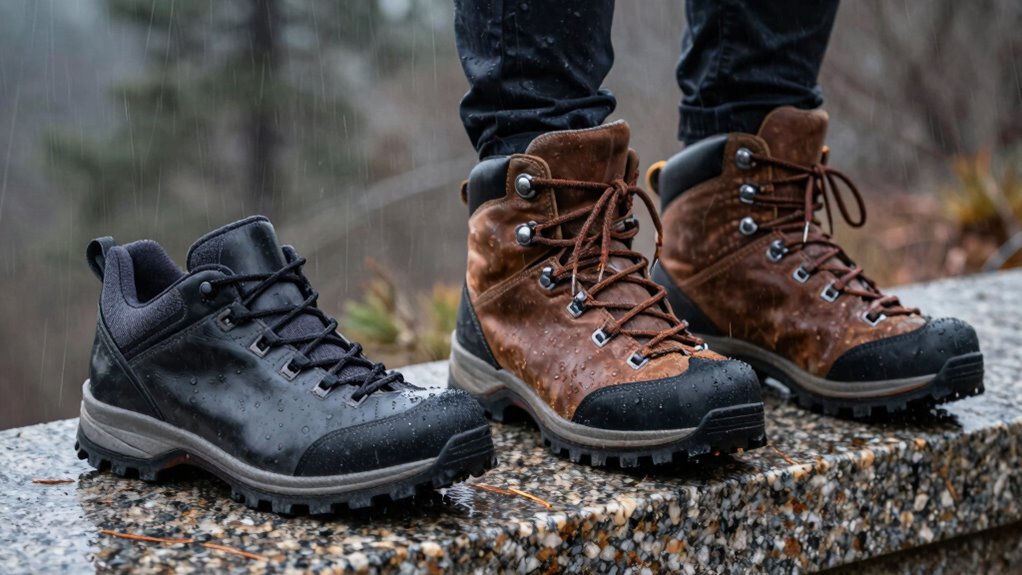
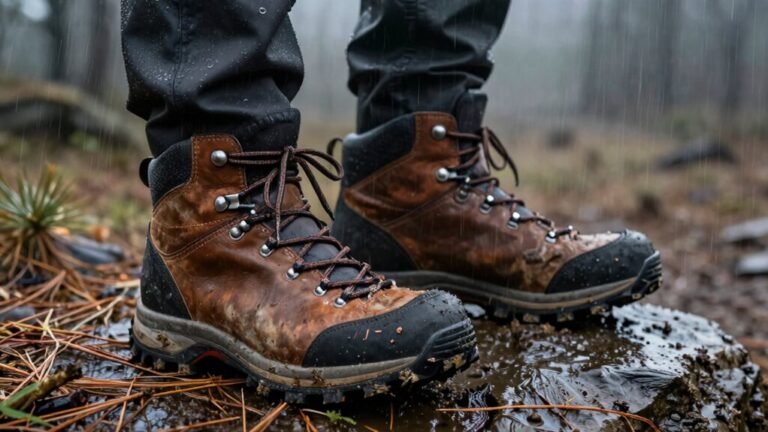
When the forecast turns nasty and your feet are on the line, picking the right boot can mean the difference between a happy hike and a soggy disaster.
You’re gonna want waterproof boots if you’re facing deep snow, puddles, or streams—they handle over 1,000 mm of water pressure and keep your toes dry thanks to sealed seams and smart membranes like GORE-TEX.
Think of them as your foot’s personal raincoat, even when submerged.
Snow boots go all out with fully waterproof builds, perfect for trudging through slush or knee-deep powder.
But winter boots? They’re more like “meh” in heavy rain—water-resistant at best, and they’ll tap out faster than a sunscreen’d swimmer.
Water-resistant options breathe better, sure, but they won’t save you when things get wild.
Activity Match: Skiing, Snowboarding, Hiking, and Beyond
What kind of adventure are you chasing—carving down icy slopes, stomping through fresh powder, or grinding miles on a backcountry trail?
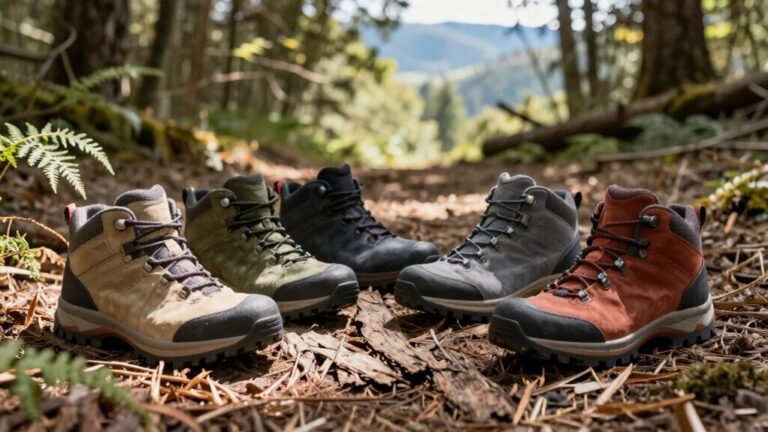
If you’re hiking, pick boots that match your terrain and load—low-cut for light trails, mid-cut for rocky scrambles, or high-cut when you’re hauling a pack big enough to sleep in.
Trail runners? Great for fast, light hikes where you’d rather float than trudge.
Backpacking or climbing icy peaks? Don’t skimp—opt for stiff, supportive boots that laugh at heavy loads and steep drops.
Mountaineering? Yeah, those beasts look like tanks, but they’ll keep you steady when the trail turns into a vertical game of “don’t slip.”
Choose wrong, and your feet might rebel—blisters, fatigue, or worse, a twisted ankle mid-summit.
Match your boot to your mission, and your feet will thank you with every step.
Durability and Longevity Compared
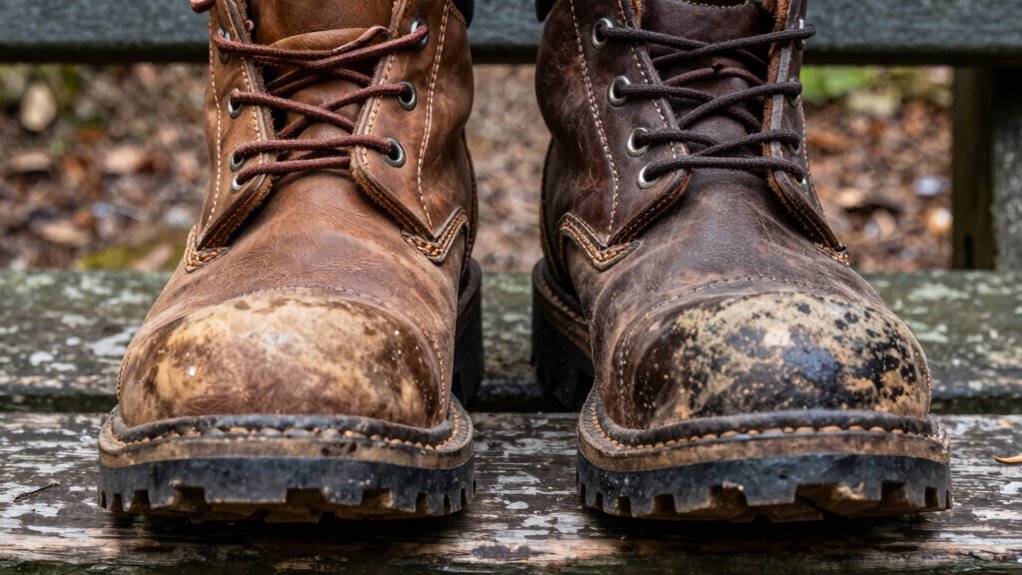
Even if you’re not aiming for a record-breaking trek, your boots better keep up when the trail throws tantrums.
You want full-grain leather or tough synthetics that won’t quit after a few hikes—strong stitching, reinforced eyelets, and shanks add serious staying power.
Yeah, those durable boots cost more upfront, but they save you cash (and blisters) down the trail.
Full-grain leather molds to your feet like a favorite jacket, while synthetics hold their shape but wear out faster—especially with lots of stitching exposed.
Break ‘em in right, and your boots stop fighting you and start working for you.
Ill-fitting kicks? They’ll turn into blister factories and wear down fast.
Proper arch support and a solid fit mean less strain, fewer face-offs with discomfort, and boots that last years, not seasons.
Pick smart, and your boots won’t just survive the journey—they’ll brag about it later.
Ease of Use: Putting On, Taking Off, and Adjusting
Ever struggle to wrangle your feet into ski boots like you’re arm-wrestling a brick?
You’re not alone. Sit down, wiggle in, and listen for that soft “PLOP” as your foot settles—snug like a firm handshake, not a crush.
Rear-entry boots and BOA dials are game-changers, especially if you’re new or just hate buckles.
Unbuckle or spin the dial, flex back, and whoosh—your toes slide free.
Micro-adjustable buckles let you tighten or loosen with a twist, while BOA wraps your foot evenly with zero hassle.
Four buckles mean more control, but three or even two keep things simple.
Non-moldable liners cushion right away; thermoformable ones shape to you over time.
Match your foot width—low, medium, or high volume—to skip slipping or squeezing.
The right fit means less fight, more fun.
Just click, dial, step, and go—no wrestling required.
Cost Considerations and Value Over Time
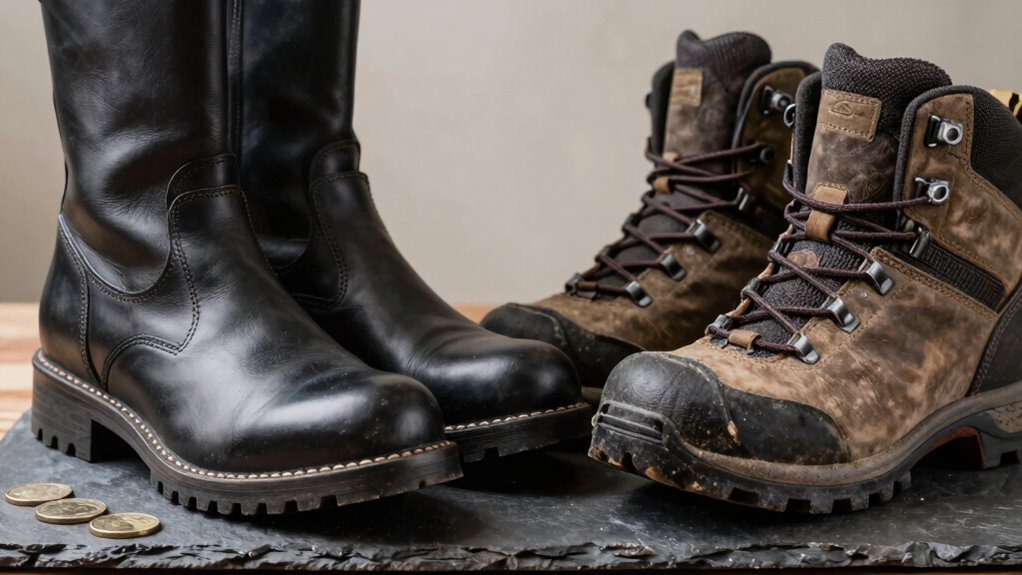
How much should you really splurge on ski boots?
Well, you can grab decent ones for $300–$700, but top-tier performance boots can run $900–$1,200.
And if you toss in custom footbeds ($200–$300) or shell punching ($30–$300 depending on the job), costs climb fast.
But here’s the kicker: high-end boots last longer thanks to tougher materials like full-grain leather or stiff, durable plastics.
Sure, synthetics hold their shape, but leather molds to your foot—like a cozy high-five over time.
Think of boot fitting as an investment, not an expense.
A proper fit means fewer pressure points, better control, and way less “ouch” after a long day.
You wouldn’t buy a race car and skip the seatbelt, right?
Spending more upfront saves your shins, your stance, and your stoke—season after season.
Smart math!
Frequently Asked Questions
Can I Use Boot Fit for Hiking in the Rain?
You can use boot fit for hiking in the rain, but only if it’s truly waterproof.
Regular shoes might keep you dry at first, yet they’ll soak through fast, leaving you squishing with every step—hello, sad soggy socks!
Waterproof boots with sealed seams and high collars are your best bet. They’ll shrug off puddles, mud, and drizzle like a champ, keeping your feet warm, dry, and happy on wet trails.
Do Full Boots Require a Break-In Period?
Yeah, full boots do need a break-in—don’t let anyone tell you otherwise!
You’ll feel some snugness at first, but that’s normal.
Wear ‘em with thick socks around the house for short bursts, let the leather flex and warm up.
It’s like a spa week for your boots.
In 5–10 wears, they’ll hug your feet like they were made for you—because, well, they kinda were.
Are Boot Fit Options Available in Wide Sizes?
Yes, boot fit options definitely come in wide sizes, and you’ve got plenty to choose from!
Brands like Justin and Thursday Boot Company make wide fits easy with E, EE, and even EEE widths for both men and women.
If your feet feel squeezed, going wide gives you comfy room, especially in the toe box.
Think of it as a stretchy invite for your toes to relax.
Plus, square toes? Total game-changer for wide feet.
You’ll walk happier, promise!
How Do I Clean Full Boots After Mud Exposure?
You knock your muddy boots together first—shake off the drama like a dog after a bath.
Let dried gunk flake off, then brush the soles clean.
Use a soapy soft brush on the uppers, scrub gently, wipe with a paper towel.
Remove laces and insoles, wash ‘em separately.
Never toss them in the wash—seriously, no one wants soup boots.
Air dry, condition, and voilà!
Your boots’ll look fresher than a TikTok trend.
Is Boot Fit Suitable for People With Flat Feet?
Oh, absolutely, you’re going to *love* how boot fit treats your flat feet—like a cozy hug for sad, squashed arches!
You’ll skip the aches, walk longer, and actually enjoy standing in line.
With proper support, your feet won’t feel like deflated balloons.
You get cushioning, alignment, and comfort—all while strutting around like you’ve got springs in your soles.
Yep, flat feet? Totally winning this round.
Conclusion
You’re strapping in, snow crunching underfoot, wind nipping your cheeks. Boot fit hugs like a favorite glove—snug, precise, ready for action. Full boots wrap you like a cozy campfire on ice, sturdy and warm for long days. Ski hard? Go precise. Hike far? Embrace the support. Either way, your feet will thank you—no soggy socks or grumpy toes. Step boldly, laugh often, and let your boots do the work!
References
- https://www.overlookboots.com/blogs/boots/wide-fit-vs-narrow-fit-work-boots-how-to-pick-the-right-pair
- https://www.overlookboots.com/blogs/boots/boot-size-guide
- https://stridewise.com/how-boots-should-fit/
- https://www.macys.com/s/boot-fitting-guide/
- https://www.farmhousetack.com/blogs/barn-blog/beginners-guide-to-tall-boots-styles-sizing-and-top-brands
- https://www.tonylama.com/en/boot-camp/fit-guide.html
- https://www.bootbarn.com/how-boots-should-fit.html
- https://rokslide.com/forums/threads/boot-sizing-go-small-or-big.392546/
- https://www.dsw.com/content/boot-sizing-guide
- https://tsavowellness.com.au/blogs/science-of-wellness/10-benefits-of-recovery-boots-for-enhanced-performance-and-wellness