Common Boot Fit Mistakes and Easy Fixes
You’re begging for blisters if you’re wearing thick cotton socks that bunch or socks that vanish into your boots. Skip the “one-size-fits-all” myth—common boot fit mistakes like ignoring foot width can lead to discomfort and poor performance.
Heel slip? That’s your boot waving goodbye with every step, a telltale sign of improper fit. Measure your foot width and try better lacing, insoles, or Merino wool socks to fix common boot fit mistakes.
Break in your boots slowly, like a first date, not a sprint. Your arches will thank you later—for lasting comfort and support, stick around and address fit issues early.
Wearing the Wrong Type of Socks
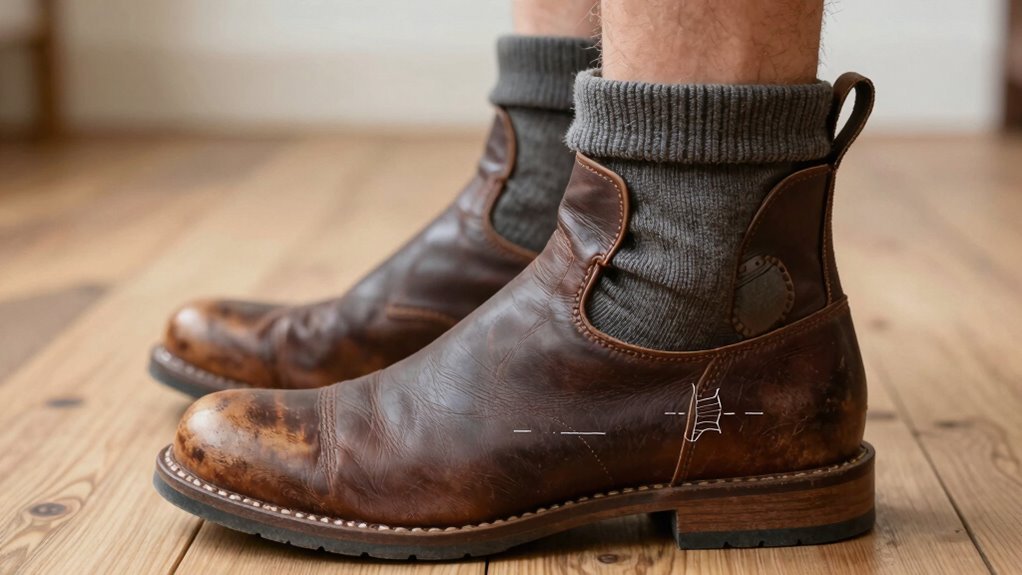
Ever wonder why your boots feel like they’re staging a mutiny every time you take a step?
Chances are, your socks are the sneaky culprits.
Wearing the wrong type means bunching, sliding, or painfully tight toes—it’s like sabotaging your feet on purpose.
Socks too big sag and wrinkle, while too-small ones stretch out and quit midday.
Both make heel slippage way worse, especially in loose boots.
Thick socks might seem like a fix, but they just cramp your toes and ignore the real problem.
And if your socks are too short? They’ll vanish into your boots like magic—bad magic.
The right sock fits snugly around your foot and calf, matches your boot’s height, and stays put without bunching.
Pair quality materials with a performance fit, and suddenly, your boots behave.
Who knew teamwork started at your ankles?
Socks made from Merino wool or synthetic blends hold their shape and grip better, even when wet.
Ignoring Width When Sizing Up
You’ve nailed down the perfect socks, and your boots still feel like they’re plotting against you?
Chances are, you ignored width when sizing up.
Slipping into a longer boot to fix tightness just creates floppy toes and zero support—like wearing clown shoes with ambition.
Instead, measure the widest part of your foot (hello, ball of the foot!) with a Brannock device if you can.
Compare that to brand charts—because “D” means medium, not magic.
If your foot’s wider than 4.2″ (men) or 3.4″ (women), go E or EE.
That 3/8-inch jump makes all the difference.
And don’t trust “wide” labels blindly—some are just hopeful marketing.
Standard widths: B (extra narrow), C (narrow), D (regular), E (wide), EE (extra wide)
Pinching?
Bulging?
Your foot’s screaming for width.
Match your foot to the right last, not just length, and finally walk happy.
Overlooking Heel Slippage
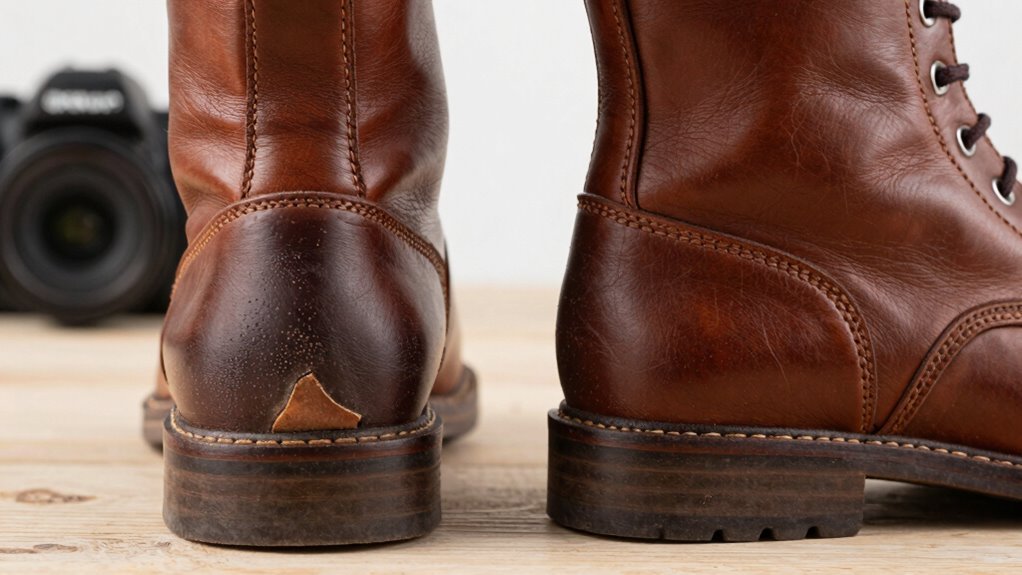
While your boot might look awesome trudging through mud or strutting down Main Street, a slipping heel turns every step into a game of “Will my foot escape first?”
Spoiler: it usually does.
If your heel slides, it’s not just annoying—it’s a one-way ticket to blisters, instability, and clumsy missteps.
This often happens because your boot’s too wide, too big, or stiff as a board, leaving gaps where your heel should snug in.
Thin socks? That’s like rolling out the welcome mat for slippage.
But hey, don’t ditch those boots yet!
Try the Rabbit Hole or Loop Lock lacing trick—they lock your heel back like a secret handshake.
Add heel pads, felt inserts, or thick socks to fill space and grip better.
With a few quick tweaks, your foot stays put, your stride stays smooth, and your boots finally work *for* you, not against you.
Win! Ill-fitting shoes are a leading cause of heel slippage, especially when the shoe is too big.
Not Breaking In Boots Gradually
When you lace up a fresh pair of boots, it’s tempting to hit the trail or tackle the workday like you’re starring in your own adventure movie—dramatic music included.
But skipping the break-in is like jumping into a dance with no rhythm—you’re gonna step on toes.
New boots need time to hug your feet just right, so start slow: wear them indoors for 30–60 minutes at first.
Gradually increase time over days, letting the leather adapt like a good hug.
Rushing leads to blisters, stiffness, and sad faces.
Thicker boots take longer—think weeks, not hours.
Flex them gently, rotate with comfy shoes, and slap on some conditioner.
Avoid heat, soaking, or marathon wears.
Your feet (and boots) will thank you with miles of happy trails.
Trust the process—adventure waits, but comfort wins.
Lacing Boots Incorrectly
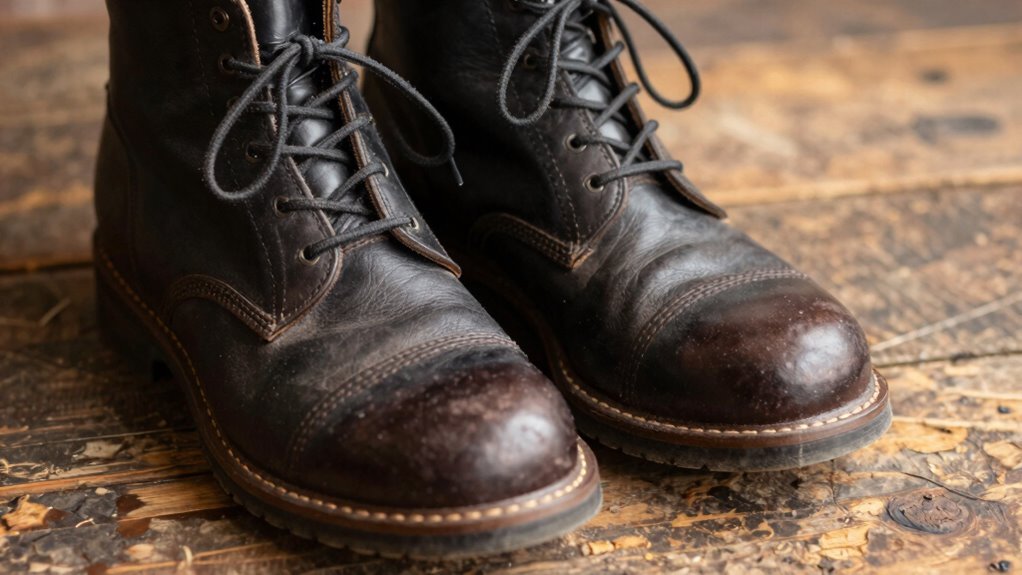
Alright, your boots are broken in just right—no more cardboard-feet vibes—so now it’s time to talk lacing up like a pro.
You’re not just tying shoes here—overtightening squishes your toes, cuts circulation, and makes your instep scream.
Ease up a bit, especially at the bottom, so your feet can move naturally.
Skipping eyelets? That’s begging for heel slippage and blisters—don’t ghost those hooks!
Uneven lacing creates pressure points, warps your boot shape, and causes hotspots that’ll ruin your hike.
And hey, crossing wrong or knotting a floppy granny knot? Yeah, that’s how laces come undone mid-trail.
Try a double-wrap bunny ear or square knot instead.
Lock it down with heel-lock lacing, keep laces flat, and always walk test.
A few tweaks and your boots won’t just fit—they’ll feel like they were made for you.
Choosing Style Over Support
You know those boots that make your outfit look instantly cooler but leave your feet begging for mercy by noon? Yeah, we’ve all been there. Choosing style over support might win you fashion points, but your feet? Not so much.
You’re skipping arch support, cramping your toes, and ignoring your foot’s real shape—flat, high-arched, or in between. That slick ankle boot? Might look great but pinch like crazy if the ball of your foot doesn’t align with the boot’s widest part.
And let’s be real—rugged-looking boots with zero grip won’t save you on a muddy trail. Chunky soles on dressy boots? Cute, but awkward if you’re stuck in an office elevator.
You want boots that look good *and* feel like a hug for your feet. Don’t just chase trends—match your style to your stride. Your feet will thank you after eight hours, not just eight minutes.
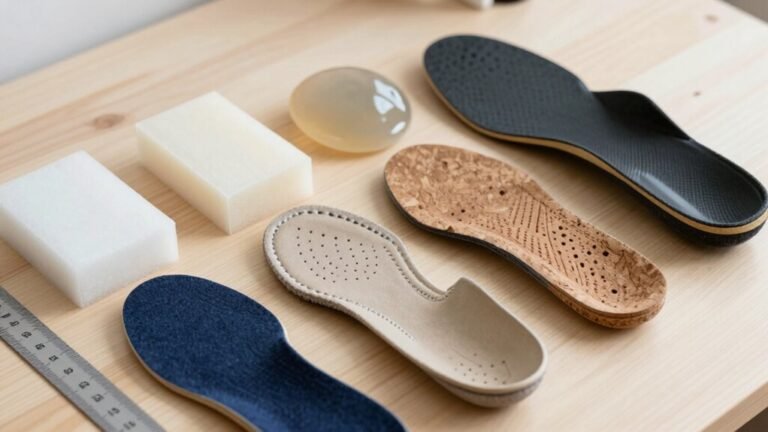
Skipping the Insole Adjustment
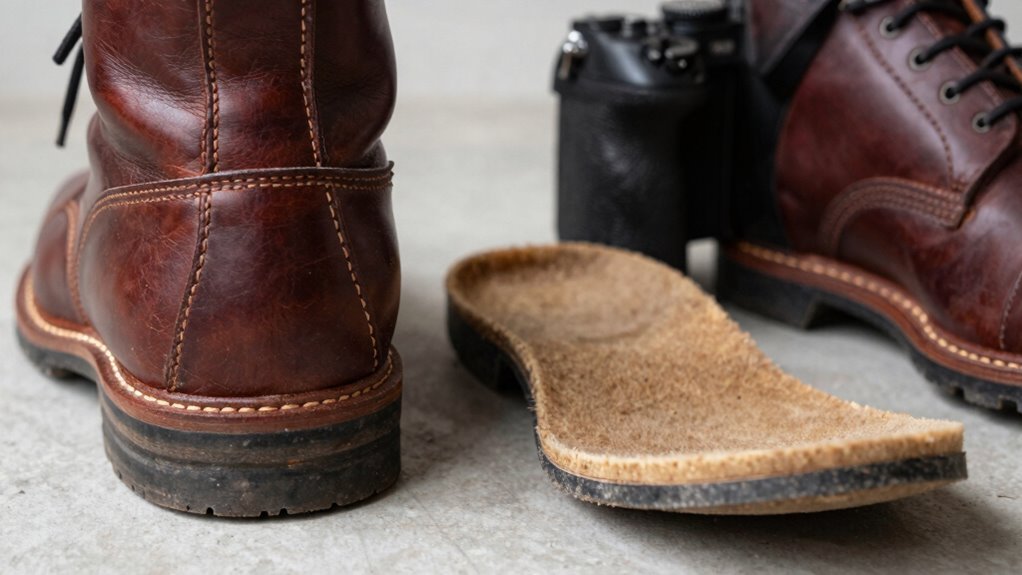
That killer boot you just scored? Don’t forget to tweak the insole—you’re not done yet!
Skipping insole adjustment is a super common mistake, especially as we age and our feet need more support.
Think plantar fasciitis, diabetes, or just years of walking.
Proper insoles slash pain by over 30%, absorbing heel shock like a champ.
They even help your back feel better after just a few weeks.
Plus, real insoles—especially custom ones—can fix your posture, reduce overpronation, and make you run faster with less fatigue.
Fancy insoles with sensors can even buzz you when your form slips.
And trust us, your gait will thank you.
Millions of older adults are already using them, and for good reason.
So don’t just lace up—level up.
Swap, shape, or support your insole, and step into the comfort you’ve been missing.
Your feet aren’t asking for much—just a little love.
Forgetting to Check Arch Compatibility
Ever wonder why your feet scream “no more” after just an hour in your boots? You might’ve skipped checking arch compatibility.
If you’ve got high arches, standard boots probably don’t cut it—without extra support or heat-moldable shells, you’re asking for fatigue and pain.
High instep bones like the cuneiform need room, or you’ll feel like your boots are clamping down like a vise.
Low arches? They’ll collapse without moderate support, leading to flat feet or plantar fasciitis.
Narrow boots cramp your style—and your orthotics—causing heel slip and tightness.
The fix? Match your boot’s arch to your foot’s natural curve.
Walk around, feel for pressure, and tweak the fit.
Custom liners or molds can hug your instep just right.
Don’t guess—test, adjust, and let your feet thank you.
Happy arches mean happy trails!
Frequently Asked Questions
How Often Should I Replace My Boots?
You should replace your boots every 500 to 1,000 miles, depending on how tough they’re and where you hike.
If you’re clocking 8 miles a day, that’s about every 4 months.
Watch for worn treads, cracked insoles, or frayed laces—your boots are screaming for retirement.
And hey, if they’re leaking? They’re basically just fancy water buckets.
Time to treat yourself to a fresh pair!
Can Wearing Tight Boots Cause Long-Term Foot Damage?
Yeah, wearing tight boots can absolutely cause long-term foot damage—you’re basically molding your feet like clay!
Did you know 1 in 3 people develop bunions from poor footwear?
That cramped toe box squishes your toes, leading to hammertoes, nerve damage, or even surgery.
You’d wrestle a raccoon barefoot, but still squeeze your feet into stiff boots?
Don’t let fashion mess with your foot health—your future self will thank you for hitting the right fit.
Are Expensive Boots Always Better Fitting?
No, expensive boots aren’t always better fitting—just because they cost more doesn’t mean they’ll love your feet.
You’ve gotta try them on, walk around, and see how they feel.
Fancy materials and stitching won’t fix a lousy shape.
Think of it like shoes for a royal ball—splendid, but still gotta fit Cinderella’s foot!
Do Boot Sizes Vary Between Countries?
Oh yes, boot sizes go full carnival act across countries—same foot, a million sizes!
You think you’re a tidy US 9?
In Europe, you’re suddenly a 42, in the UK you shrink to an 8, and Japan calls you 26.5 for fun.
They measure barleycorns, centimeters, Paris points—who knows!
You’re not big, small, or sane—just lost in translation.
Pack a conversion chart, or just grin and blame the system.
Should I Buy Boots Later in the Day?
Yeah, you should definitely buy boots later in the day—you’ll avoid the “happy feet become angry feet” surprise.
By late afternoon, your dogs are nicely swollen from walking around, just like they’ll be on the slopes.
That way, you’re not squeezing lunch meat into socks by 3 p.m.
Try them on after a quick stroll, wear your thin ski socks, and bend into stance—boom, perfect fit!
Conclusion
You’ve got this! Remember, 70% of foot pain comes from poorly fitting shoes—yikes! Don’t let boot blunders slow you down. Wear the right socks, snug that heel, and lace up smart. A few tweaks make all the difference, like breaking in boots like you’re warming up pancakes—slow and steady. Your feet will thank you, and hey, happy feet mean happier adventures. Now go step out in style—comfortably!
References
- https://rocasocks.com/why-do-my-socks-keep-falling-down-in-my-boots/
- https://bootnshoe.com/blogs/ask-the-boot-guy/boots-are-too-loose-and-wearing-thick-socks-doesnt
- https://darntough.com/blogs/the-alternate-stitch/socks-that-dont-bunch-slide
- https://www.youtube.com/watch?v=tCgacc3A0Hw
- https://outdoors.codidact.com/posts/51002/51003
- https://camelcitymill.com/blogs/news/make-work-boots-tighter
- https://www.overlookboots.com/blogs/boots/boot-size-guide
- https://nicksboots.com/blogs/blog/boot-width-chart
- https://www.ironpros.com/workwear/article/22910366/how-to-choose-the-correct-boot-width-for-your-foot
- https://blog.v12footwear.com/safety-boot-sizing-why-brands-differ