Beginner Guide to Boot Fit
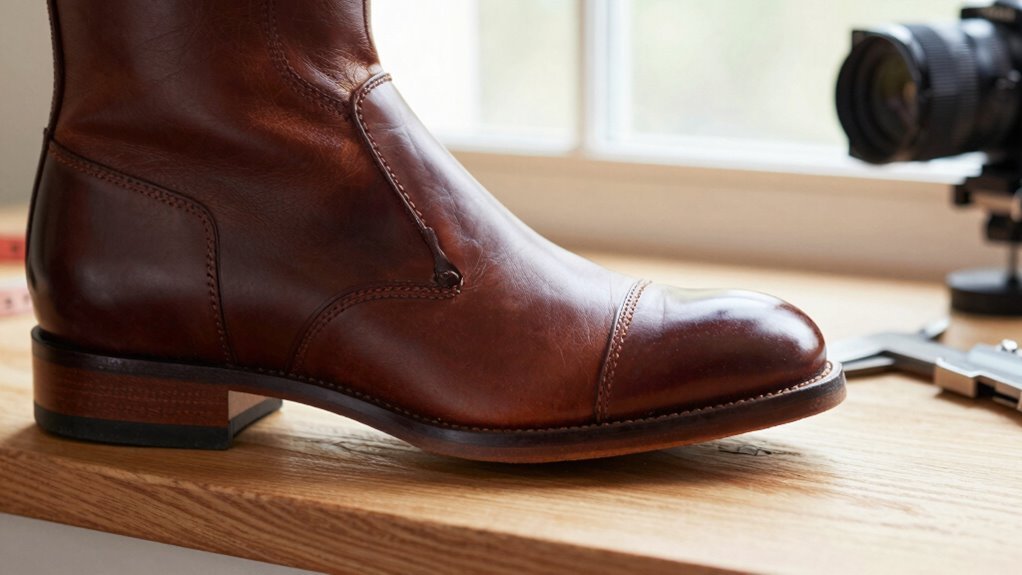
Start by tracing your feet on paper—socks on, please—and measure from the heel to the longest toe. This simple step is crucial for proper boot fit, ensuring you account for natural foot shape and size.
Add a little extra room (6mm for you, 8mm for him) and always size to the bigger foot. A proper boot fit prevents discomfort and supports healthy foot function during wear.
Match your arch type: flat feet benefit from stability features, while high arches need extra cushioning. Getting this right enhances comfort and improves overall boot performance.
Ensure a snug heel with no slipping more than a quarter inch and allow wiggle room for your toes. These fit markers help maintain control and prevent blisters.
For wide feet, consult width charts—D is standard for men, B for women. Choosing the right width is a key part of accurate boot fit.
And hey, the best sock choice might surprise you—always test boot fit with the socks you plan to wear. Sock thickness impacts how well your boots fit and feel.
Understanding Your Foot Shape
Ever wonder why your feet feel like they’re rebelling against your favorite shoes?
Well, it’s likely because you haven’t met your foot shape yet—no, really!
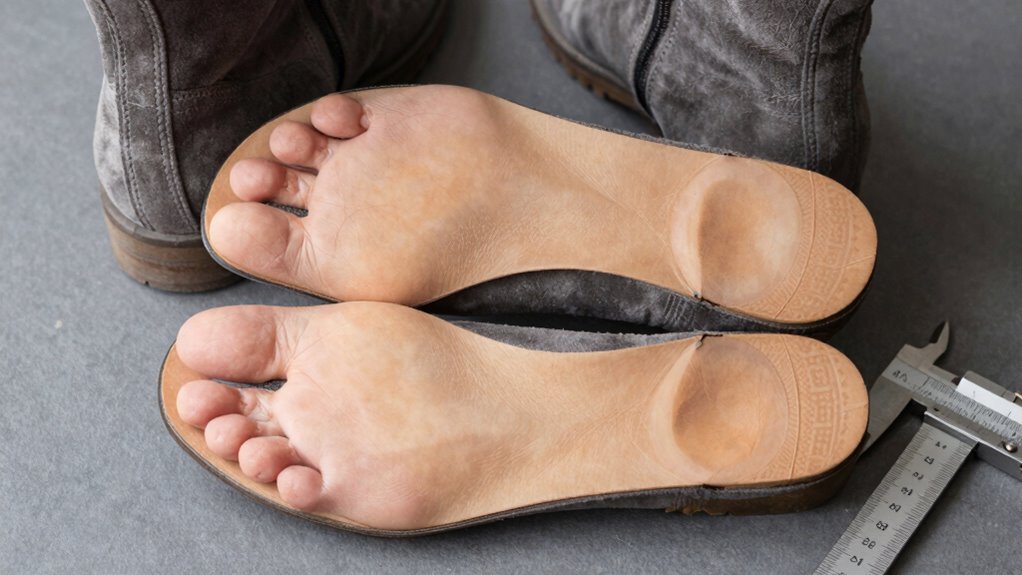
Most of us (about 70%) have the Egyptian type, with the big toe longest and others tapering off.
If your second toe pops out ahead, you’re rocking the Greek foot, which can lead to corns or claw toes if squeezed.
Got a boxy toe lineup? That’s Roman or peasant style—cute, but prone to hammer toes.
Flat feet roll inward too much, while high arches shift pressure to the ball of your foot.
And hey, if your footprint looks like a solid blob, you’ve got low arches; a faint curve means high ones.
Knowing your foot’s shape helps you avoid blisters, bunions, and shoe shopping disasters.
Think of it as matchmaking, but for your boots.
Your foot’s arch type influences how your foot rolls during movement, affecting comfort and fit.
Measuring Your Feet Correctly
Now that you’ve met your foot’s unique shape—whether it’s Egyptian, Greek, or Roman—it’s time to get down to the nitty-gritty: measuring it right.
Grab a piece of paper bigger than your foot, a pen, and a ruler—socks on, please!
Tape the paper to a hard floor (no carpets—your foot might “sneak” extra space).
Stand evenly, trace your foot, and measure from heel to longest toe tip in centimeters.
Add 6mm if you’re a woman, 8mm if you’re a guy—feet need room to breathe.
Do both feet; use the bigger one—it’s the boss.
For width, find the widest part at the ball, measure edge to edge, or wrap a tape around.
Do it at day’s end when feet are peak-sized (they swell, just like your post-lunch jeans!).
Precision’s key, but keep it fun—your boots should fit, not flee!
Knowing your boot width ensures proper fit and prevents foot issues like bunions and calluses.
Choosing the Right Boot Size
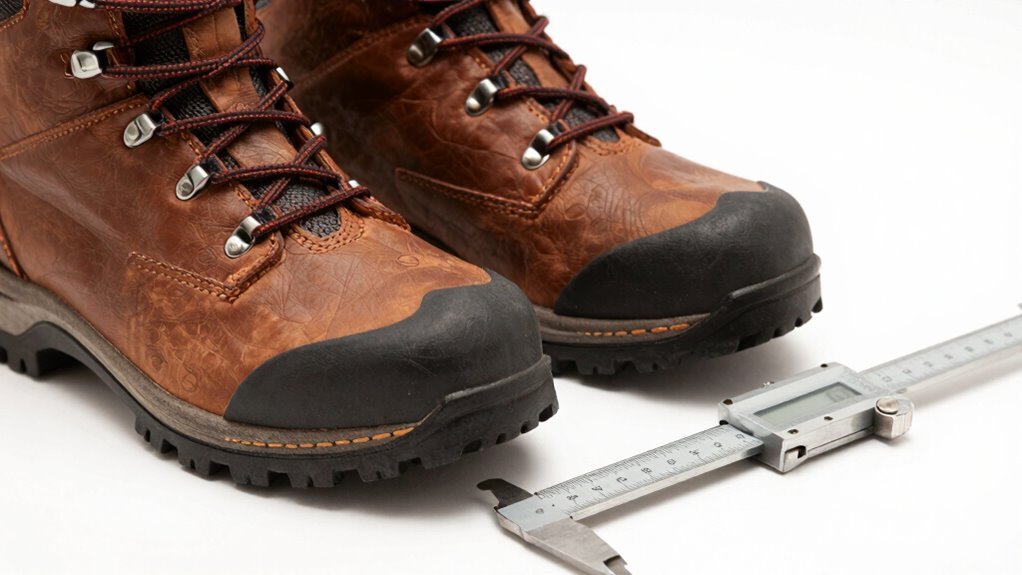
How do you nail the perfect boot fit without playing a guessing game? Start by measuring your foot length using the tracing method—just step on paper, mark the longest toe, and subtract 0.2 inches for pencil thickness. Remember, your boot size isn’t your exact foot length; drop down one full US size from your measurement (so an 11-inch foot fits best in size 10).
US sizing counts in ⅓-inch jumps, and widths go from AAA to EEE—men usually need D, women B.
Got Aussie or UK sizes? Convert them first!
Always measure both feet and pick the larger size.
And hey, if you’re eyeing those rugged Blundstones, check those charts—they run differently.
Your perfect boot isn’t magic, it’s math (with a little fun thrown in).
Handmade boots vary slightly due to the unique last each maker uses, so consider trying on a sample or using a boot fit service.
Considering Width and Volume
So, what’s the secret to avoiding sausage toes or waltzing around like you’re in clown shoes? Getting the right width and volume.
Start by measuring the widest part of your foot—snugly wrap a tape measure around the ball, wear socks like you’d in boots, and always test both feet (one’s usually bigger!).
Men’s D and women’s B are standard, but if you’re squeezing or sliding, check wider or narrower options.
Each width jump—like D to E—adds about a quarter inch across the forefoot.
That extra space? It’s gold for high-volume feet.
Use brand charts to match your numbers, and don’t forget to subtract a full size from your foot length when reading them.
Brands like Justin, Nicks, and Overlook all vary—EE for men or B for women might surprise you.
When it fits right, you’ll feel snug, not squished, and move freely—happy feet make every step a joy.
Evaluating Arch Support Needs
Figuring out your arch type is like revealing a secret level in the video game of comfort—suddenly, everything makes sense.
Is your footprint wide and flat, slightly raised, or barely there?
That wet test tells all.
Flat feet need stability to stop inward collapse, while high arches crave cushioning for better shock absorption.
Normal arches? Lucky you—just grab a firm midsole and go.
Make sure the support lines up perfectly with your arch’s peak, not too high or low, so it actually helps instead of hurts.
Your heel should stay put, toes wiggling freely, no cramping.
Too much support strains, too little tires—you want that Goldilocks zone.
Materials like PowerStep Pinnacle offer just-right semi-rigid coverage.
And hey, skip the ballet flats—they’re cute but useless here.
When your boot hugs your arch like it was made for you (because it should be), every step feels like a high-five from your future self.
Testing for Heel Slippage and Toespace
Walking in boots that fit like a dream feels almost magical—suddenly, every step is easier, lighter, and way more fun.
To test heel slippage, walk around and watch for lift; more than half an inch means they’re too big.
A little slip—about a quarter inch—is normal at first and gets better as boots break in.
Slide your foot forward, pull the liner out, and slip a finger behind your heel; if it fits, you’re golden.
For toespace, wiggle your toes freely—no cramming!
Your widest foot part should match the boot’s widest point.
Try the wet footprint test on paper to see your spread.
Walk on different surfaces to check stability and gaps.
If your heel’s dancing too much, try heel-lock lacing or thicker socks.
Little tweaks now mean big comfort later—happy feet aren’t just happy, they’re hilarious at how good they feel!
Pairing Boots With the Right Socks
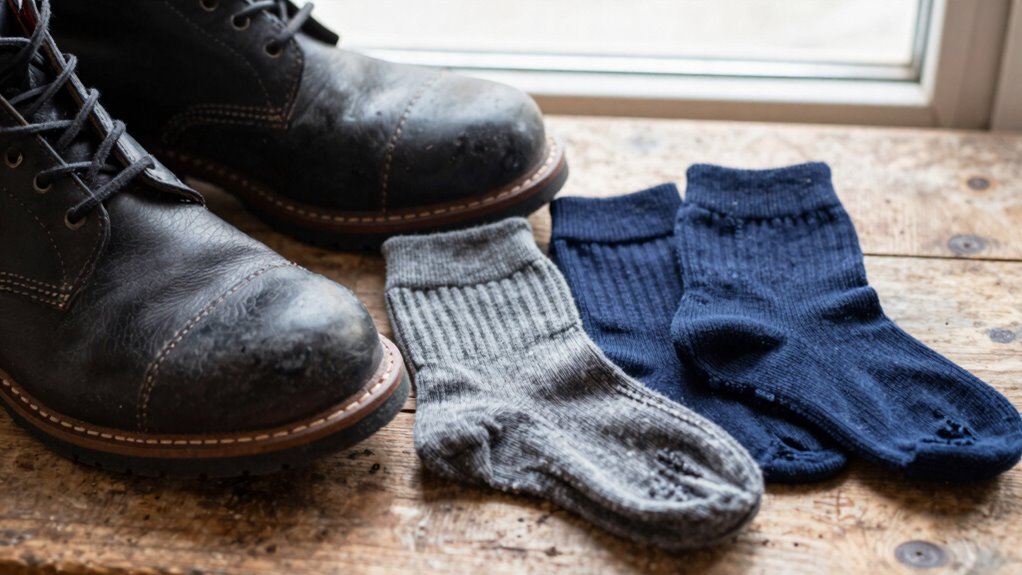
While your boots do a lot of the talking, let’s be honest—they’re only as good as the socks you pair them with.
Crew socks work great with ankle or rain boots, while mid-calf boots look best with socks an inch above the top—keeps things sleek, not sloppy.
Knee-highs? Match them with over-the-calf socks so nothing bunches.
For hiking or tactical boots, go tall and thick for full coverage and cushion.
Dress boots love thin, smooth socks—keeps that sharp look.
Thick wool’s your best friend in cold weather, especially with leather or rain boots.
Merino, alpaca, or bamboo blends wick moisture and fight blisters.
Avoid slippery socks or annoying seams, and always try them on together—no guessing games.
A snug heel grip and the right thickness stop slippage and save your soles.
Your boots might be stars, but your socks? They’re the backup singers making the whole show rock.
Frequently Asked Questions
Can I Wear Orthotics With My Boots?
You can absolutely wear orthotics with your boots—go ahead and rock that combo!
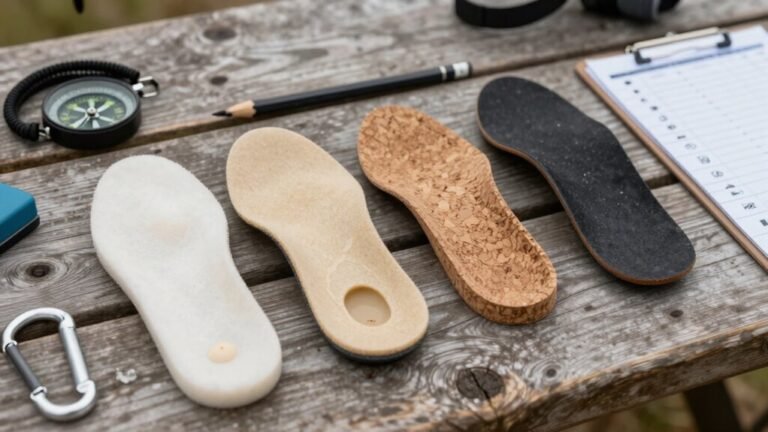
Just grab 3/4-length ones if space is tight, especially in steel-toes or Uggs.
Toss out the squishy insoles, size up a half, and lace snugly.
Your feet will thank you, especially on long days.
Boom—comfort, support, and style all in one step!
How Do I Break in Stiff New Boots?
You tame stiff boots like a pro wrestler taming a wild horse—gently but firmly.
Wear them indoors with thick socks, flex the shafts by hand, and bounce around to bend them where your feet flex.
Use stretching spray and stuff with newspaper overnight.
Condition the leather, avoid soaking, and let your feet do the magic over time.
They’ll hug your feet like your favorite sweatshirt—snug, cozy, and all yours.
Are Waterproof Boots Less Breathable?
Yeah, waterproof boots are less breathable—you’re basically wrapping your feet in a raincoat.
The membrane keeps water out but traps sweat inside, especially when you hike hard or it’s hot.
Bigger feet or long wear make it worse.
You’ll feel steamier than a sauna in socks.
If it’s dry and warm, go breathable or water-resistant instead.
Your feet will thank you, and hey, maybe even send a postcard.
Should Boots Feel Tighter at First?
Yes, they should feel snug at first—you’re building a friendship, not a cage.
Think of it like a bear hug from your favorite cousin: tight enough to feel cared for, but not squished.
Leather stretches slightly, so a bit of firmness helps shape the fit.
Wear thick socks, walk around, laugh at your awkward new-boot waddle—soon, it’ll move with you like it always has.
Comfy now means perfect later.
Can I Stretch Boots That Are Too Tight?
Yeah, you can totally stretch boots that are too tight—no need to ditch them just yet!
Slip in a stretcher or try the freezer trick with water bags, and boom, they’ll ease up.
Warm them with a hairdryer, wear thick socks, and walk around like you’re on a mission.
With a little love and elbow grease, they’ll fit like they were made for you—well, almost!
Conclusion
You’ve got this! Did you know 80% of people wear the wrong shoe size? Don’t let that be you. Now that you know how to measure your feet, check width, and test fit, you’re ready to find boots that feel like they were made just for you. Slip them on, wiggle your toes, and enjoy the walk—without blisters or grumbles. Happy stepping, boot pro!
References
- https://fitmyfoot.com/blogs/footprints/five-ways-to-determine-your-foot-type
- https://thefootandankle.clinic/blog/what-are-the-differnent-types-of-feet-and-foot-shapes/
- https://www.granulon.com/post/understanding-foot-types-and-demographics-across-the-world
- https://kcfoot.com/there-are-9-types-of-feet-which-type-are-you/
- https://www.footic.com/barefoot-academy/types-of-feet/
- https://thechelseaclinic.uk/foot-shapes/
- https://www.podexpert.com/en/blog-pathology-type-feet-pxl-151_159.html
- https://insiteinsoles.com/health-and-wellness/different-foot-shapes/
- https://www.outsideonline.com/health/training-performance/foot-types-running-shoes/
- https://nicksboots.com/blogs/blog/boot-width-chart