Common Insoles Mistakes and Easy Fixes
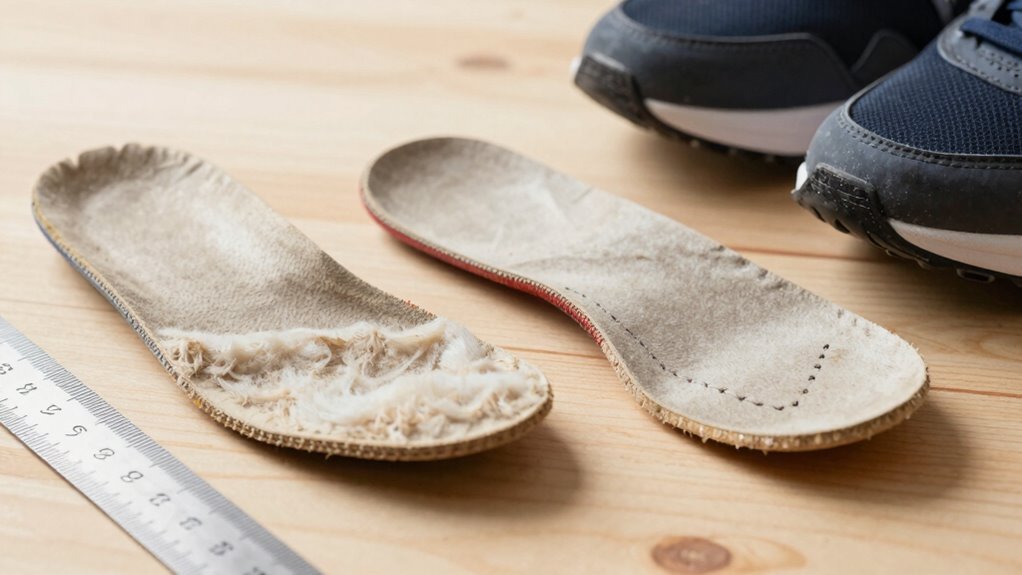
You’re probably making common insoles mistakes that can easily be fixed. Squeezing into the wrong insole size, skipping arch checks, or ignoring wear and tear can all compromise foot health and comfort.
Don’t let worn-out inserts stay in your shoes too long—replace them every 6 months, just like you would with a frayed toothbrush. Match your insoles to your shoe type and foot arch to avoid unnecessary strain.
One size doesn’t fit all when it comes to insoles. Choosing the right support based on your specific needs can make a huge difference in comfort and long-term foot care.
Choosing the Wrong Size Insole
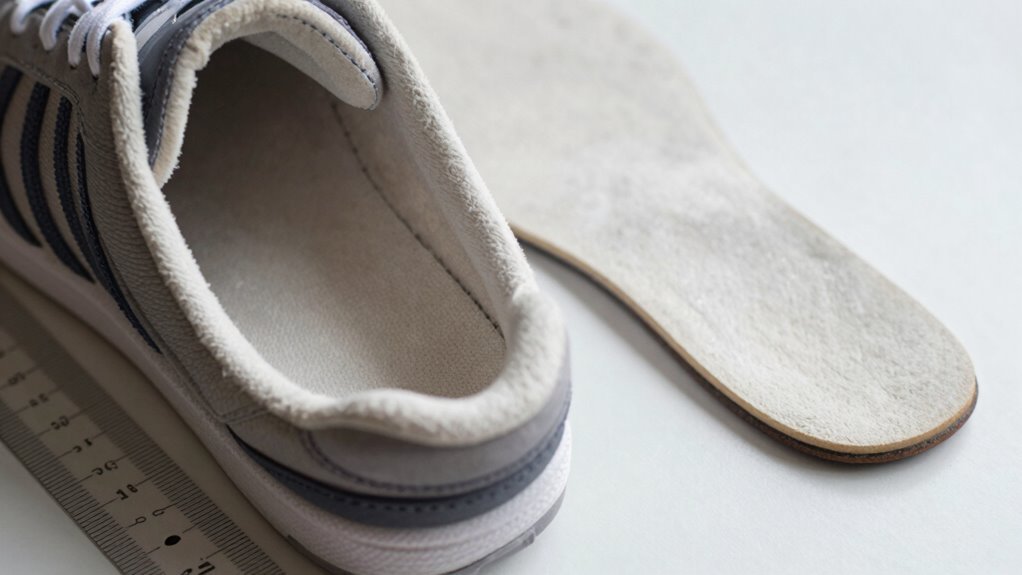
Picking the perfect insole can feel like finding a unicorn—rare and magical—but getting the size wrong turns that dream into a daily foot fiasco.
You’re not alone—63 to 72% of folks wear the wrong size, and 47% squeeze into shoes too small for their feet.
If your insole’s too big, it bunches up and creates blisters, wobbles your step, and might even make you sprain an ankle.
Too small? Your toes are jammed, leading to pain, bunions, or ingrown toenails.
Yikes!
Don’t just guess your size—measure your larger foot and check the insole length from heel to toe.
Leave a thumb’s width at the end.
Skip the guesswork: use size charts in cm, not just labels.
Brands vary—UK 8 isn’t always US 9.
Try them on, walk around, and trust your feet.
Get it right, and hello, comfort heaven!
Always size up when between sizes to ensure proper alignment of arch support and heel cup.
Keeping Old Insoles Too Long
Wearing tired insoles is like expecting a deflated bouncy castle to give you a joyride—it just won’t lift you up anymore.
You’re better than that!
If you’re still using the same insoles after six months, they’ve likely lost their bounce.
Runners or folks on their feet all day? Swap them every 2–3 months—trust us, your feet will thank you.
Heavy use, sweat, and hard floors squash support fast.
Check for flat arches, thinning foam, or new aches—they’re screaming for a change.
Think of insoles like toothbrushes: useful, but not forever.
Refresh them regularly, and you’ll stand taller, walk easier, and keep discomfort at bay.
Your feet aren’t asking for much—just a little love and a fresh pair now and then!
Timely replacement lowers strain across the chain; joints and tendons receive less shock.
Using One Type of Insole for Every Shoe
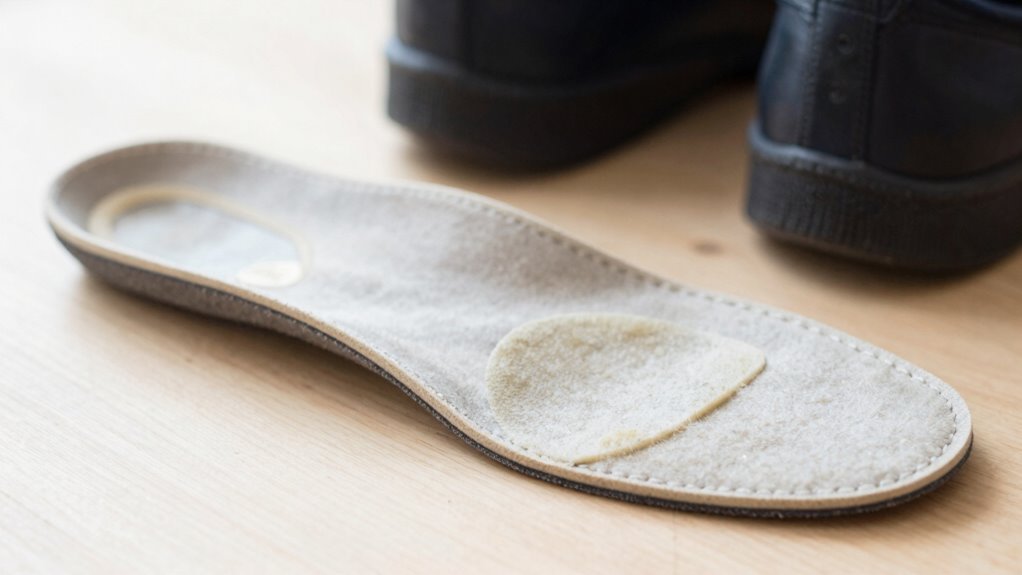
Mixing and matching insoles like they’re one-size-fits-all? That’s like wearing flip-flops to a snowstorm—nope, it just doesn’t work!
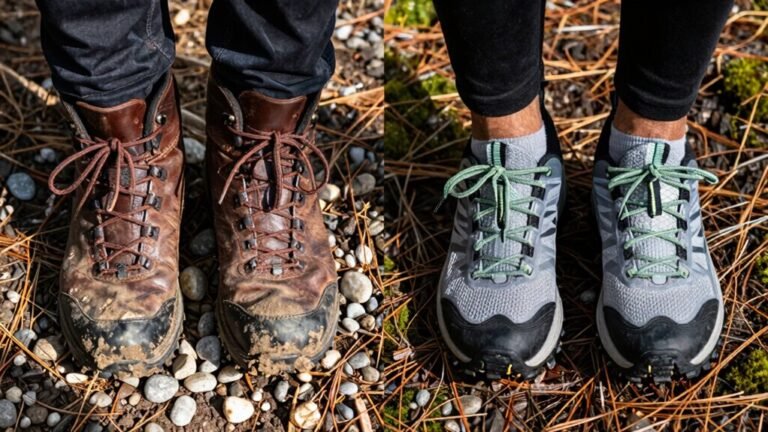
Your hiking boots crave high-volume insoles with firm support, while your sleek dress shoes need low-volume ones that fit snug.
Cycling shoes? They demand slim, stiff insoles to prevent squishy chaos.
And don’t forget—sock thickness changes everything!
A thick winter sock with the wrong insole equals cramped toes and grumpy feet.
Sports cleats need 3/4-length PowerStep PULSE® insoles, not your chunky hiking pair.
Heels? SlenderFit® ones cushion without bulging.
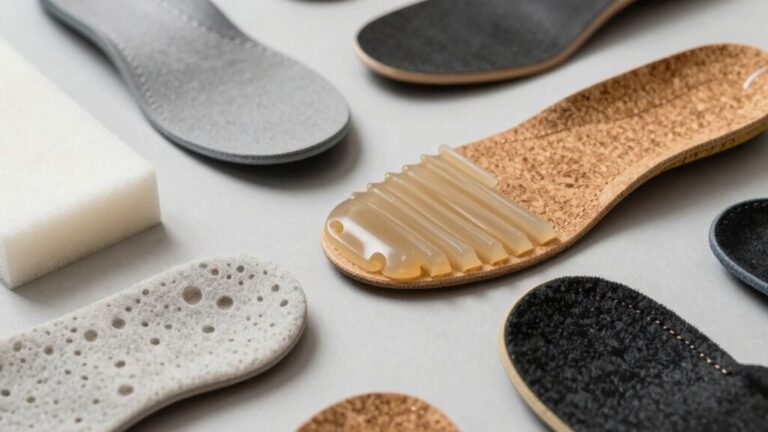
Even materials matter—gel for bounce, cork for breathability, leather for style.
Pick foam for casual wear, firm orthotics for work boots.
Match the insole to the shoe and activity, and suddenly, every step feels *right*.
Your feet will thank you—no more guessing games!
Foam insoles, known for holding up well over time without losing shape, are ideal for daily use where long-lasting support is essential.
Ignoring Foot Arch Type When Selecting Insoles
Ever wonder why your feet still ache even with insoles? You might be ignoring your arch type—ouch!
Picking insoles like you’re blindfolded at a shoe sale won’t cut it.
Your arch is like your fingerprint: unique and in need of the right match.
Flat feet love firm support to stop overpronation, while high arches crave cushioning to absorb shock.
Neutral arches? They’re happy with a balanced blend of comfort and stability.
Skip the guesswork and do the wet test—yes, it’s as fun as it sounds.
Then check your shoe wear patterns like a foot detective.
Get this wrong, and you’re basically asking your feet to work overtime.
Let’s make every step feel like a spa day, not a wrestling match.
- Your arch type shapes how your foot moves, so support must match your structure.
- Flat feet need firm control to stop rolling, not squishy softness that wobbles.
- High arches lack shock absorption—cushioning is king, not rigidity.
- Medium arches thrive with balanced support; avoid extremes that feel awkward.
- Test your type early to dodge pain, blisters, and grumpy knees down the road.
Assuming All Insoles Offer the Same Support
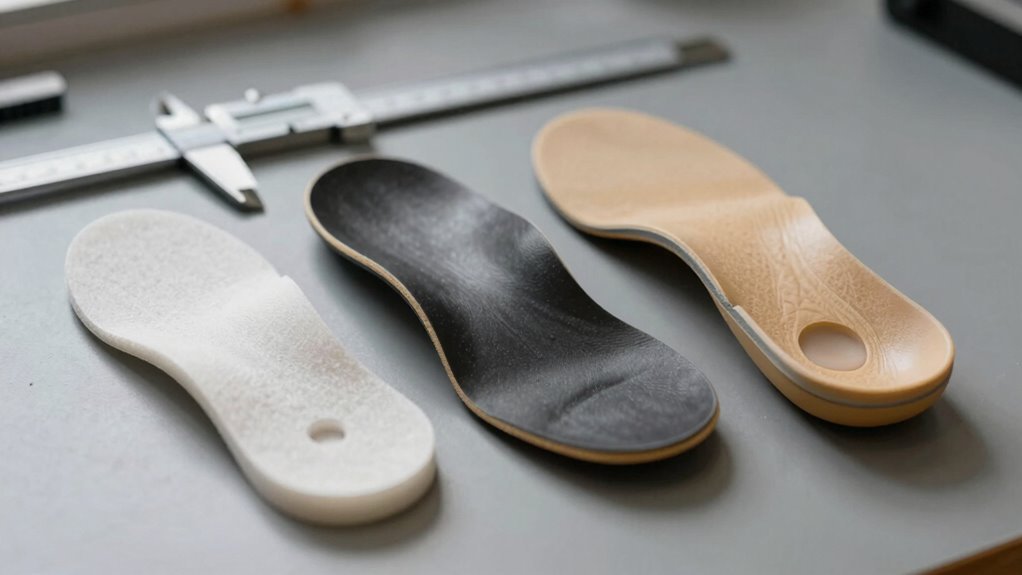
Just because it slips into your shoe doesn’t mean it’s got your back—literally.
Not all insoles offer the same support, and grabbing the softest one isn’t always the answer.
You might love plush cushioning, but if you need arch control, you’re better off with a firm, supportive insole that keeps your feet aligned.
Cushioned types feel cozy and help with tired feet, but they won’t correct overpronation or ease plantar fasciitis like structured, rigid insoles can.
Think of it like choosing the right backpack—one has pillows, the other has lumbar support.
Activities matter too: hiking, work, or sports each need specialized support.
A $55 carbon fiber insole might feel stiff, but it’s built for power and agility.
So don’t just grab any insole—grab the right one.
Your feet will thank you with every step.
Overlooking Insole Thickness and Shoe Fit
How’s it feel when your shoe suddenly turns into a crowded elevator—too much going on and nowhere to move?
That’s what happens when you overlook insole thickness and shoe fit.
Too thick, and you’re cramming your foot into a space that wasn’t made for it; too thin, and your toes are sliding around like they’re on vacation.
The sweet spot? A 10-mm insole—it boosts balance and cuts fall risk, especially for older adults.
But it’s not just about thickness—your shoe needs room to breathe, too.
- Pick a 10-mm insole for better stability and fewer slips
- Leave a thumb’s width between your toe and shoe tip
- Match insole thickness to your shoe’s depth and width
- Avoid bulky insoles that cramp your forefoot or lift your heel too high
- Choose shoes that fit your foot shape—don’t let insoles do all the work
Not Replacing Insoles After Visible Wear
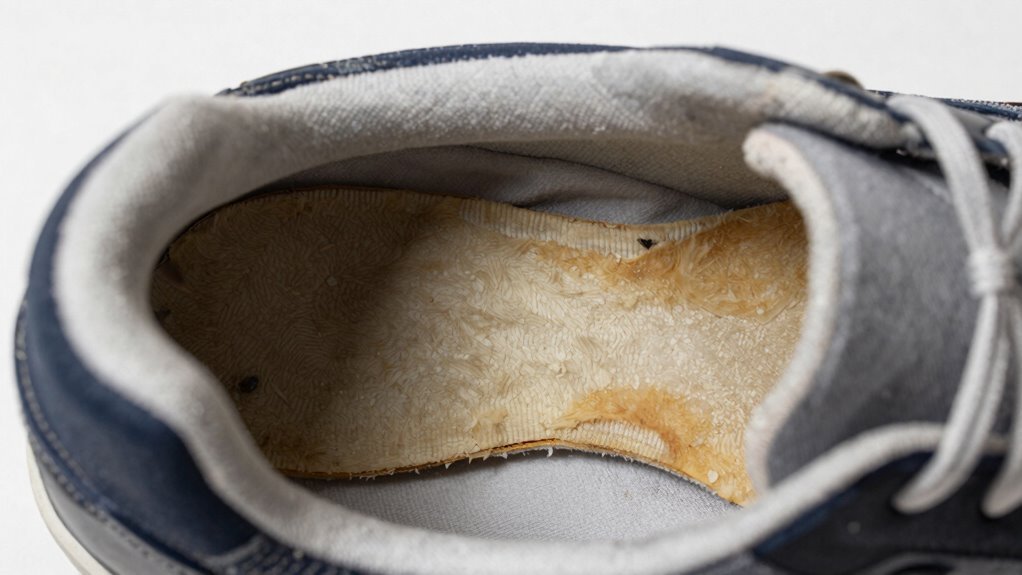
You’ve nailed the perfect insole thickness and found shoes that fit like they were made just for you—congrats!
But if your insoles are cracked, peeling, or look like they’ve been through a war, it’s time to let them go.
Flattened arches or squished heel cushions? Yeah, they’re not fighting for you anymore.
Most insoles need replacing every 6–12 months, but if you’re on your feet all day or pounding pavements, think every 3–6 months.
Delaying replacements means sore feet, bad posture, and grumpy knees.
It’s like wearing a saggy sock—just sad.
Rotate pairs, clean ‘em weekly, and stash them in a cool, dry spot.
Your future self (and your feet) will thank you with happy dances.
Don’t wait until they’re flat as a pancake—give your soles the support they deserve!
Using Insoles Without Addressing Underlying Foot Issues
Ever wonder why your feet still act up no matter how many fancy insoles you try? You’re cushioning pain, not curing it.
Insoles can feel amazing—like a hug for your heels—but if you skip the doctor’s visit, you might miss serious issues like flat feet, diabetes-related nerve damage, or misalignment creeping up your back.
Sure, studies show insoles ease symptoms fast, but long-term? They’re not magic.
Without diagnosis, you’re just putting a bandage on a sneaker.
- You’re treating pain while the real problem keeps growing
- That comfy arch support might hide dangerous numbness from diabetes
- Your flat feet aren’t fixed—just cushioned for now
- Shin splints or back pain could be your body yelling for help
- Custom insoles feel great, but they’re not a time machine for your gait
Frequently Asked Questions
Can Insoles Cause Discomfort if Worn Immediately Without Breaking In?
Yeah, insoles can definitely cause discomfort if you wear them all day right away—your feet aren’t fans of sudden changes.
That firm arch support might feel like a foot fortress, but it can lead to soreness, blisters, or even tingling at first.
Think of it like breaking in new shoes: start slow, let your feet adapt, and soon they’ll be thanking you instead of staging a protest.
Are Gel Insoles Suitable for Long-Term Daily Use?
Yeah, you can use gel insoles daily, but they aren’t built to last forever—think of them like your favorite sneakers, not a lifelong commitment.
You’ll love the cushy comfort at first, but after 6–12 months, they flatten out, lose bounce, and stop supporting you like they should.
Swap ‘em out regularly, or your feet might throw a little protest party—hello, achy arches!
Do Insoles Help With Foot Odor in Shoes?
Yeah, insoles totally help with foot odor in shoes.
They suck up sweat like a sponge, keep your dogs dry, and shut down stink-causing bacteria.
With cool tech like activated charcoal and antimicrobials, they’re like a breath mint for your shoes.
You stay fresh, comfy, and confident all day—no more peeling off socks and gagging.
Trust us, your nose will throw a party.
Can I Wash My Insoles to Keep Them Clean?
You bet you can wash your insoles—why let grime throw a party in your shoes?
Use warm water and mild soap, gently scrubbing with a soft cloth or brush, then rinse and air-dry overnight.
Skip the harsh chemicals and never soak them—seriously, no one likes a waterlogged insole!
Keep it simple, keep it dry, and your feet will thank you with every step.
Clean insoles mean happy feet!
Are Custom Insoles Worth the Higher Cost?
Yeah, custom insoles are worth the splurge if you’re dealing with real foot drama—think chronic pain, wonky arches, or diabetes.
They’re molded just for you, so they actually fix problems, not just cushion them.
Sure, they cost more upfront, but think of it as a Netflix subscription for pain-free walks—it pays off!
Plus, they last years and save your knees, hips, and your favorite jeans from awkward waddling.
Conclusion
You’ll wobble like a penguin in flip-flops if you keep making insole mistakes! Don’t let tiny foot errors wreck your swagger. Swap them out, size right, match your arch, and kiss blisters goodbye. Fix these now and your feet will throw you a parade. Seriously, happy feet mean happy life—no exaggeration! Step smart, feel like a spring-loaded superhero, and strut like the sidewalk’s yours.
References
- https://samuraiinsoles.com/blogs/articles/insole-size-chart
- https://theshoesnobblog.com/why-a-shoe-size-guide-can-be-misleading/
- https://www.blister-prevention.com/blogs/treatment/toe-fit-check
- https://www.mid-michiganfootandankle.com/blog/180418-wrong-shoe-size-cushioning-and-other-factors-lead-to-injury
- https://hawleylaneshoes.com/did-you-know-63-72-of-people-wear-the-wrong-shoe-size/
- https://pmc.ncbi.nlm.nih.gov/articles/PMC8594192/
- https://pmc.ncbi.nlm.nih.gov/articles/PMC6064070/
- https://www.footsurgeon.com/blog/3-signs-your-foot-orthotics-dont-fit-right.cfm
- https://redi-thotics.com/how-often-should-you-replace-insoles/
- https://treadlabs.com/blogs/insoles-reach-your-stride/how-frequently-should-orthotic-insoles-be-changed