Beginner Guide to Hiking Socks
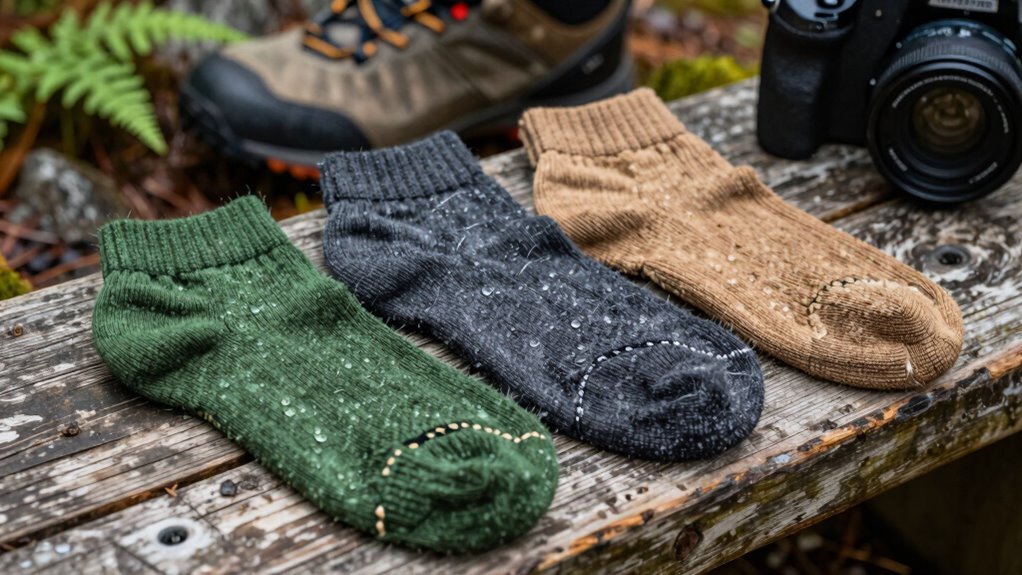
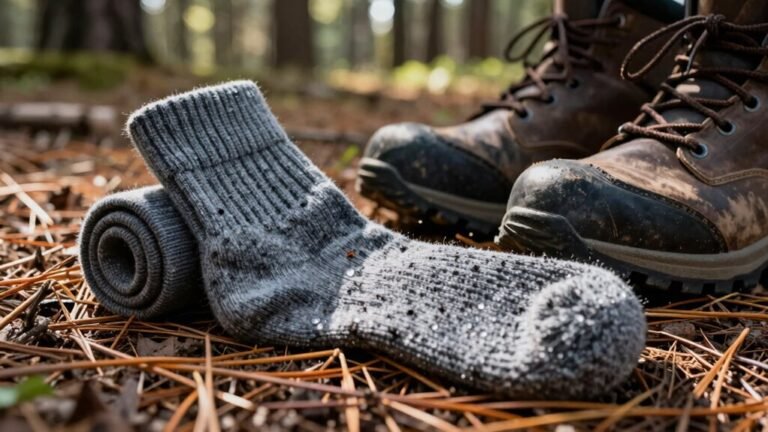
You’re going to love how the right hiking socks keep your feet happy mile after mile. Ditch the cotton—they’re like sponges for sweat—and grab merino wool blends that wick moisture, fight stink, and feel soft all day.
Pick a snug fit with no bunching to prevent blisters and discomfort. Match the cushioning level of your hiking socks to the terrain and your boot type so your feet stay supported and comfortable.
Think of hiking socks as tiny bodyguards for your feet, protecting them with every step. And there’s a whole trail of smart tips just ahead to keep every step blister-free.
Why Hiking Socks Matter More Than You Think
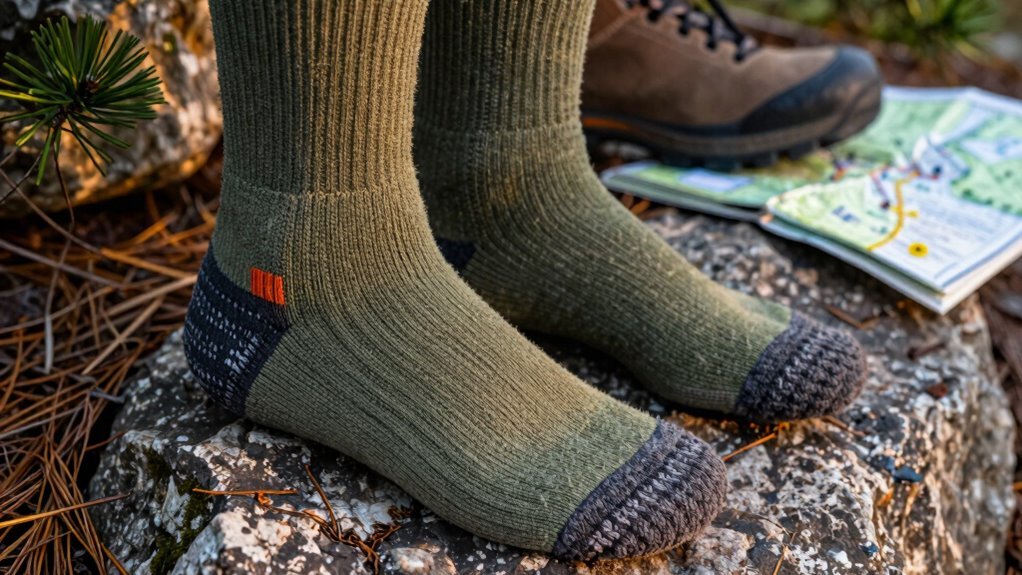
Ever wonder why your feet don’t stage a full-on rebellion halfway through a hike?
It’s probably thanks to your hiking socks doing the heavy lifting.
They’re not just fancy footwarmers—they’re your secret weapon.
You stay steady because moisture-wicking fibers keep sweat under control, so hot spots don’t flare up.
When you’re crushing mile after mile, your socks cushion every step, reduce friction, and prevent blisters like tiny bodyguards.
Merino wool sneaks in by feeling soft, never soggy, while keeping your feet at the Goldilocks temperature—never too hot, never too cold.
And with a snug, elastic fit, there’s no slipping or pressure points to ruin your groove.
You’re not just walking—you’re gliding.
With technical socks, you dodge blisters, chafing, and fatigue without even trying.
Bottom line? Your feet stay happy, healthy, and ready for more adventure.
Who knew socks could be this heroic?
Merino wool and synthetic blends offer superior moisture-wicking and odor resistance, making them ideal for extended wear on the trail.
Materials That Make a Difference
Your sock drawer’s dream team—merino wool, nylon, polyester, and spandex—isn’t just throwing a fibers-only party; they’re teaming up to keep your feet happy mile after mile.
Merino wool’s soft, breathable, and great at wicking sweat, so your toes stay dry and blister-free.
It even fights odors—yes, it’s okay to wear them twice (we won’t tell).
Nylon adds toughness and springs back after every hike, while polyester dries fast and keeps moisture moving.
Spandex? That’s the sneaky hero giving your socks a snug, wrinkle-free hug.
Together, they blend strength, comfort, and smart performance.
Skip cotton—it’s a moisture magnet and loves blisters way too much.
Look for 60%+ merino with nylon and a touch of spandex for all-season magic.
Many top performers, like the Darn Tough Hiker Full Cushion, back their quality with a lifetime guarantee.
These high-fiving fibers don’t play games; they’ve got your back—or rather, your feet—on every trail twist.
Understanding Sock Heights and Their Uses
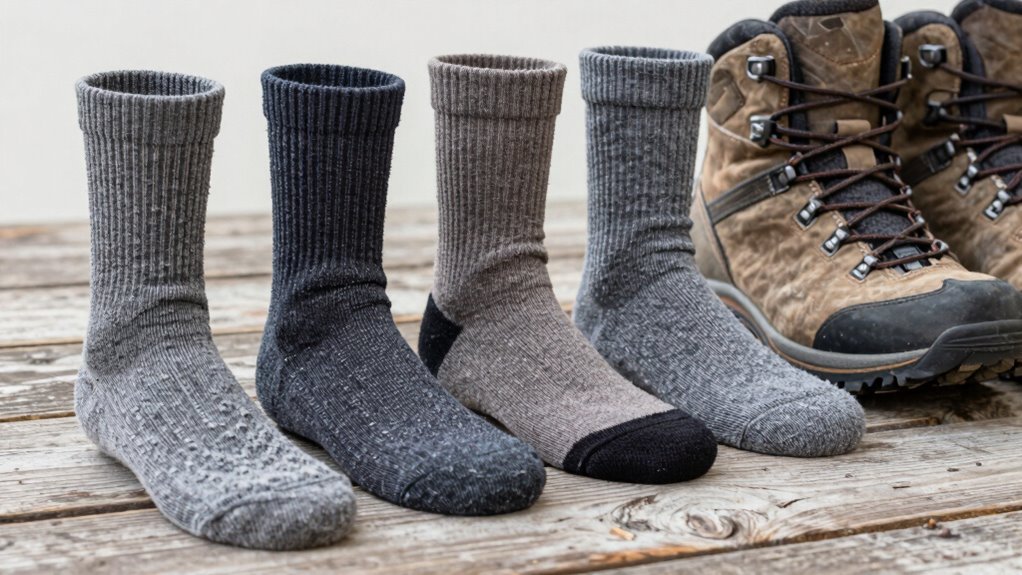
Why do sock heights matter when you’re hitting the trail?
Because stepping into the wrong length can mean blisters, chafing, or sweaty misery.
No-shows are great for warm days and low-cut shoes, but skip ’em with boots—they won’t protect your ankles.
Ankle socks add a little more coverage and work well for day hikes or casual wear.
Need real protection? Go crew—these classics sit a few inches above your ankle, guard against boot rub, and handle most terrain like champs.
Micro crew socks? Think of them as crew’s sleek cousin—just enough height to shield your skin without overheating.
And when winter hits or you’re trekking through snow, knee-highs bring warmth, support, and full-calf coverage.
Pick smart, hike happy—your feet will thank you when they’re blister-free and comfy all day long.
Crew-length socks are especially effective at preventing blisters when paired with hiking boots thanks to their ideal height for boot compatibility.
Cushioning Levels for Different Terrain
When the trail gets tough, your socks should be ready to rumble—cushioning isn’t just fluff, it’s your foot’s bodyguard against rocks, roots, and relentless uphill climbs.
Pick the right level and you’ll hike happier, blister-free, and full of spring in your step.
- Light cushioning keeps your feet cool and dry on sunny, short hikes with smooth paths—it’s like a cool breeze for your toes.
- Medium cushioning is your go-to buddy for most trails, offering sweet spot comfort with extra padding where you need it most.
- Heavy cushioning wraps your feet in cozy armor, perfect for rocky ridges, snow, or when your backpack feels like a small elephant.
- Match your cushion to the terrain, weather, and mileage—your dogs will thank you at the trailhead.
How Fit Affects Performance and Comfort
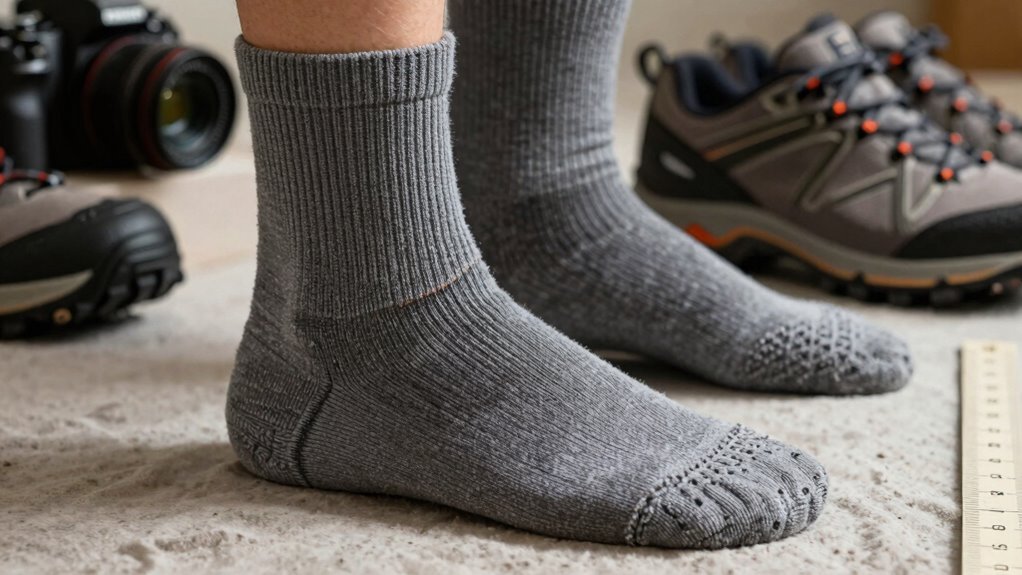
A well-cushioned sock might handle the bumps and bruises of rugged trails, but none of that matters if it doesn’t fit right—like bringing a superhero to a dance-off and expecting kicks.
You’ve got to match sock size to your actual foot, not your boot, since boots often run bigger.
Socks sized 42–43 usually rock with size 44 boots for that sweet, snug fit.
When your sock hugs your foot like a second skin—no wrinkles, slipping, or tight spots—you’re golden.
The heel lines up perfectly, there are no pressure points, and blisters don’t stand a chance.
Good fit means less fatigue, better circulation, and no hot spots, even on long hauls.
Whether you pick thin, medium, or thick, a precise fit keeps everything working smoothly.
It’s not just comfort—it’s trail confidence, step after step.
Pairing Socks With Your Hiking Boots
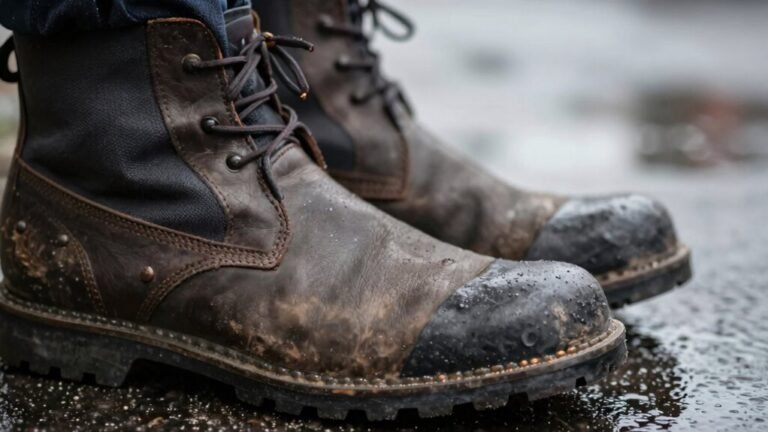
Even if you’ve got the toughest hiking boots on the trail, skimping on sock pairing is like showing up to a campfire cookout with a fork but no marshmallows—half the fun’s missing.
—half the fun’s missing.
- Pick a blend with 50–70% merino wool and a touch of stretch—your feet will stay warm, dry, and blister-free.
- Go thin in summer, especially with lightweight boots; thick socks can bunch and tire you out fast.
- Match crew-length socks to most boots—they sit just right, protecting your ankles without rubbing.
- Size down slightly in socks for a snug fit; they should hug your heel and cushion key spots without slipping.
Whether you’re scrambling in the sun or trudging through snow, the right sock-boot combo feels like your feet are in on the adventure too.
Don’t leave them hanging.
Caring for Your Hiking Socks to Extend Lifespan
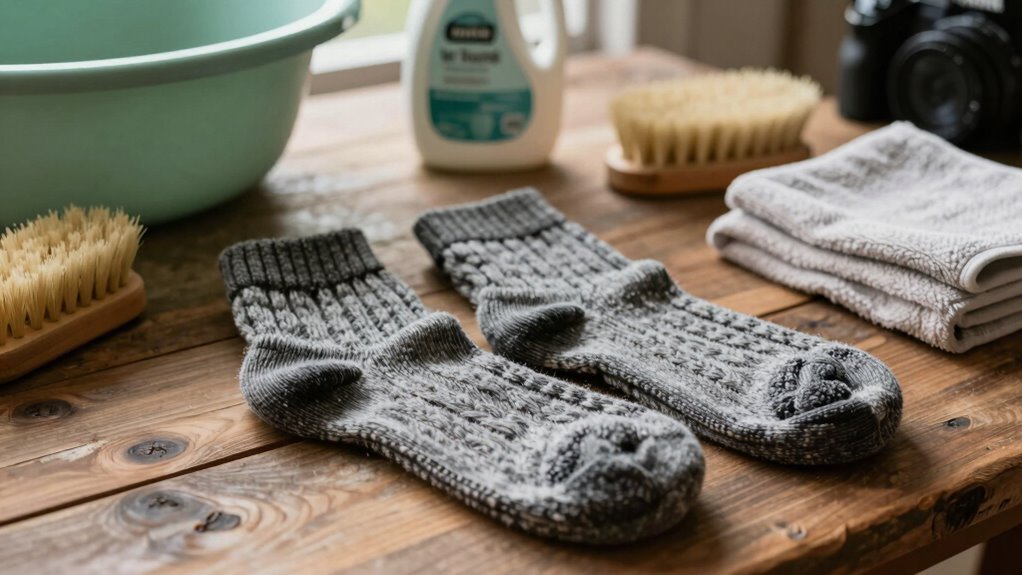
Give your hiking socks some love, and they’ll return the favor—mile after mile.
Wash them inside out in cold water (no hotter than 86°F) with a mild, neutral-pH detergent—skip the bleach and softener, they’re fiber foes!
If you’re out in the wild, hand wash by gently kneading and rinsing thoroughly.
Always air dry flat—no machine drying or ironing, unless you enjoy turning cozy socks into sad, shrunken relics.
At camp, turn them inside out nightly and crumple them in your hands to fluff and freshen.
Change socks when your feet feel damp—because sweaty toes scream for rescue!
Store them flat, folded neatly, not balled up like laundry grenades.
Inspect regularly and ditch threadbare pairs before they betray you with blisters.
And hey, rotate at least two pairs on hikes—because even socks need a breather!
Frequently Asked Questions
Can I Wear Hiking Socks With Regular Shoes?
Yeah, you can totally wear hiking socks with regular shoes!
They’ll keep your feet dry, comfy, and blister-free, even if you’re just strolling through town.
Just pick a low-cut style like no-show or ankle so they don’t peek out.
Go for moisture-wicking materials like merino or synthetics—skip cotton, unless you enjoy soggy socks.
Think of it as giving your everyday shoes a hiking upgrade—your feet will thank you!
How Many Pairs Should I Bring on a Hike?
You’ll usually need 1 to 3 pairs, and here’s a fun fact: 70% of hikers say swapping socks mid-hike boosts comfort big time!
Bring one pair for day hikes, two for weekends, and three for long or wet trips.
Rotate them to keep feet dry, avoid blisters, and feel like a happy trail-dancing llama.
Wool or synthetic, never cotton—your feet will thank you, sweat or not!
Are Expensive Hiking Socks Worth the Price?
Yeah, expensive hiking socks are totally worth it—you’ll skip the blisters, stink, and sock graveyards.
They hug your feet just right, wick sweat like magic, and bounce back hike after hike.
Sure, they cost more upfront, but you’re not buying a new pack every month.
Plus, some brands replace them forever—how cool’s that?
Your feet will thank you, especially when you’re miles in.
Happy feet = happy trails!
Do I Need Different Socks for Winter Hikes?
Yeah, you do need different socks for winter hikes—regular socks just won’t cut it when the frost hits.
You’ll want merino wool or thermal blends that keep your toes warm, even when they’re sweaty.
These bad boys wick moisture like magic, so no more swamp feet or blisters.
Plus, they’re cozy enough to hug your feet all day.
Trust me, your future self will thank you when you’re not doing the “frozen toes dance” on the trail.
Can I Use Compression Socks for Hiking?
Yeah, you can totally use compression socks for hiking—and they’re a game-changer on long, tough trails.
They boost blood flow, cut leg fatigue, and help you bounce back faster.
Just make sure they fit snug but not sausage-like.
Skip them in freezing temps to avoid cold toes, and never sleep in them—your legs aren’t fans of 24/7 squeeze parties.
Perfect for big mileage or if your legs get tired easily.
Conclusion
You’ve got this! The right hiking socks can feel like a bear hug for your feet—seriously, they might just save your hike. From moisture-wicking materials to perfect cushioning, every detail matters. Pair ‘em right with your boots, treat ‘em kindly, and they’ll last trail after trail. Don’t overlook the little things—they make walking on clouds feel possible, even up a muddy mountain. Now go step out, sock game strong!
References
- https://pmc.ncbi.nlm.nih.gov/articles/PMC6572579/
- https://www.stio.com/blogs/hiking-gear/what-are-hiking-socks
- https://tabiouk.com/blogs/news/the-science-of-comfortable-socks-materials-and-technology
- https://www.rei.com/learn/expert-advice/backpacking-socks.html
- https://us.giesswein.com/blogs/news/why-merino-wool-socks-are-the-best-choice-for-sports
- https://www.pcta.org/2024/the-benefits-of-wearing-merino-wool-in-the-backcountry-93576/
- https://www.outdoorgearlab.com/topics/shoes-and-boots/best-hiking-socks
- https://soxs.co/en/blog/hiking-socks-comfort-and-support-for-every-hike/
- https://mountaineerjourney.com/blog/best-hiking-socks
- https://wildlandtrekking.com/wildland-gear-guide/best-hiking-socks/