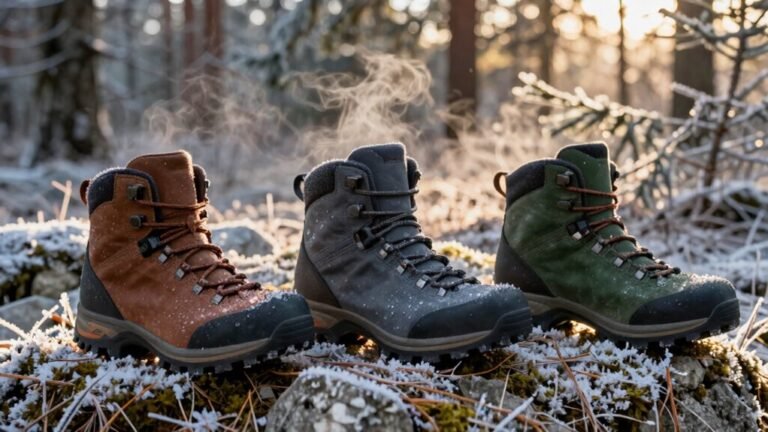
How to Use Hiking Socks the Right Way
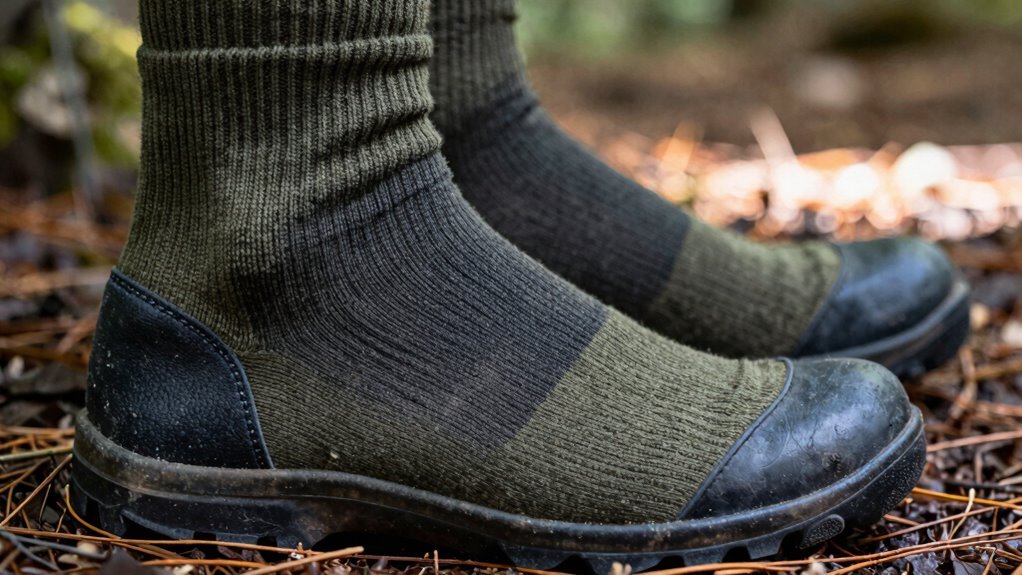
Ditch cotton and grab merino wool or smart blends that wick sweat, fight stink, and keep your feet happy. How to use hiking socks the right way starts with choosing moisture-wicking materials that protect your feet on every trail.
Fit snug but not tight—bunching causes blisters, and nobody’s got time for that. Try a slick liner under a cushy outer sock; double layers slash friction and boost comfort.
Match sock height to your boots, wash them gently, and swap out worn pairs before they quit on you. Stick around—there’s a whole world of foot-love secrets waiting to be uncovered.
Choose the Right Material for Your Conditions
Ever wonder why your feet feel like they’re on a moisture-packed rollercoaster during a hike?
It’s all about the sock material.
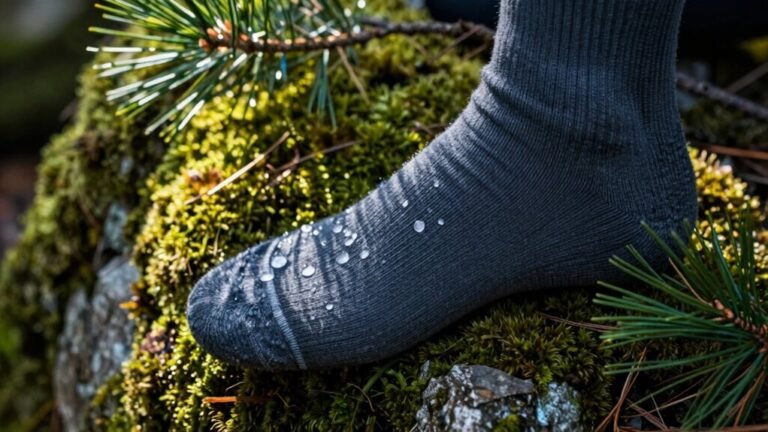
Ditch the cotton—it soaks up sweat like a sponge and never dries, turning your boots into bacterial bathhouses.
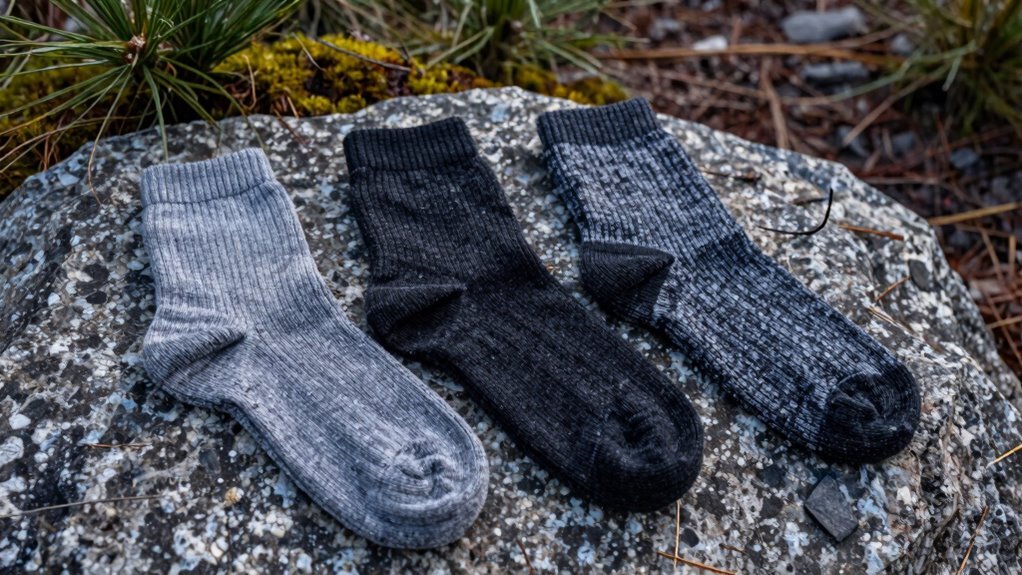
Instead, grab merino wool; it wicks moisture fast, keeps your feet cozy in cold weather, and won’t stink after day three.
It’s soft, itch-free, and naturally fights funk.
For rugged trails, blends rock: merino mixed with nylon or polyester adds toughness and speeds up drying.
Coolmax and olefin fibers push sweat outward, while a touch of spandex keeps socks snug and bunched-free.
Hot hikes? Go lightweight and breathable.
Winter trek? Up the wool content for serious warmth.
Your feet aren’t just along for the ride—they’re the VIPs.
Treat them right with smart fabric choices, and every step will feel lighter, drier, and way more fun.
Many top performers, like the Darn Tough Hiker Full Cushion, use a merino wool, nylon, Lycra spandex blend for optimal balance of comfort, durability, and moisture management.
Prioritize Proper Fit and Sizing
One size definitely doesn’t fit all when it comes to hiking socks—your feet deserve a custom fit that keeps them happy mile after mile.
Ditch the guesswork: measure your foot from heel to longest toe, because sock sizes go by inches, not shoe sizes.
That sneaker you sized up in? It doesn’t mean your socks should swim.
Aim for snug but not tight, with the heel cup hugging your heel and no bunching.
Wrinkles mean blisters—hello, hot spots!
If you’re between sizes, size down; extra fabric’s a no-go.
Wide feet? You might need to bump up a size for comfort.
Match sock height to your shoe or boot—no-show for trail runners, crew or over-the-calf for higher boots.
When in doubt, REI’s experts can measure you.
Your feet will thank you with every step.
FITS Sock Size Medium = Shoe Size 6 – 8 men’s and 7½ – 9½ women’s.
Happy trails—and happy toes!
Use the Double-Layer Sock Technique
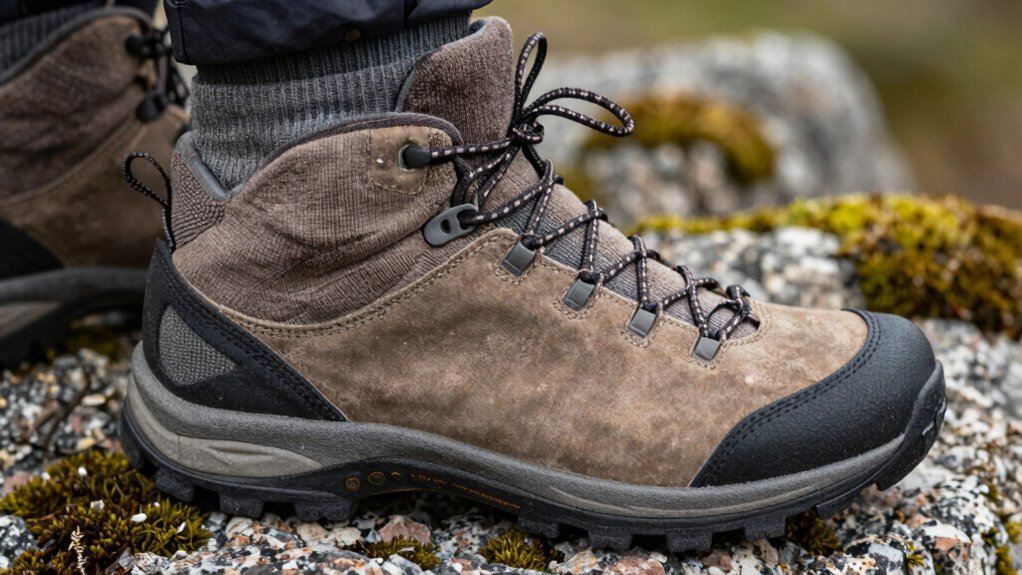
You’ve got the perfect fit dialed in—snug heel, no bunching, and the right height for your boots—so now let’s kick things up a notch.
Try the double-layer sock trick: a slick liner under a cushiony outer sock. Friction moves from your skin to between the socks, so blisters don’t stand a chance.
Sweat? The inner layer shunts it away while the outer one soaks it up and lets it evaporate—dry feet are happy feet!
That extra layer also cushions your soles, making rocky trails feel like sidewalks.
It even helps regulate temperature, keeping you warm when it’s cold and cool when you’re sweating buckets.
Studies show hikers and soldiers using double socks get fewer blisters—like, way fewer.
One found blister rates dropped from 59% to just 22%!
Plus, who doesn’t want to hike 100 miles without a single hot spot?
Your feet will thank you—no drama, just adventure.
Friction management is central to blister prevention, making the double sock method especially effective during long hikes.
Pair Socks With the Right Footwear
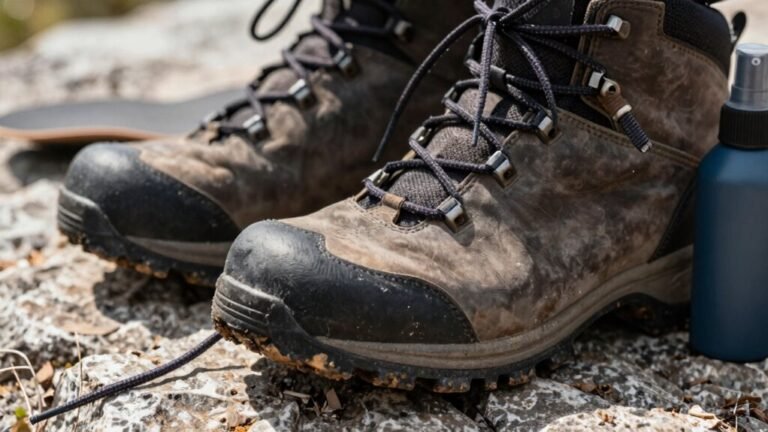
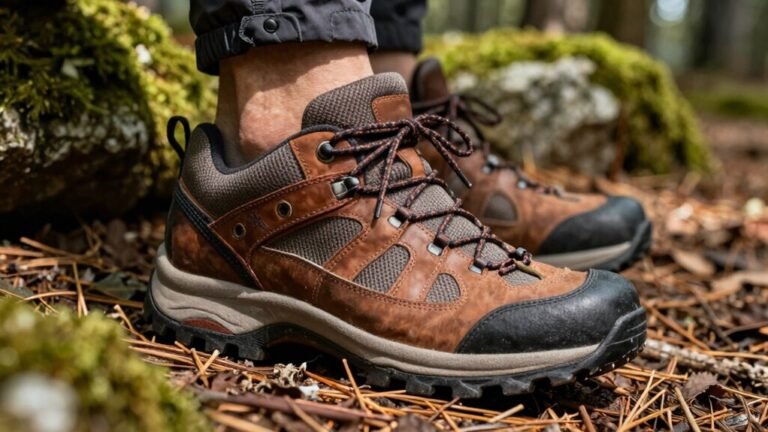
Matching your socks to your boots isn’t just about looks—it’s your secret weapon for happy feet on the trail.
Grab crew socks for most hiking boots; they rise just above your ankle to fight friction.
If you’re rocking ankle or mid-cut shoes, go with quarter or micro crew socks—snug, breathable, and just enough to block debris.
No-show socks? Only with low-cut runners, and maybe a prayer they stay down.
Tall boots demand over-the-calf socks, especially in cold weather—your calves will thank you.
Watch for bunching; your sock shouldn’t puff like a medieval pantaloone.
Match cushioning to your journey: plush for rocky terrain, light for summer hikes.
Merino wool blends? Magic. They wick sweat and smell better than gym socks on day three.
Try combos at home first—because blisters on mile two are *so* not part of the adventure.
Maintain and Replace Socks Regularly
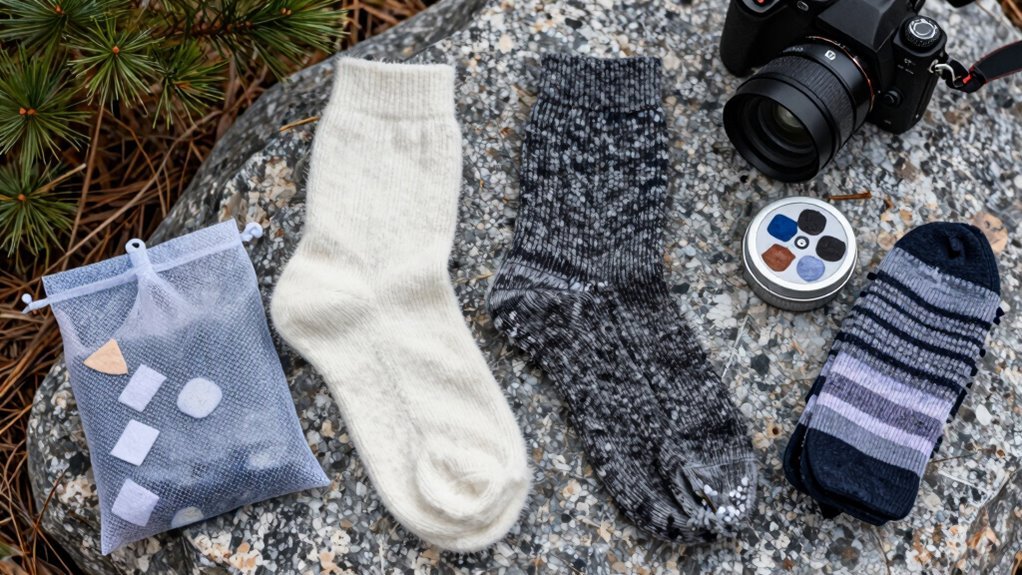
Tossing your hiking socks in the laundry just once doesn’t cut it if you want them to last—treat them right, and they’ll treat your feet even better.
Turn them inside out to zap trapped gunk, wash in cold or warm water with gentle, pH-neutral soap, and skip the bleach—your socks (and nose) will thank you.
Air dry them flat, away from blazing sun, or toss in the dryer only if the label says it’s safe.
On the trail, swap socks midday to ditch sweat and grit, and give woolies a cold rinse in a stream if they get funky.
Hang them on your pack like tiny hiking flags—sunlight kills stink bugs!
Watch for thin spots, pilling, or sagging: these mean your socks are ready for retirement.
When cushioning quits or smell sticks no matter what, just toss ‘em.
Good socks love your feet—so show yours some love back!
Frequently Asked Questions
Can I Wear Hiking Socks With Sandals?
Yes, you can wear hiking socks with sandals—just pick the right pair!
Match taller socks to supportive sandals, and go for lightweight, breathable materials like merino wool.
They cushion your feet and prevent blisters, especially on rough trails.
Avoid cotton—they’ll stay soggy and stink.
Slip-on trail sandals? Try split-toe socks.
It’s like giving your feet a cozy high-five while staying cool.
Who knew fashion could be this comfy?
Should I Wear Hiking Socks in the Winter Only?
No, you shouldn’t wear hiking socks in winter only—they’re way too handy for just one season!
You’ll love how they keep your feet warm in snow *and* cool on scorching summer trails.
Thanks to smart wool fibers, they kick moisture away and stay fresh, even after days of hiking.
Honestly, your feet will thank you year-round—don’t shortchange them to a winter cameo!
Are Wool Hiking Socks Itchy?
No, wool hiking socks aren’t itchy—if you choose the right kind!
Merino and alpaca wool are soft, fine, and cozy, not scratchy like old-school wool.
They bend with your skin instead of poking it, and they wick sweat like magic, so your feet stay happy.
Think clouds, not couch cushions.
Plus, no lanolin means fewer itches.
Your grandma’s itchy wool sweater jokes? Totally outdated.
Modern wool feels so good, you’ll forget you’re wearing socks at all.
Can I Use Regular Socks for Hiking?
No, you really shouldn’t use regular socks for hiking—they trap moisture and rub your feet raw.
Cotton holds sweat like a sponge, turning pebbles into blisters fast.
Hiking socks? They wick sweat, cushion your soles, and fight friction like tiny foot superheroes.
Think of them as your hike’s MVP: they’ve got arch support, tough toes, and won’t quit when the trail gets gritty.
Your feet will thank you—seriously, skip the cotton catastrophe!
Do Hiking Socks Prevent Blisters Completely?
Nope, hiking socks won’t make you blister-proof—they’re more like bodyguards than force fields.
They reduce friction, wick sweat, and cushion hotspots, but if you grind your foot all day, you’ll still burn through even the toughest pair.
Think of them as co-pilots, not miracle workers.
Pair smart sock choices with good boots, dry feet, and quick fixes, and you’ll hike happier—just don’t skip the moleskin backup!
Conclusion
You’ve got this! Slip on the right socks, and your feet will practically throw a party. Think of blisters as uninvited guests—keep them away with smart choices. Good socks are like trusty sidekicks, working behind the scenes so adventures feel effortless. Feet stay happy, hikes stay epic. A little care goes a long way, so treat your gear kindly. Now, go make memories—one joyful step at a time.
References
- https://mountaineerjourney.com/blog/best-hiking-socks
- https://wildlandtrekking.com/wildland-gear-guide/best-hiking-socks/
- https://www.wta.org/news/magazine/features/how-to-pick-the-right-hiking-socks-for-you
- https://www.rei.com/learn/expert-advice/backpacking-socks.html
- https://pantherlakecampingresort.com/on-the-trail-what-socks-should-i-wear-hiking/
- https://halti.com/pages/tips-for-choosing-the-right-socks
- https://www.outdoorgearlab.com/topics/shoes-and-boots/best-hiking-socks
- https://darntough.com/collections/hiking-socks
- https://www.fitssock.com/pages/size-guide
- https://feetures.com/pages/size-and-care