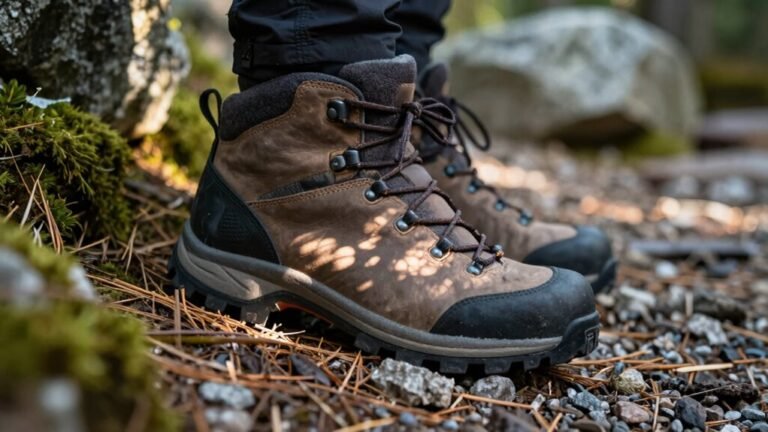
Hiking Boots Vs Trail Runners: Which Should You Pick?
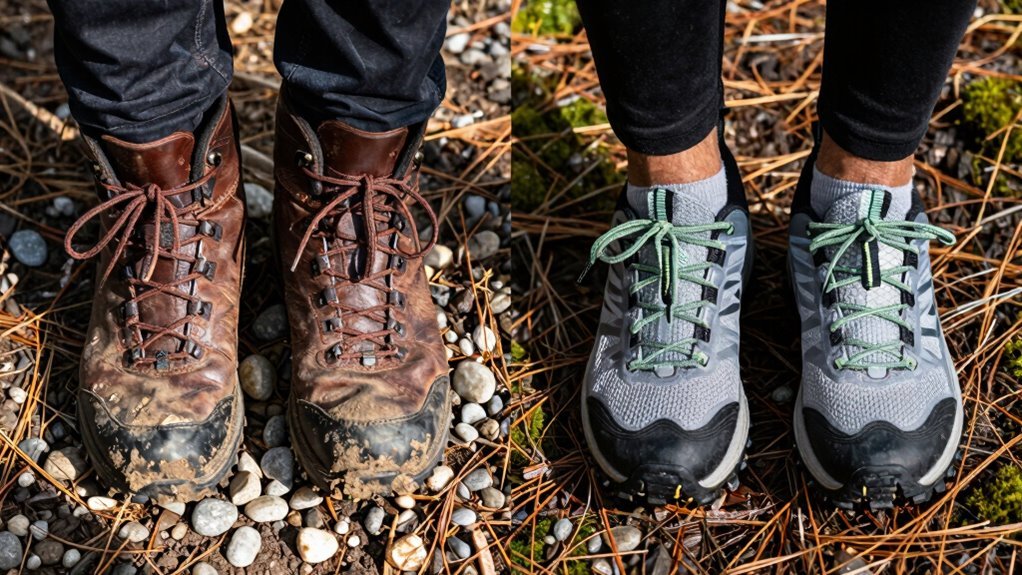
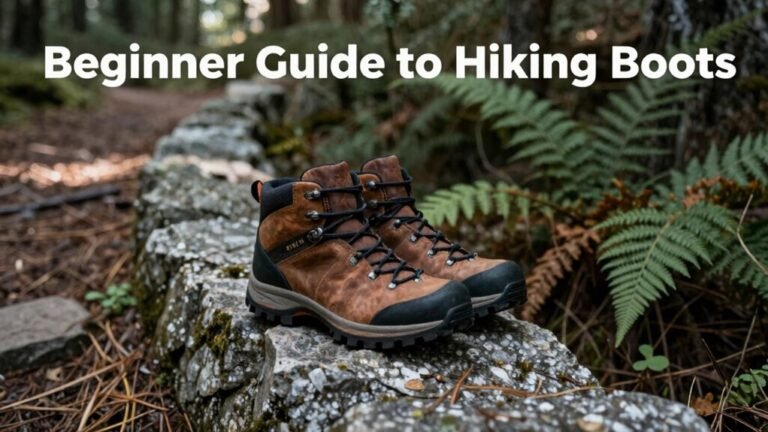
When choosing between hiking boots and trail runners, consider your terrain and pace. Hiking boots offer strong ankle support and durable traction, ideal for rocky or uneven trails.
Trail runners prioritize speed and comfort, with lightweight, breathable designs perfect for dry, smooth paths. They lack long-term durability in mud or scree compared to hiking boots.
Hiking boots excel in wet, rugged conditions, staying resilient over years. Trail runners shine in heat and on fast-paced adventures.
Your adventure style ultimately determines the best pick—whether you need the protection of hiking boots or the agility of trail runners.
Support and Stability: Ankle Protection Compared
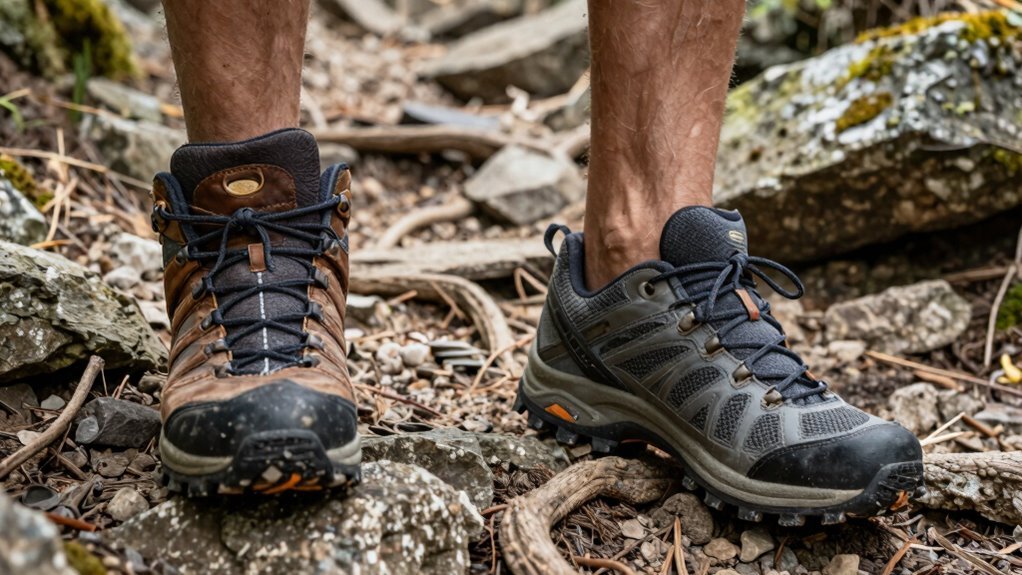
When it comes to ankle protection on the trail, hiking boots and trail runners take very different approaches—and your choice can make or break your hike.
You get more coverage with high- or mid-top boots, which wrap your ankle like a cozy hug, but don’t be fooled—stiffness underfoot matters way more.
That rigid sole fights twisting on rocky ground, giving you 5-star stability.
Trail runners score 4 stars, move freely, and let your ankles flex and strengthen over time—like nature’s gym!
Sure, they leave you exposed to sticks and mud (gaiters, anyone?), but they also build resilience.
On rough terrain or with a heavy pack, boots shine.
But if you’re light on your feet and the trail’s kind, runners have your back—literally.
Think of boots as bodyguards and trail runners as personal trainers: both protect, but in very different ways.
Many trail runners are under 2 lb, making them exceptionally lightweight for faster movement and reduced fatigue.
Weight and Comfort: Light Steps Vs Rugged Build
Why do your feet feel like they’re clocking double time when the rest of you isn’t even breaking a sweat?
Because every extra ounce on your feet is like carrying 4–6 pounds on your back—ouch!
Trail runners weigh just 20–25 ounces, while hiking boots can tip the scales at over 3 pounds.
That’s like strapping a pair of burritos to your feet all day.
Lighter shoes mean less fatigue, smoother strides, and more miles with the same energy.
Sure, boots offer rugged build, but they can leave your legs feeling like lead after a few miles.
Trail runners? They’re like walking on clouds—snug, nimble, and way kinder on your stride.
If you’re not hauling a backpacking fortress, why drag extra weight?
Light steps win long-distance comfort, hands down.
Weight on feet has a disproportionate impact on energy expenditure, making lighter footwear a smart choice for endurance.
Traction and Grip: Performance on Different Terrains
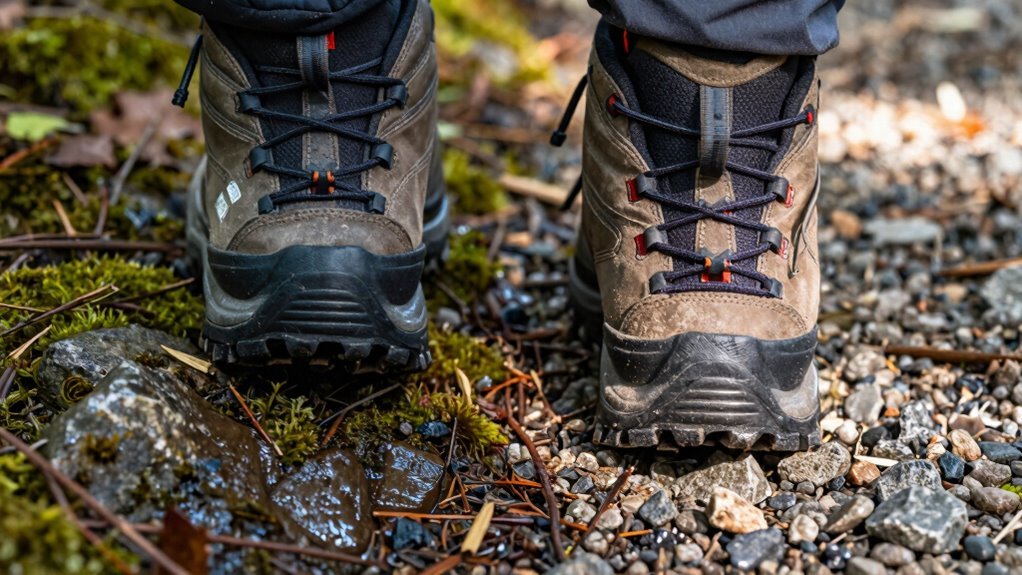
How’s your grip when the trail throws a curveball—or a slick boulder, or a mud pit?
If you’re in hiking boots, you’re laughing, not slipping.
Their deep lugs and grippy rubber chew through wet rock, gravel, and steep mud like a hungry mountain goat.
That extra weight? It actually helps you stay planted when the terrain gets nasty.
Trail runners do okay on dry, flat paths with their flexible soles and 5mm Vibram Megagrip lugs, giving you a fun, connected feel.
But when things turn rocky or slick, they can’t match the bite and stability of boots.
On brutal inclines or slippery boulders, boots keep you confident, especially with a heavy pack.
Sure, trail runners are nimble on easy ground, but when Mother Nature turns mischievous, wouldn’t you rather have max traction underfoot?
Stay upright, stay safe—boots win the grip war.
This advantage becomes especially clear when carrying heavy loads, where the excellent traction for varied terrain of hiking boots makes a critical difference.
Durability and Longevity: Handling Wear and Tear
Ever wonder why your trail runners seem to ghost on you halfway through a thru-hike?
They’re built light, not tough, and that shows fast when miles stack up.
Here’s what you’re up against:
- Your trail runners last only 500–750 miles—mesh frays, soles flatten, and cushioning caves in like a sad popcorn bag.
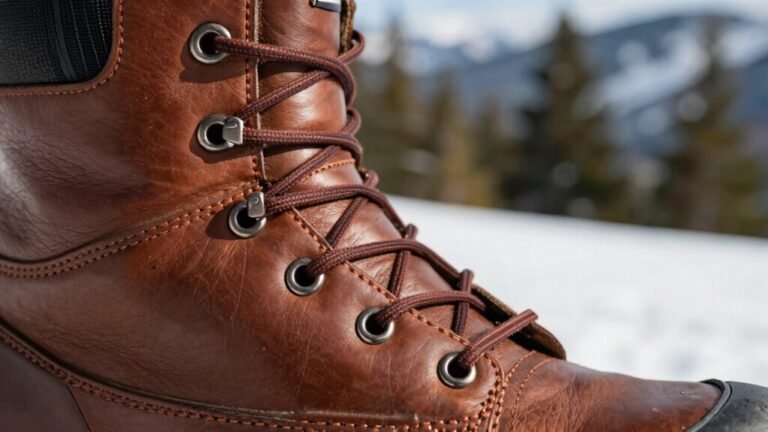
- Hiking boots laugh at that, handling thousands of miles thanks to rugged leather, beefy outsoles, and stitched welts.
- Boot materials like full-grain leather shrug off rocks and roots, while trail runner uppers unravel like bargain socks.
- Need proof? A Merrell Moab laughs at 800+ miles, while your favorite runners tap out before the finish line.
Bottom line: if you walk a lot, boots won’t bail on you like runners often do. They’re the dependable friend you want when trails get rough.
Breathability and Weather Resistance: Staying Dry and Cool
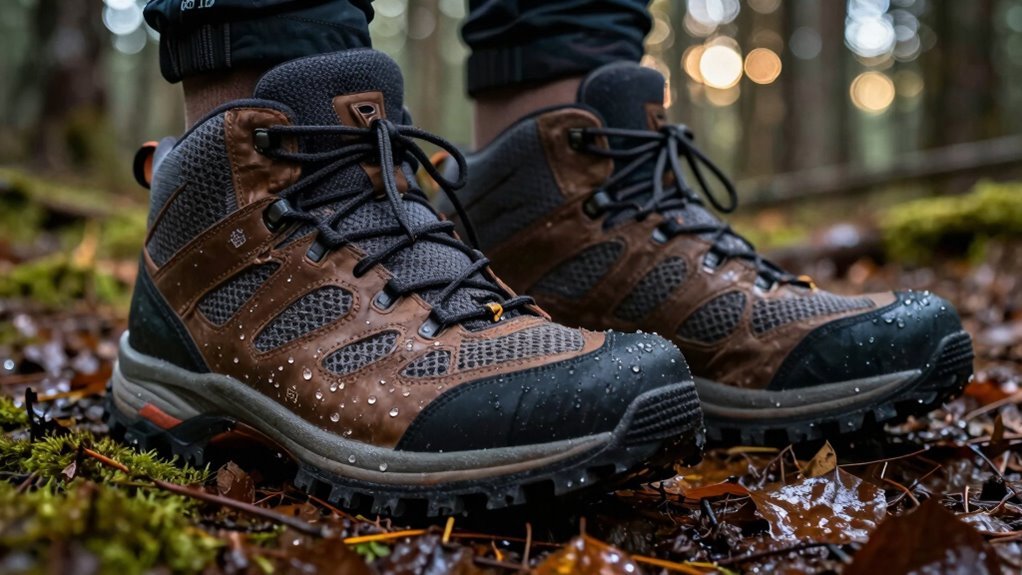
Think you’re doomed to soggy socks every time the trail turns wet or your feet overheat on a sunny climb?
Not so fast.
Trail runners shine when it’s hot and dry—those breathable mesh uppers let air flow like a breeze, wicking sweat fast so your feet stay cool and comfy.
They dry quickly too, which is great if you splash through puddles or get caught in a surprise shower.
But rain all day?
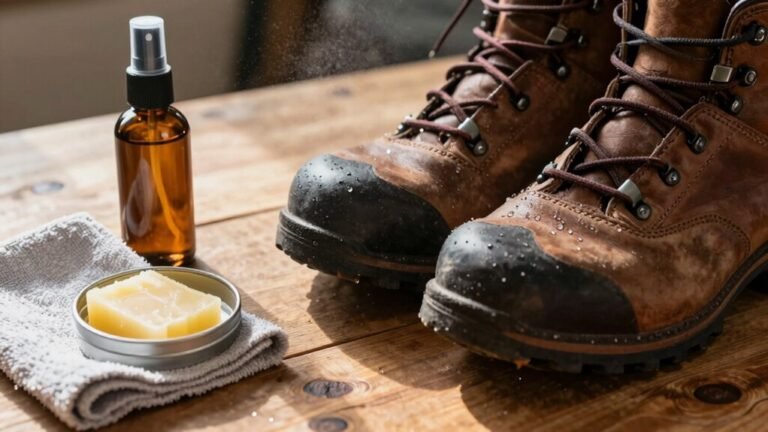
Hiking boots with Gore-Tex and sealed seams keep water out longer, especially in cold, muddy, or snowy terrain.
Just don’t expect to stay dry inside if you’re sweating buckets—their heavy build traps heat and moisture over time.
For most fair-weather hikes, trail runners win on comfort and airflow.
When storms loom or winter bites, reach for boots.
Matching your shoes to the weather? That’s how you stay dry, cool, and happy on every trail.
Use Case Scenarios: Matching Footwear to Your Adventure
Why let shaky footing or slow swaps hold you back when the trail’s calling?
Let’s match your kicks to your adventure like a pro:
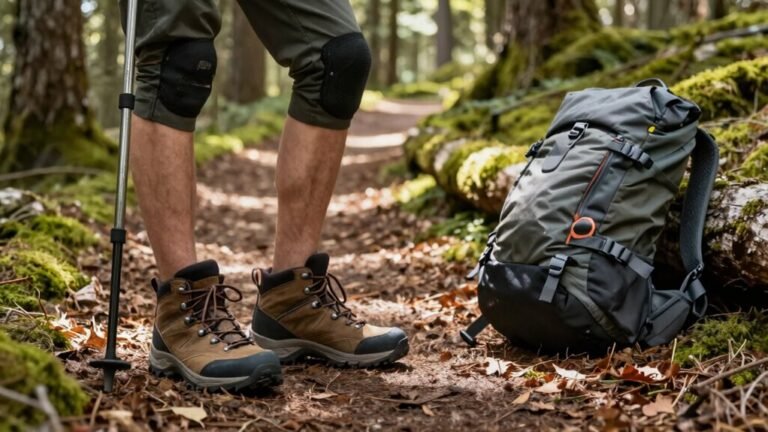
- Hauling a heavy pack through rocky zones? Grab hiking boots—they’ve got your back (and your ankles) with tough soles and solid grip.
- Booking it fast on smooth trails? Trail runners are your speed demon, light, spry, and ready to roll without a break-in dance.
- Cranking out big miles day after day? Runners keep your legs fresh and your pace zippy, even if you’ll swap pairs like socks on a thru-hike.
- Climbing slick boulders or trudging through muck? Boots shine in messy, technical messes where stability beats speed every time.
Pick your fighter, not just your favorite color—they’re not just cute, they’re trail tacticians!
Frequently Asked Questions
Can I Wear Trail Runners in the Snow?
You can wear trail runners in the snow, but only if they’re built for it—don’t expect your regular pair to keep up.
Models like the Salomon Speedcross 6 GTX or Icebug NewRun BUGrip GTX tackle snow and ice like little mountain goats with superglue on their soles.
They’ve got deep lugs, ice spikes, and waterproofing to keep you dry and stable.
Just skip the summer trail runners—they’ll freeze, slip, and leave you hopping like a penguin on ice!
Are Hiking Boots Worth the Extra Cost?
Oh, absolutely, hiking boots are worth the splurge—they’re like body armor for your feet!
You’re tackling rocky paths and lugging gear, so you want support, not a blister convention.
They last longer, grip like a pro, and won’t quit when trails get nasty.
Yeah, they cost more, but think of all the high-fives your feet will give you.
Worth every penny, promise!
Do Trail Runners Protect Against Sharp Rocks?
Yeah, trail runners can protect you from sharp rocks, especially if they’ve got rock plates—those firm inserts stop pointy stones from poking your soles.
Some even spread pressure so you won’t feel every jagged edge.
But let’s be real, they’re not magic boots.
On rocky trails, you’ll still wince if the sole’s thin.
Go for models with full-length plates or serious cushion, and your feet’ll thank you—no drama, just happy hiking!
How Often Should I Replace Hiking Boots?
Think of your hiking boots like trusty old tires—once they’re worn down, you risk a blowout.
Replace them every 500 to 1,000 miles, depending on how hard you push them.
If you’re stomping through mud, snow, or rocky trails weekly, lean toward 500.
Cracked soles, wobbly ankles, or squishy midsoles?
Don’t wait—swap them out.
Your feet will thank you, and hey, new boots mean fresh trail bragging rights!
Can I Use Hiking Boots for Running Short Distances?
Yeah, you can totally run short distances in hiking boots—no one’s stopping you if the trail gets spicy!
Just make sure they fit well and flex nicely at the forefoot.
Lightweight models with cushy soles? Perfect for quick bursts.
They won’t hug your feet like running shoes, but hey, they’ll handle rocky scrambles like a champ.
Think of them as the sturdy, slightly clumsy friend who’s great in a crisis—just don’t expect a gold medal.
Conclusion
So, which one’s right for you? If you’re day-hiking a rocky path like the trails at Colorado’s Garden of the Gods, trail runners keep you light and quick, while hiking boots shine on heavy backpacking trips through muddy, root-filled woods. You’ll love how each fits a different adventure. Think of it like shoes for school versus sneakers for gym—both great, just built for different days!
References
- https://mountaineerjourney.com/blog/hiking-boots-vs-trail-runners
- https://cruxrange.com/blog/hiking-boots-vs-trail-runners/
- https://www.outdoors.org/resources/amc-outdoors/outdoor-resources/hiking-boots-vs-trail-runners-which-is-the-best-footwear-for-the-backcountry/
- https://www.thehikinglife.com/2020/08/trail-runners-vs-hiking-boots-a-30-year-perspective/
- https://backpackinglight.com/forums/topic/22522/
- https://activetraveladventures.com/hiking-boots-shoe-buyers-guide/
- https://www.rei.com/learn/expert-advice/hiking-boots-vs-trail-runners-the-great-debate.html
- https://www.outdoors.org/resources/amc-outdoors/outdoor-resources/hiking-boots-vs-hiking-shoes-vs-trail-runners-choosing-whats-right-for-you/
- https://thetrek.co/boots-vs-trail-runners-two-loyalists-compare-contrast/
- https://backpackinglight.com/forums/topic/4244/