Sun Protection on Trails: What Actually Helps
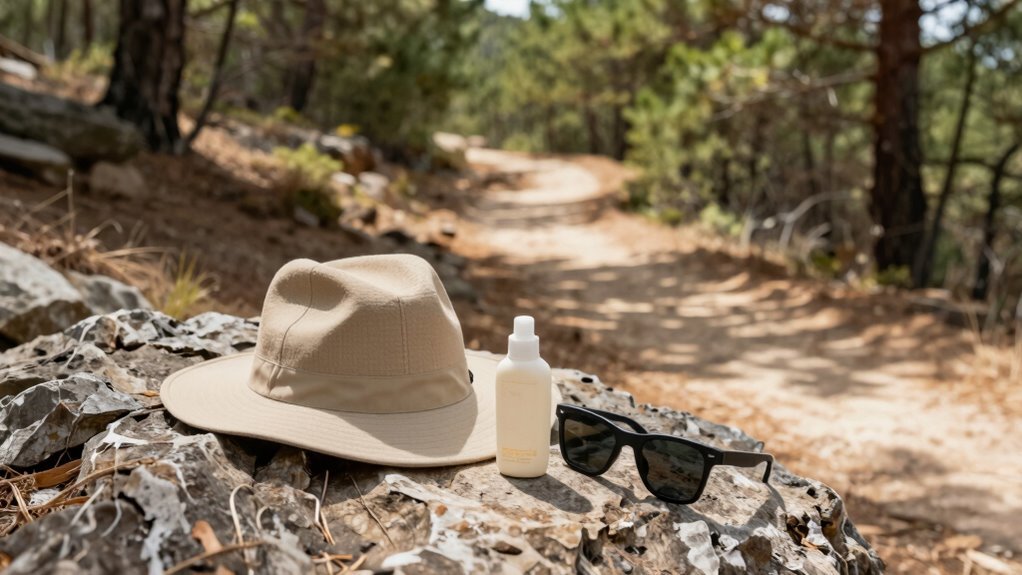
You’re hiking at 4,500 feet where UV blasts 50% harder, so sun protection on trails is critical. Skip the regular sunscreen and go for SPF 50 zinc oxide—it won’t quit when you sweat buckets.
Toss on UPF 50+ clothing and a wide-brim hat that actually shades your neck, not just your ego. These gear choices boost sun protection on trails and reduce exposed skin.
Start early to dodge midday sun, and don’t forget reflected rays off rocks and sand. Mix smart gear, timing, and reapplication, and you’ll stay protected without turning into a sunburnt tomato—there’s more where that came from.
Understanding UV Exposure on the Trail
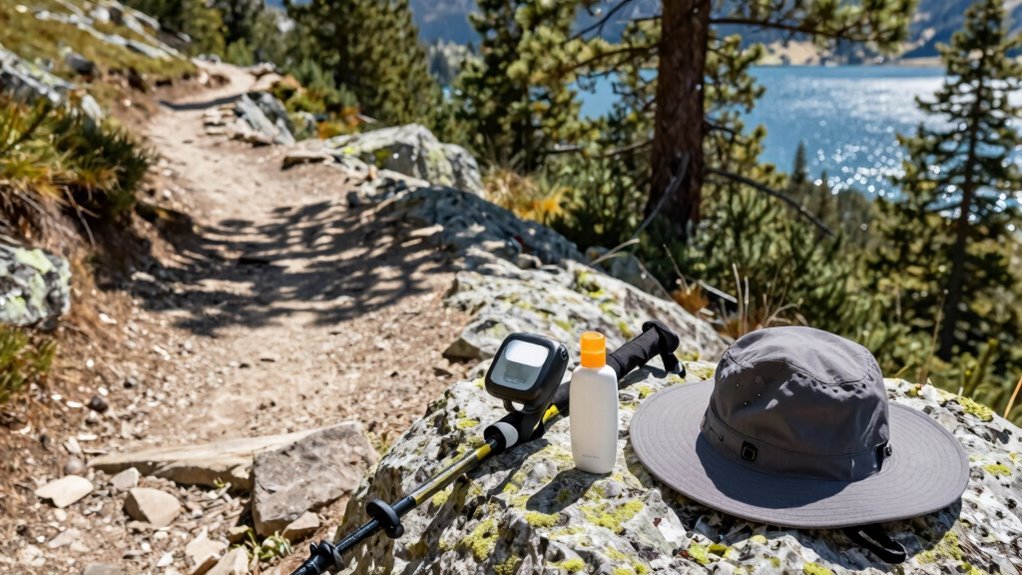
Ever wonder why the sun feels twice as fierce when you’re hiking up a rocky trail?
That’s because UV radiation jumps 6% every kilometer you climb—less atmosphere up there means less protection.
At 4,500 feet, you’re soaking in 50% more UV than at sea level!
And don’t forget the ground: sand, granite, and even snow reflect up to 80% of rays, zapping you from below like a solar sandwich.
In Arizona, trails bake under a UV index of 11+, where sunburn hits in under 10 minutes—yikes!
Even on winter hikes, the index can hit 8.
Clear skies, zero shade, and 300+ sunny days a year crank the heat.
Hike at noon, and you’re basically the main character in the sun’s spotlight.
So yeah, up high and out in the open, your skin’s working overtime.
Bask in the glow? Sure—but respect the burn.
Arizona ranks fourth nationally for melanoma incidence.
How Sweat and Altitude Impact Sunscreen Effectiveness
Where do you think sunscreen stands up when sweat starts pouring and the trail climbs into thin air?
Not great, unless you’re using a water-resistant formula.
Sweat dilutes regular sunscreen fast, rubbing it off and leaving your skin exposed—plus, it can run into your eyes and sting like crazy.
Even the best sunscreen won’t last over 80 minutes when you’re sweating buckets.
And up high? UV intensity jumps about 10–12% per 1,000 meters, so your protection gets hammered twice—by sweat and stronger rays.
Studies show some inorganic sunscreens might slightly reduce sweat on small skin patches, but overall, they don’t mess with your body’s cooling.
No, sunscreen won’t make you overheat—your body’s still got this.
Reapply often, especially at altitude, and stick with sweat-proof formulas.
Your skin (and your sunglasses) will thank you when that midday sun hits hard.
Some sunscreens may impede sweating, but this effect is typically localized and not all sunscreens have the same impact.
Choosing the Right Sunscreen for Outdoor Adventures
You just crushed the high-altitude sun game by reapplying every 80 minutes—but now it’s time to talk about what goes on your skin in the first place.
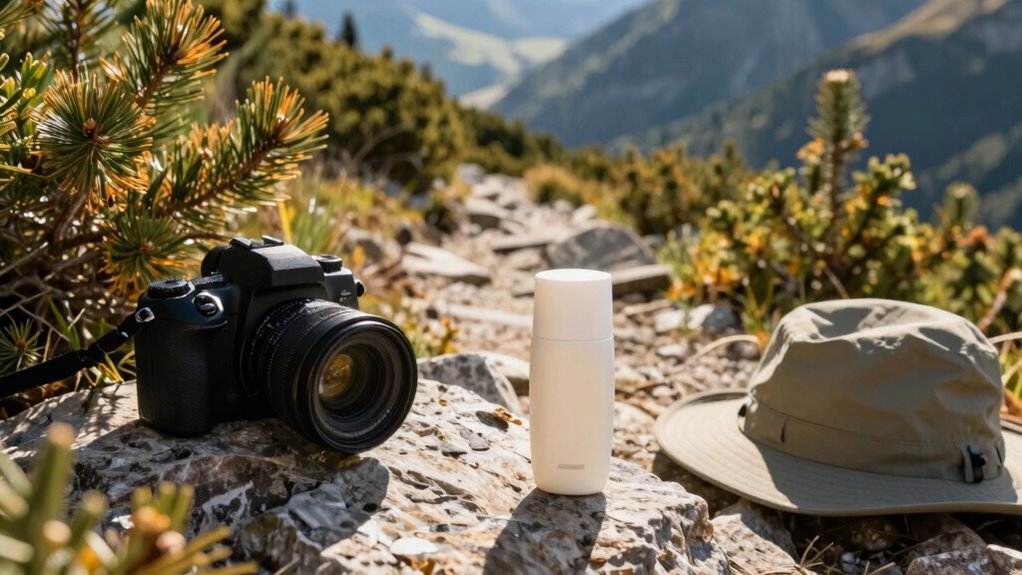
Go for mineral sunscreens with zinc oxide or titanium dioxide—they’re FDA-approved, sit gently on your skin, and deflect UV rays like tiny mirrors.
They’re kind to sensitive skin, won’t clog pores, and skip the stinging eyes (because nobody likes surprise sunscreen tears).
SPF 30 blocks 97% of UVB rays, but for intense hikes, SPF 50 gives you max tested protection right from the start.
Love the planet? Choose reef-safe zinc-based formulas without oxybenzone—they protect coral and come in eco-tubes made with recycled plastic.
Tinted options? They hide the ghostly white cast and even out your glow.
With vitamin E and shea butter, they hydrate while they protect.
Slather on, adventurer—your skin’s ready for the wild.
This formula uses the highest percentage of zinc oxide allowed by the FDA.
The Truth About UPF Clothing and Sun-Protective Gear
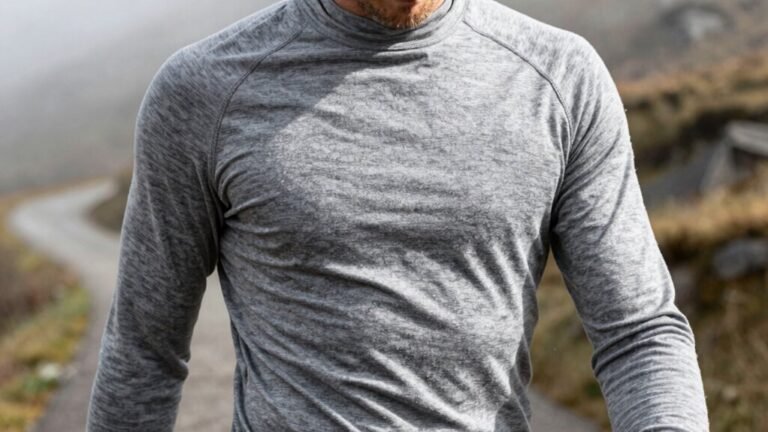
How about skipping the sunscreen smearathon and letting your clothes do the heavy lifting? UPF clothing’s got your back—literally—by blocking harmful UVA and UVB rays without the sticky reapplication. Unlike regular tees (which might only offer UPF 5), sun-protective gear is rated to keep you shielded, even when it’s cloudy or you’re splashing in water.
Here’s why UPF gear rocks:
- UPF 50+ blocks 98% of UV rays—that’s next-level armor.
- Dark, tight-woven fabrics last longer and protect better, especially when wet.
- It’s low-maintenance—slip it on and go, no greasy bottles needed.
Perfect for hiking, swimming, or just existing outdoors, UPF wear combines comfort and smart science.
Plus, pairing it with sunscreen on exposed bits gives you total coverage.
You’re not just dressed—you’re armored, effortlessly.
Fashion meets function, and your skin wins.
Do Wide-Brim Hats Really Protect You?
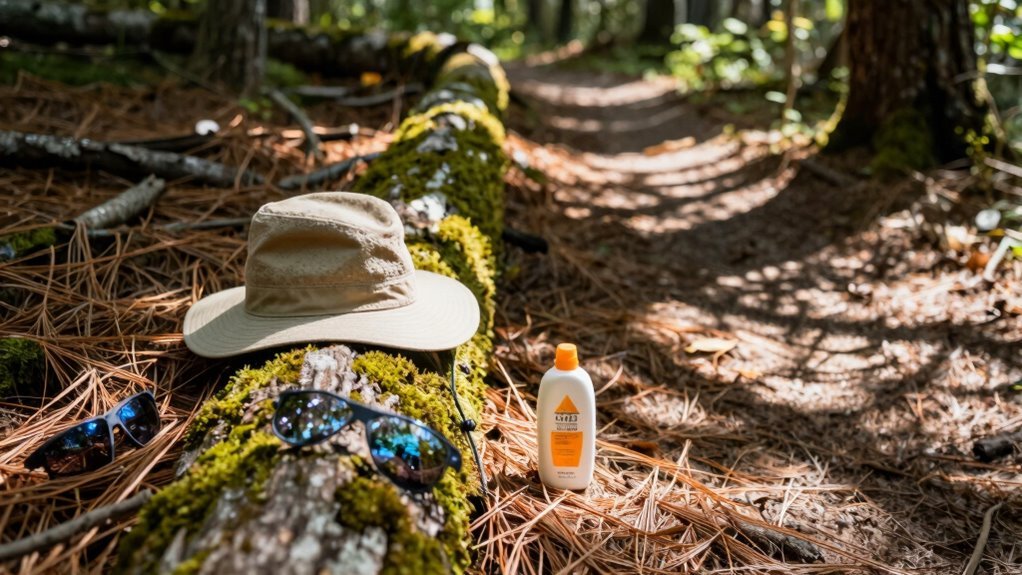
Ever wonder if that floppy hat you’re rocking is actually doing its job?
Good news: a wide-brim hat with a 3-inch (7.6cm) brim or more shades your face, ears, and neck like a pro.
Look for UPF 50+ fabric—it blocks 98% of UV rays—and skip loose weaves; hold it to the light, and if you see lots of shine through, it won’t protect you.
Hats with 360-degree brims or neck flaps? Even better.
They can boost sunburn resistance by 2–3 times, though they can’t block all UV (especially scattered or reflected rays).
Still, they outshine baseball caps, which leave ears and neck to fry.
Just don’t rely on the hat alone when UV hits level 3+.
Pair it with SPF 50+ sunscreen, and you’ve got a solid defense.
Now that’s what we call hat-trick protection!
Timing Your Hike to Minimize UV Risk
Sun’s beating down, your hat’s doing its best, but let’s be real—no amount of UPF fabric turns you into a UV-proof superhero.
You’ve got one real advantage: timing. Beat the burn by planning your moves around the sun’s schedule.
Here’s how to outsmart peak UV:
- Hike early – Start at dawn and bag miles before 10 a.m., when UV stays low and trails are cool.
- Wait it out – If you’re out midday, especially between 1–6 p.m., chill in the shade and save energy for later.
- Go late – Kick off a post-4 p.m. hike to enjoy softer light, safer rays, and stunning sunsets without the risk.
Your skin (and smile) will thank you. Smart timing means more fun, less fry—because nobody wants to be a human barbecue.
Common Sun Protection Mistakes Hikers Make
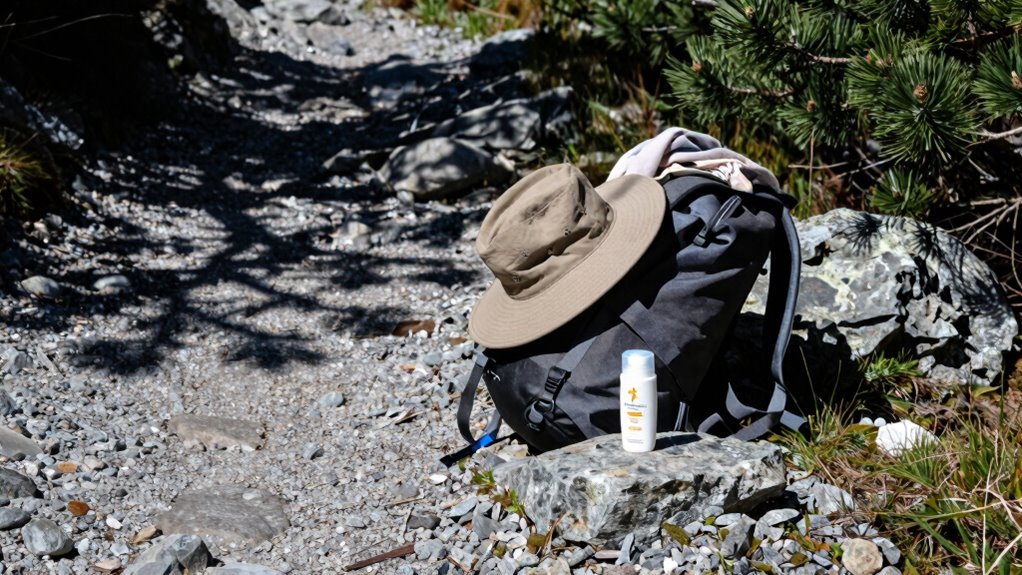
While you’re busy picking the perfect trail snack or syncing your playlist, your skin might already be screaming for backup—because skipping sun prep is more common than you’d think.
You’re not alone if you forget sunscreen; 31% of adults don’t protect themselves on hikes.
And no, slapping on SPF once won’t cut it—most apply too little and rarely reapply every two hours.
Think SPF 50 is twice as strong as SPF 25? Nope—it’s just 1% better at blocking UVB.
You also probably skip UPF clothing, opting for tank tops over long sleeves, and forget hats or UV-blocking sunglasses.
Cloudy day? UV rays still punch through.
Snow, water, and sand reflect them right onto your face.
Only 14.3% of guys regularly protect their skin—and 27% never do.
Don’t be a sunburnt statistic.
Cover up, slather on broad-spectrum SPF, and reapply like your hike depends on it—because it kind of does.
Frequently Asked Questions
Can Sunscreen Expire if It’s Never Been Opened?
Yeah, sunscreen can totally expire even if you’ve never opened it—sad, right?
The clock starts ticking from the day it’s made, not when you crack it open.
Most last about three years, but heat and sun can speed up the breakdown.
Check the date, sniff it, and watch for weird textures.
If it’s off, toss it!
Better safe than sunburned.
Is It Safe to Use Sunscreen on Lips?
Yes, it’s safe to use sunscreen on your lips—if you pick the right kind.
Go for lip balms with SPF 30+ and non-nano zinc oxide, since they’re made to be licked, not just looked at.
Skip the face sunscreen; it’s not snack-safe!
Reapply after snacking or sipping, because let’s be real, who doesn’t taste their lip balm?
Better safe than sunburned—your lips will thank you later.
An ounce of prevention beats a trip to the dermatologist any day!
Do Tattoos Need Extra Sun Protection?
Yeah, tattoos totally need extra sun protection—you’re not just saving your art, you’re saving your skin!
Fresh ink? Keep it covered, no sunscreen until healed.
Once it’s good, slap on SPF 30+ like it’s a badge of honor.
Reapply, wear shades, hats, and sleeves, and your tattoo will thank you by staying bold and vibrant for years.
Think of it as sunscreen + style = sun-safe swagger!
Can You Get Sunburned Through Car Windows While Driving?
You *can* get sunburned through car windows while driving—ironic, right, since you’re *inside*?
Side windows let in way more UVA rays than you’d think, and if you’re fair-skinned, damage can start in under 20 minutes.
UVB’s mostly blocked, but UVA sneaks through, aging skin and raising cancer risk.
Keep windows up, wear sunscreen, and maybe skip the tan hunt during your commute—your skin’ll thank you later.
Is Early Morning Sun Harmful for Hikers?
You’re safe from sunburn in the early morning, so go ahead and hit the trail with confidence!
UVB rays—the ones that burn—are still warming up, and your shadow’s taller than you, which is nature’s way of saying “all clear.”
It’s cool, fresh, and way more pleasant than midday heat.
Just don’t get too cocky—UVA rays sneak around all day, so a little sunscreen never hurts!
Conclusion
You’re charging up that sun-drenched trail, sweat dripping, wind whispering through the pines. Picture your skin shielded by smart sunscreen, a trusty wide-brim hat flapping like a superhero’s cape, and UV-blocking clothes riding shotgun. You’ve timed it just right—golden light, lower rays, nature’s perfect balance. Slip on those shades, laugh off the burn zone, and keep adventuring, because you’ve got sun safety on lock!
References
- https://skinandcancerinstitute.com/skin-cancer-risks-hikers-outdoor-enthusiasts-arizona/
- https://www.garagegrowngear.com/blogs/trail-talk/sun-uv-damage-tents-tarps-slingfin
- https://alterpm.com/2025/07/17/phoenix-summer-hiking-dangers-why-you-should-stay-home/
- https://pmc.ncbi.nlm.nih.gov/articles/PMC7662767/
- https://americanhiking.org/sun-safety/
- https://leisuregrouptravel.com/planning-some-hiking-trips-this-year-dont-forget-the-sun-protection/
- https://www.precisionhydration.com/performance-advice/performance/sunscreen-affect-sweat/
- https://pubmed.ncbi.nlm.nih.gov/38126091/
- https://www.triathlete.com/training/research-confirms-no-sunscreen-wont-make-you-overheat/
- https://worldofasaya.com/blogs/skincare-tips/the-ultimate-guide-to-finding-the-best-sweatproof-sunscreen