How to Prevent Pack Shoulder Pain
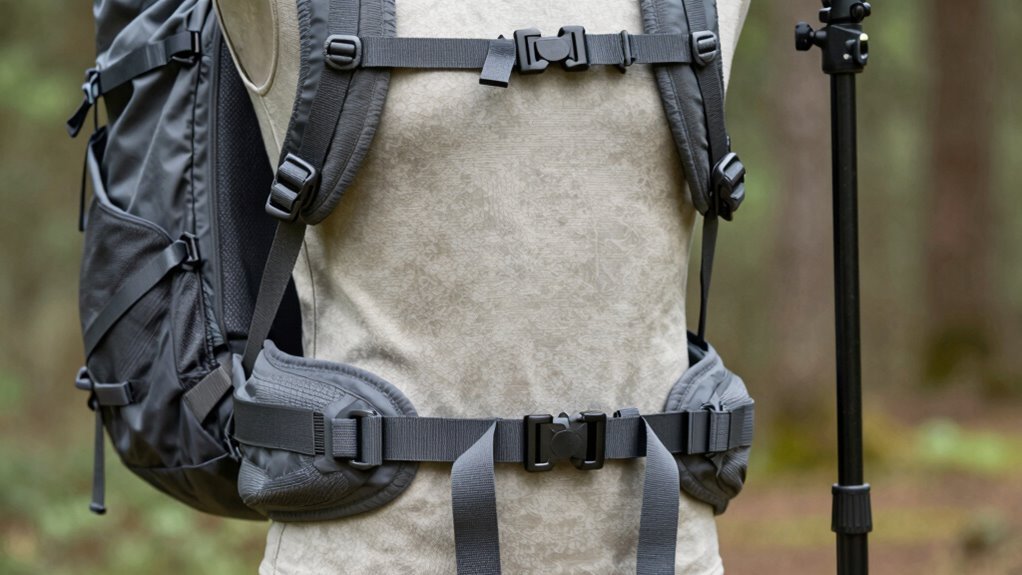
To prevent pack shoulder pain, start by tightening your hip belt snugly so most of the weight rests on your hips, not your shoulders. This simple adjustment shifts the load where your body can handle it best.
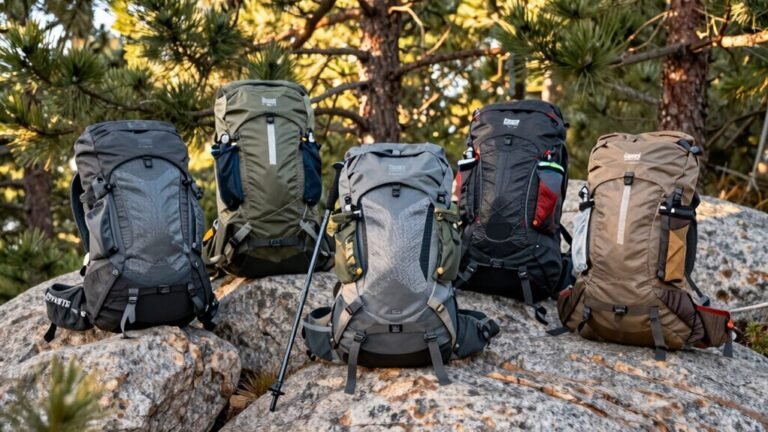
Adjust your pack to fit your torso length properly. Sit tall when fitting and load heavy items close to your back and high in the pack to maintain balance.
Strengthen your core and upper back with exercises like planks and rows. A strong foundation helps stabilize your pack and reduces strain.
Stand with good posture—shoulders back and chest up—so your body can support the pack efficiently. Trekking poles also help by reducing shoulder load and improving balance on the trail.
Adjust Your Backpack to Fit Your Torso Length
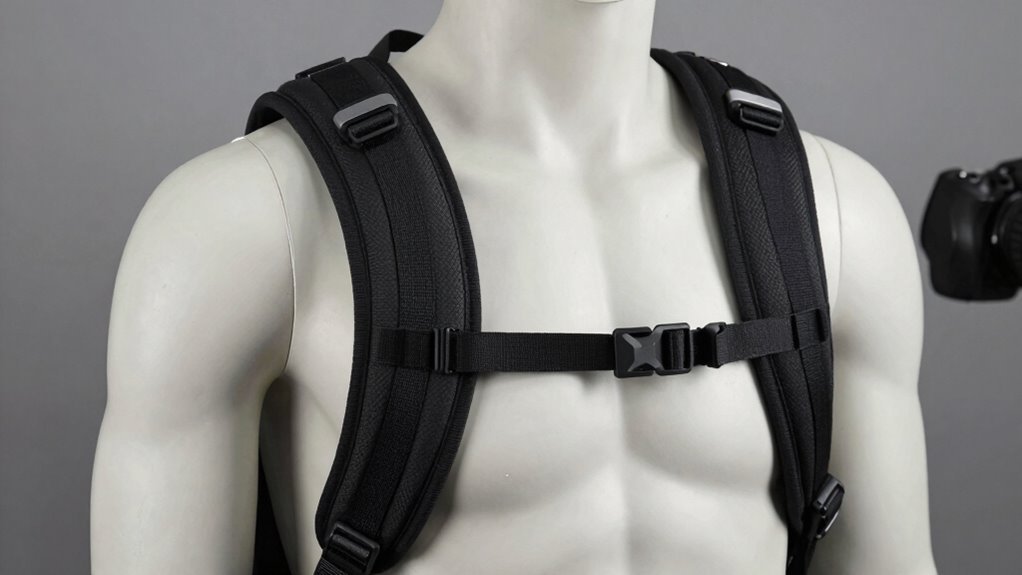
When it comes to dodging shoulder pain, how you wear your backpack matters way more than you think—so don’t just sling it on and go!
Start by matching the pack to your torso length, not your height.
Sit down and measure from your hips to your shoulder—this sweet spot guarantees the backpack sits just below your occiput, not digging into your neck.
Use the single investigator method if you’re with friends; it keeps things consistent and kinda fun.
Position the top of the pack high on your back, aligned with your shoulders, so weight stays close to your spine.
Adjust straps evenly, and remember: heavy stuff near your back improves balance.
If your pack fits your body’s blueprint—based on real data from thousands of students—you’ll stand taller, sway less, and keep pain at bay.
Seriously, your shoulders will thank you like it’s their birthday.
Use Hip Belts to Transfer Weight Off Your Shoulders
You’ve nailed the perfect backpack fit, so now let’s give your shoulders a serious break—meet the hip belt, your unsung hero on every hike.
It’s not just padding—it’s a weight-lifting wizard, shifting up to 80% of the load from your aching shoulders to your strong hips.
Even with lighter packs, you’re still offloading 25%, making your 40-pound burden feel like a breeze.
Pop that padded belt snug around your hips or just above your hips, tighten it till the weight lifts off your shoulders, and boom—instant relief.
Wider, pivoting belts work best, moving with you and spreading pressure so nothing digs in.
They keep your stride smooth, reduce joint stress, and let your spine chill out.
Sure, skip it under 20 pounds, but once you’re loaded up, your hips were made for this.
Your shoulders will thank you—no more screaming halfway up the trail!
A properly adjusted hip belt ensures weight rests on your hips, not your shoulders, and when fitted right, you’ll experience that magical feeling of comfort many describe upon correct use.
Pack Strategically for Balanced Load Distribution
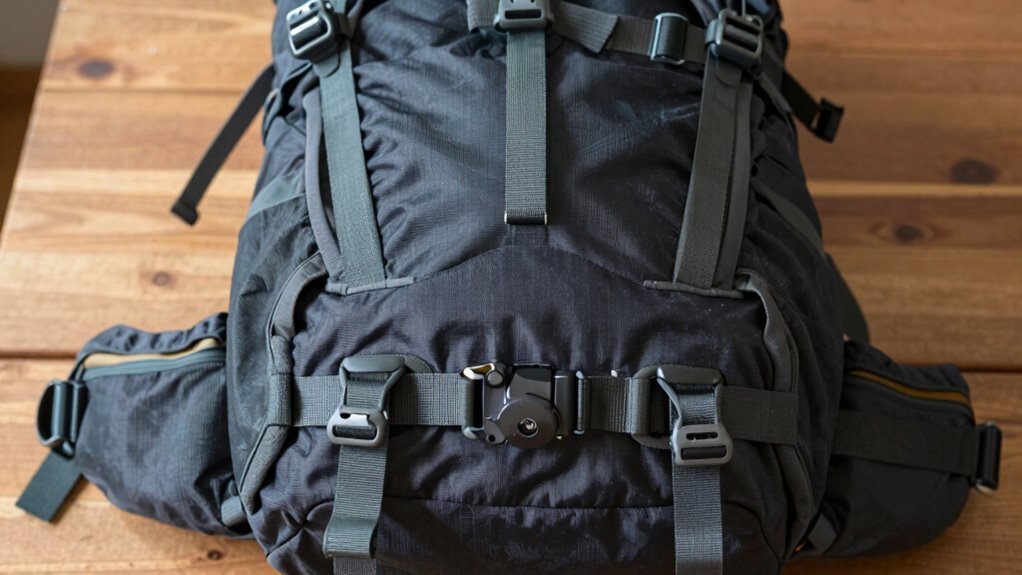
Always pack smart, and your shoulders will actually thank you—yes, really, they’ll send you a postcard from Pain-Free Land.
Stick heavy stuff like food and water between your shoulder blades, close to your back, so weight stays centered and doesn’t pull you forward.
Toss your sleeping bag in first at the bottom for a stable base.
Load clothes and lighter gear on top, filling gaps evenly on both sides so you don’t lean like a tipsy hiker.
Keep everything snug against your back and high on your hips—no saggy backpack butt!
Use both straps, tighten them, and keep the pack within a couple inches of your waistline.
Balance is key: uneven weight means one shoulder doing all the complaining.
Pack light, stand tall, and your shoulders will hike happy all day long. Proper load distribution helps maintain shoulder joint stability during extended movement.
Strengthen Core and Upper Back Muscles
Grab your water bottle, because it’s time to fire up your core and upper back—your shoulders’ best backup crew.
You’re not just carrying a pack; you’re leading a team, and your core’s the captain.
Planks and bird-dogs keep your torso rock-solid on rugged trails, while rows and face pulls beef up your upper back to handle heavy straps like a pro.
Strong abs and obliques help spread the load, so your shoulders don’t throw a tantrum halfway up a hill.
Try reverse flies—they’re like a pep talk for your shoulder blades.
And don’t skip rotator cuff moves: external rotations with a band keep your joints happy, while internal rotations fight strap squeeze.
Think of side-lying lifts as oil changes for your shoulders—small effort, big payoff.
Train these moves regularly, and you’ll laugh off long hikes that once left you sore.
Your pack’s heavy, but your body? Stronger than ever.
Poor weight distribution causes asymmetrical strain that undermines even the strongest muscles.
Maintain Proper Hiking Posture
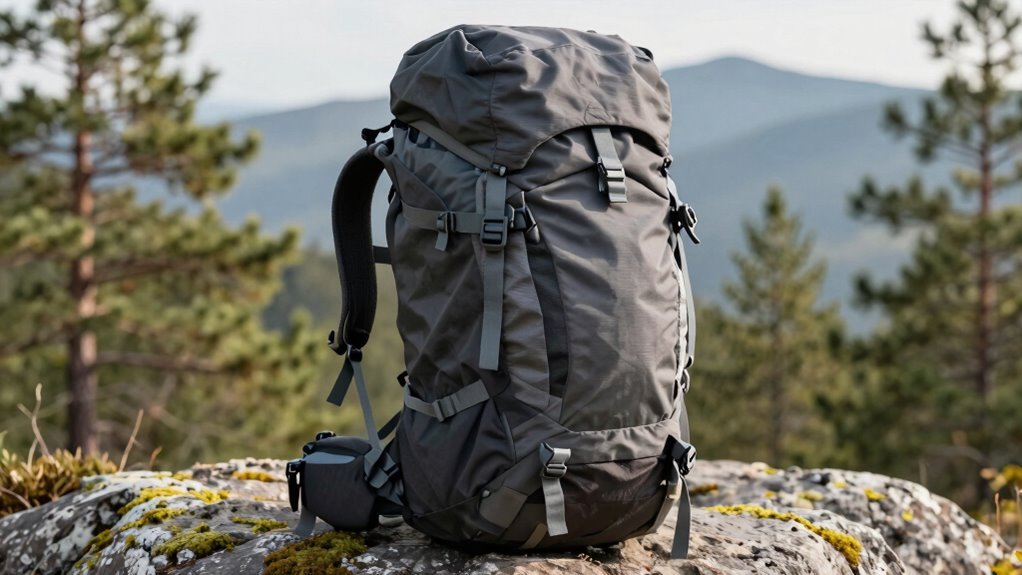
- Walking tall isn’t just for confidence—it’s your secret weapon against shoulder pain on the trail.
- You’ll save your shoulders and feel stronger mile after mile when you nail your posture.
- Here’s how to keep your body happy:
- Keep your ears over your shoulders and avoid poking your head forward like a curious turtle—your neck will thank you.
- Stand upright with a neutral spine; no slouching or hunching, unless you’re trying to impersonate a question mark.
- Let your shoulders chill—don’t hike them up by your ears like you’re dodging trouble; relaxed is the move.
- Use trekking poles to offload stress and stay balanced, especially when the trail gets sassy with steep drops or scrambles.
- Good posture isn’t just for your mom’s “sit up straight” lectures—it’s trail magic in action.
Frequently Asked Questions
Can Pack Shoulder Pain Be a Sign of Nerve Damage?
Yes, pack shoulder pain can be a sign of nerve damage, especially if you’re feeling numbness, tingling, or a shocking jolt down your arm.
You’re not just imagining it—those are red flags your nerves might be stretched or pinched.
Weakness or cold, discolored skin? Don’t shrug it off!
Your body’s sending SOS signals, and skipping a doctor’s visit could turn a small issue into a bigger mess.
Listen up—your shoulders aren’t drama queens!
How Do I Know if My Backpack Is Too Heavy?
You’re practically auditioning for a circus strongman act if your backpack makes you wobble, lean forward, or feel like a pack mule after minutes.
You’ll know it’s too heavy when your shoulders scream, arms tingle, or you’re喘ing like you ran a marathon.
Straps dig in, the pack sways, or you can’t stand upright?
Yeah, it’s way too much—lighten up before you turn into a grumpy, hunched gnome!
Should I See a Doctor for Persistent Shoulder Pain?
Yeah, you should totally see a doctor if your shoulder pain won’t quit—especially if it’s hanging around longer than your last bad haircut.
If it’s still bugging you after two weeks, gets worse daily, or messes with your sleep, lifting, or reaching, don’t tough it out.
Clicks, pops, numbness, or weakness? Yep, time to get it checked.
Your shoulder’s not a DIY project—treat it right!
Can Hydration Affect Shoulder Pain While Hiking?
Absolutely, hydration’s your shoulder’s best buddy on the trail—think of water as WD-40 for your joints.
Skip sips, and your cartilage dries out like stale bread, making every step creakier than a screen door.
Synovial fluid slacks off when you’re parched, turning smooth moves into grinding groans.
Stay hydrated, and your shoulders won’t throw a hike tantrum.
Guzzle water, flex easy, and keep those joints jazzed.
Is Shoulder Pain Worse at High Altitudes?
Yeah, shoulder pain can definitely get worse at high altitudes—your body feels it more the higher you go.
Thin air and lower oxygen ramp up joint stress, especially in your shoulders.
If you’ve got a history of injury or surgery, watch out—altitude can sneak up on you like an uninvited hiking buddy.
Stay sharp, move gently, and listen to your body.
It’s not just soreness; it might be your shoulders waving a tiny white flag!
Conclusion
You’re hiking, shoulders screaming, when—bam!—you remember these tips. Adjust that pack snug to your back, click the hip belt like a seatbelt for comfort, and suddenly, the weight vanishes. Pack smart, stand tall, and those core muscles you never knew exist? They’ve got your back—literally. Coincidence you feel amazing halfway up the trail? Nah. You’ve just outsmarted pack pain. Now go crush that summit, pack ninja!
References
- https://www.internationaljournalssrg.org/IJIE/2025/Volume12-Issue1/IJIE-V12I1P107.pdf
- https://pmc.ncbi.nlm.nih.gov/articles/PMC10575324/
- https://d-nb.info/1260536998/34
- https://repository.tudelft.nl/file/File_3db7f145-9330-462e-b3f8-ae8b1732da17?preview=1
- https://www.imse.iastate.edu/files/2014/03/EagleZoe-thesis.pdf
- https://www.youtube.com/watch?v=HPlj88ycG_Q
- https://pmc.ncbi.nlm.nih.gov/articles/PMC6011123/
- https://blog.tortugabackpacks.com/backpack-hip-belt/
- https://backpackinglight.com/forums/topic/an-interesting-article-on-the-impact-of-using-hipbelts/
- https://sectionhiker.com/when-are-load-lifters-important-on-a-backpack/