Nutrition Tips for Older Backpackers
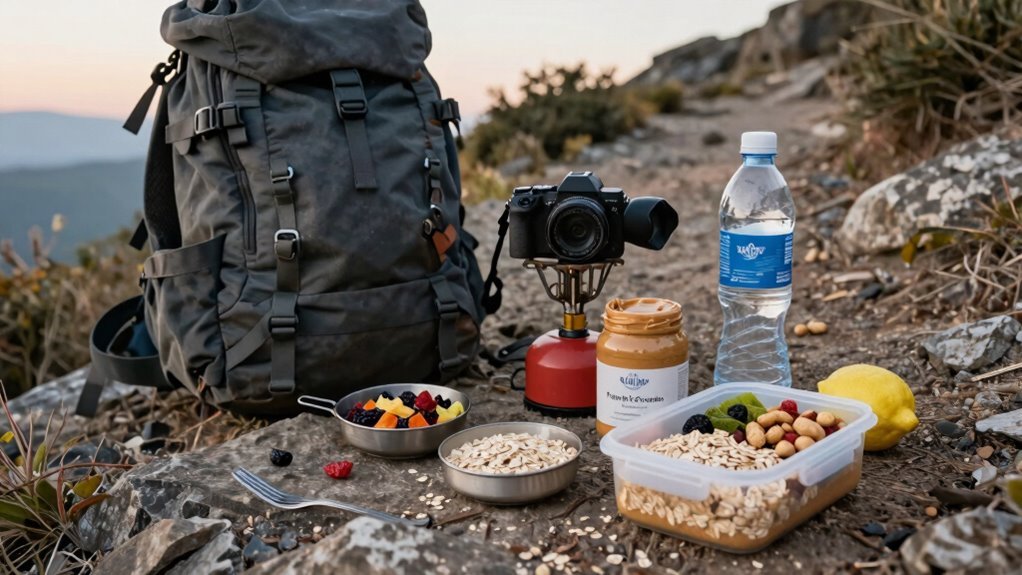
Nutrition tips for older backpackers are essential for maintaining energy and health on the trail. You’ve got this, trail warrior—just toss in more protein like tuna pouches, jerky, or nuts to keep your muscles happy after 50.
Fiber-rich oats and dried fruit keep things moving smoothly (pun intended). Sip water with electrolytes every hour and snack often—your energy will thank you.
Pre-portion food to avoid munching too much (or too little). And hey, there’s a whole trail full of tasty, smart fueling secrets waiting just ahead.
Prioritize High-Quality Protein Sources
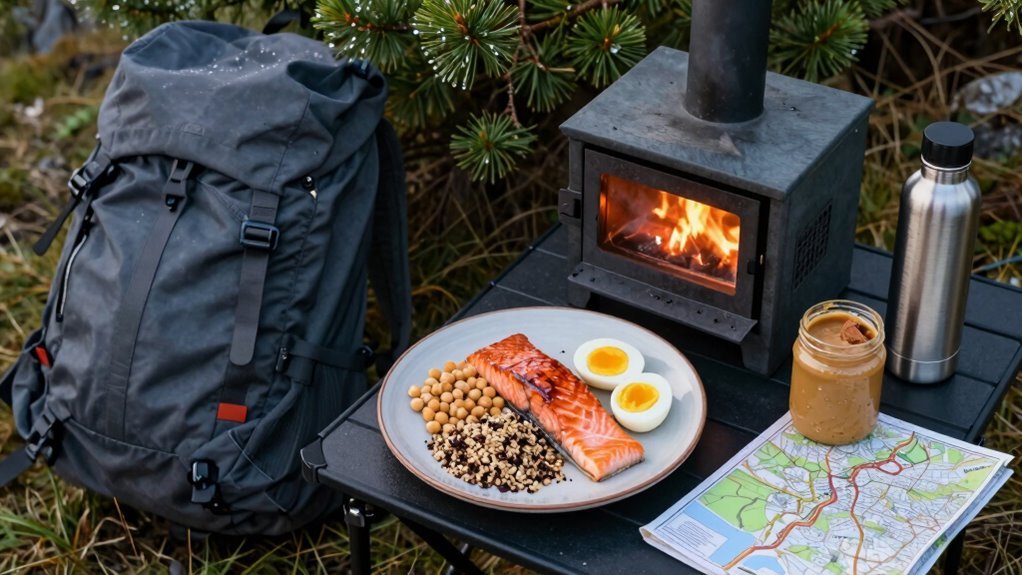
Ever wonder how to keep your muscles happy and your energy steady on the trail as you age?
You’ve got this—just pack smart with high-quality protein.
Toss in tuna or sardines from foil pouches; they’re light, tasty, and won’t weigh you down.
Jerky? Yes, please—beef or turkey gives you a salty, satisfying crunch that lasts mile after mile.
Love cheese? Hard salami and Parmesan or Gouda survive the backpack like champs.
Don’t forget dehydrated eggs or protein powder—mix whey or plant-based blends into meals fast.
Greek yogurt, cottage cheese, or mozzarella add creamy goodness early in the trip.
Beans, nuts, hummus, and hemp hearts bring plant-powered punch.
Aim for 10–20% of calories from protein, spread through the day.
Regular protein intake supports immune function, especially since vigorous hiking can temporarily suppress your body’s defenses.
Your legs will thank you, and hey, strong muscles mean more snacks—and who doesn’t hike for those?
Embrace Fiber-Rich Foods for Digestive Health
You’re out on the trail, miles from the nearest bathroom, and the last thing you want is for your gut to stage a rebellion—so let’s talk fiber.
It keeps things moving smoothly, reduces constipation, and softens stool so you’re not straining mid-hike.
Load up on apples, bananas, oats, and blueberries—they’re light, tasty, and kind to your gut.
Don’t forget trail-friendly veggies like peas, broccoli, and sweet potatoes; they’re packed with fiber and nutrients.
Toss in some lentils or chickpeas for a hearty, digestion-friendly meal that fuels your legs and your gut.
Dried fruits and whole grains like oatmeal are backpacking gold—compact, filling, and fiber-rich.
Sprinkle in seeds or pack a Larabar for extra gut love.
Your digestive system will thank you when you’re deep in the backcountry and regularity is everything.
Staying well-hydrated enhances fiber’s effect by helping break down food and move it through the intestines, supporting stay well-hydrated.
Stay happy, stay regular, and keep moving.
Stay Hydrated With Smart Fluid Choices
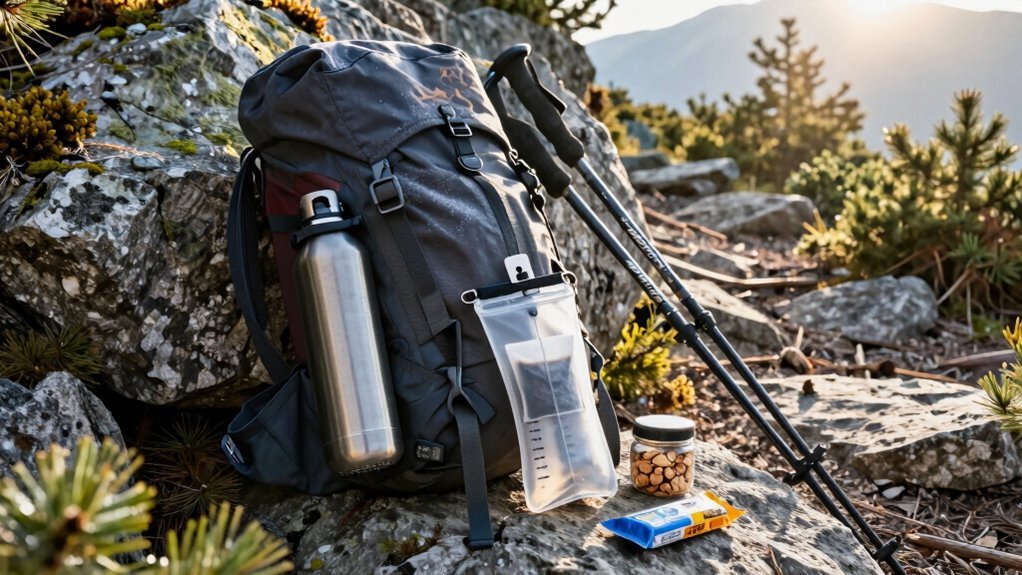
You’ve got your fiber-packed snacks sorted, so your digestive crew is happy and ready for the trail—but don’t forget the other half of gut harmony: water.
Start hydrating the night before—your future self will thank you, even if you make a few extra pit stops.
Drink 16–24 ounces an hour before hiking, and sip steadily every 15–20 minutes; set a timer if you’re prone to forget (we’ve all been “that person” at camp).
Carry at least half a liter per hour, and aim for 2–3 liters daily.
Toss in electrolyte tablets or salty snacks to keep cramps and confusion at bay—because nobody wants to argue with a trail map.
Use a reusable bottle or bladder, and weigh yourself post-hike; replace each lost pound with 500–700 ml.
Stay sharp, stay wet, and let your kidneys do the happy dance all trail long.
Even 1–2% body weight loss from dehydration can impair cognitive function and trail performance, so staying ahead of thirst is key.
Choose Nutrient-Dense Meals and Snacks
What if your backpack could pack powerhouse meals all on its own?
Well, you’re in charge—and smart choices mean energy that lasts, not just a quick buzz.
Skip the junk, grab foods that love you back.
You want flavor, fuel, and staying power without weighing yourself down.
Think compact, tasty, and loaded with good stuff your body actually uses.
- GreenBelly meals (650 calories!) keep hunger at bay on long trails
- GoMacro bars and honey stinger waffles make snacking fun and filling
- Tuna packets and beef jerky give you protein that’s ready when you are
- Trail mix with nuts, seeds, and dried fruit? Yes, please—energy with crunch
- Freeze-dried fruits and quinoa pouches bring nutrients without the bulk
Eat well, feel strong, and let your meals work as hard as you do.
Support Joint Health With Targeted Nutrients
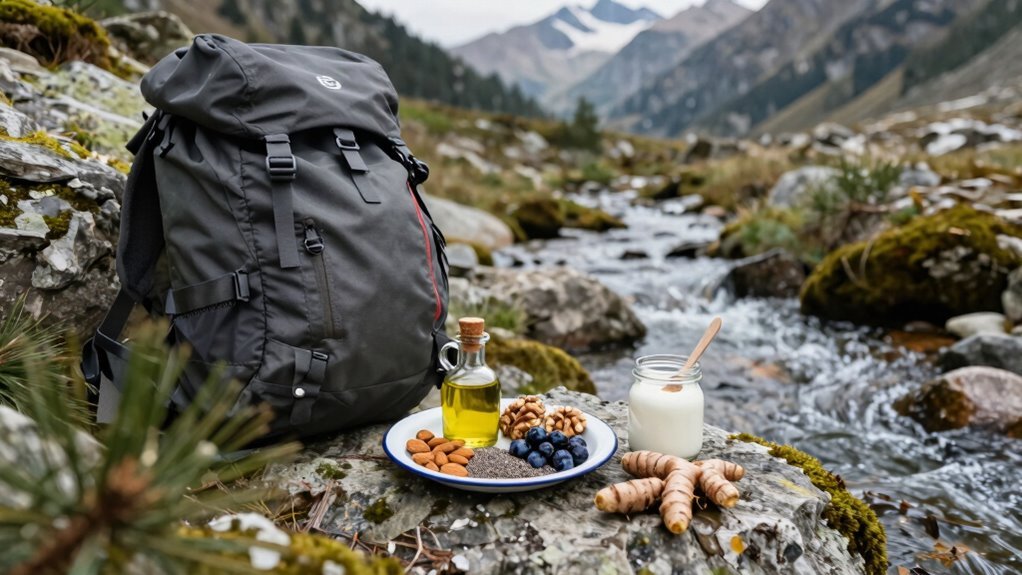
How does your body keep moving mile after mile, uphill and down, without grinding to a halt?
It’s your joints doing the quiet, heavy lifting—so treat them right.
You need 1,200 mg of calcium daily to keep bones strong; grab it from yogurt, kale, or sardines with bones (yes, really).
Vitamin D—around 400 IU daily, or 2000 IU in a supplement—helps you absorb it, so scramble some eggs or toss back fatty fish a few times a week.
Fight trail-blaze inflammation with omega-3s from flaxseeds, walnuts, or a daily fish oil capsule.
Spices like turmeric and ginger? They’re not just for flavor—they’re joint-saving superstars.
Don’t forget collagen from bone broth or a scoop of powder in your morning coffee.
Pair it with vitamin C–rich berries to help rebuild cartilage.
Your knees will thank you at mile ten—seriously.
Balance Carbohydrates for Sustained Energy
While your boots do the walking, it’s the carbs in your pack—and your body—that keep you striding mile after mile.
You need carbs, not just for energy, but for lasting power, especially on multiday trips.
Aim for 45–55% of your intake from carbs, leaning on a mix of simple and complex sources.
Simple carbs like trail-side gummies or honey give quick fuel, while oats or whole grains keep your tank steady.
Snack every few hours—your muscles will thank you—and don’t skip post-hike carbs to bounce back fast.
Hydration helps, too, so sip that electrolyte drink like it’s mountain tea!
- Grab energy bars or corn chips for easy, calorie-dense carb hits
- Snack on dried fruit or Gatorade when you need a fast boost
- Choose whole grains when possible for lasting stamina
- Pair carbs with healthy fats to smooth energy crashes
- Eat within 30–60 minutes after hiking to refuel like a pro
Manage Portion Sizes Without Sacrificing Nutrition
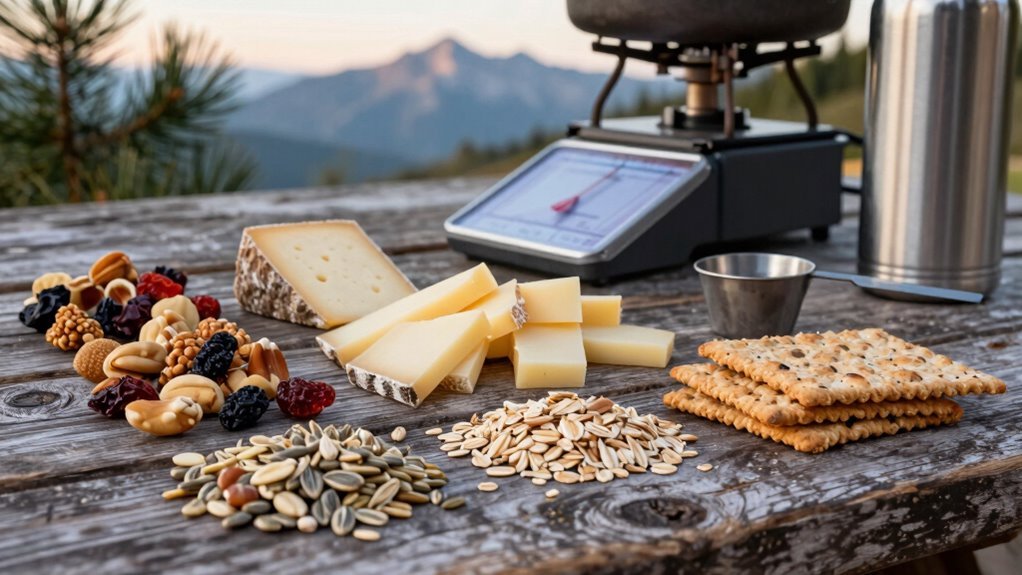
Ever wonder how you can eat well on the trail without lugging around a backpack full of food? You’ve got this—by choosing calorie-dense foods like macadamia nuts, peanut butter, and olive oil, you’ll pack serious energy without the bulk.
A little goes a long way: just one ounce of nuts or a splash of oil adds big calories.
Pre-portion snacks in 3×5 bags and meals in 4×6 ones so you don’t overpack—stick to about 1.5 pounds of food per day for 3,000 solid calories.
Use gallon bags with premeasured meals to keep things light and precise.
Eating smaller portions more often—every hour, even—keeps your energy steady without weighing you down.
With smart choices like trail mix or powdered fats, you’ll stay fueled, nimble, and smiling all hike long—because nobody wants to be the snacker stuck carrying extra snacks… and regrets.
Plan for Electrolyte Balance and Recovery
You’ve nailed packing smart with nutrient-rich bites that keep your pack light and your energy high, but let’s talk about what keeps everything running smoothly under the hood—your body’s fluid balance.
As you age, thirst signals fade, so don’t wait until you’re parched.
Pre-hydrate with 250–500 ml of water plus electrolytes, especially on long or hot hikes.
Sweat zaps sodium, potassium, and magnesium, and skipping replacement can leave you weak, crampy, or worse—hello, hyponatremia!
Sip every 30 minutes, and fuel longer treks with electrolyte mixes or a pinch of salt in your bottle.
- Start your day with 400–500 ml water mixed with electrolytes
- Use powders or tablets on hikes over 2 hours, especially in heat
- Munch electrolyte-rich snacks like nuts, bananas, and jerky
- Take 5-minute hydration breaks hourly to check in with your body
- Recover nightly with sugar-free options like Bix to recharge tired muscles
Frequently Asked Questions
Can I Eat the Same Meals as Younger Backpackers?
You *can* eat the same meals as younger backpackers, but you probably don’t want to—trust me, your body will thank you later.
While they’re downing candy bars and instant noodles, go for nuts, dried fruit, and oatmeal with nut butter.
These keep your energy steady, not jittery.
Add beans or jerky for protein to fight muscle loss.
Your taste buds—and tired legs—will prefer real food anyway.
Think snacks with superpowers, not just empty calories.
How Do I Adjust Nutrition for High-Altitude Hikes?
You boost carbs to 60% of your meals—they’re your body’s favorite fuel and easier on oxygen up high.
You snack on trail mix and drink extra fluids, tossing in electrolytes to stay sharp.
You pack berries and nuts for antioxidants and healthy fats, helping you fight fatigue and feel great.
And hey, who knew chocolate could be *this* good for recovery?
You’ve got this, mountain maven!
Are Supplements Necessary for Older Backpackers?
No, you don’t *have* to take supplements—they’re not magic beans.
But hey, they do help when trail food gets bland and your body’s working overtime.
Think of them as backup dancers for your energy, joints, and recovery.
Fish oil, vitamin D, and protein powder? Superstars.
Just don’t toss common sense out with your old hiking boots—listen to your body, pack smart, and let supplements support you, not carry you.
What Foods Help Prevent Fatigue During Long Treks?
You’ll crush those miles when you fuel with whole grains like oatmeal and quinoa—they give you steady energy so you don’t crash like a backpacker napping mid-trail.
Toss in fruits, nuts, and peanut butter for snacks that pack a punch without weighing you down.
Mix in jerky and trail mix for protein-powered stamina, and boom, you’re hiking strong, laughing at fatigue, and still got zip left in your pockets.
How Often Should I Eat on Multi-Day Hikes?
You should eat every 1.5 to 2 hours—it’s non-negotiable, like checking your shoelaces before a steep downhill.
Imagine hiking hard but forgetting to fuel?
73% of older backpackers bonk by lunchtime without steady snacks.
So, snack, breakfast, snack, lunch, snack, dinner—like clockwork.
Pack nuts, dried fruit, or tuna packs.
Your gut’ll thank you, and hey, no one wants hangry trail meltdowns.
Conclusion
You’ve got this, trail warrior! Packing smart nutrition isn’t just fuel—it’s your secret weapon for summit views and campfire laughs. Think hearty proteins, fiber that keeps things *moving*, and snacks that taste like joy. Hydrate like a champ, balance energy like a tightrope walker, and remember: even your knees deserve a thank-you note. Out there, every bite brings adventure—so make ‘em count, one delicious step at a time!
References
- https://www.hiking-for-her.com/best-protein-sources-for-hikers.html
- https://www.backpacker.com/skills/cooking/recipes/protein-rich-recipes/
- https://www.centerwellprimarycare.com/en/resources/the-7-best-protein-packed-foods-for-healthy-aging
- https://alpino.store/blogs/news/healthy-travel-snacks-for-backpacker
- https://rootana.com/blogs/meal-shakes/10-high-protein-backpacking-foods
- https://www.healthline.com/nutrition/high-protein-foods
- https://www.davidonearth.com/blog/best-foods-to-take-while-backpacking
- https://www.menshealth.com/fitness/a69472837/protein-while-traveling-strong-talk-mens-health/
- https://under30experiences.com/blog/gut-healthy-foods-to-eat-while-traveling
- https://zoe.com/learn/high-fiber-foods