Packing Light Tips for Older Hikers
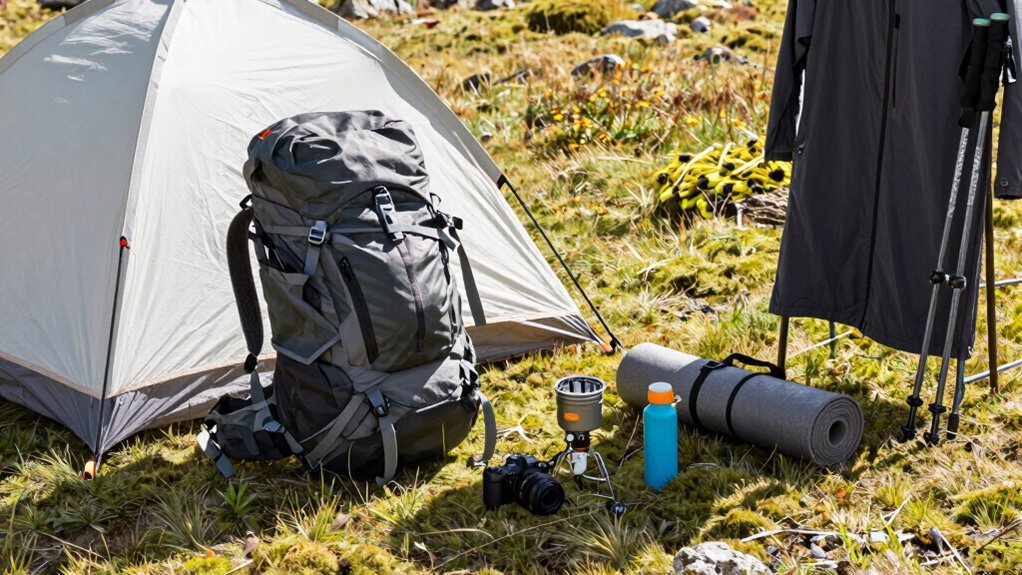
When packing light, older hikers should prioritize lightweight gear to reduce strain and increase comfort on the trail. Choose a streamlined backpack—brands like Gossamer Gear or Framus offer excellent options—that fits well and moves with your body.
Opt for versatile clothing and multi-use layers instead of bulky alternatives. Trekking poles with cork grips not only aid balance but also serve double duty as support for setting up shelters.
Stay hydrated by sipping water frequently and pack small, nutritious snacks to maintain energy. Leave heavy extras behind, like that second power bank; you likely won’t need it. Test all your gear before hitting the trail to prevent blisters or unstable packs. Smart preparation ensures a more enjoyable hiking experience.
Choose a Lightweight Backpack That Fits Well
Ever wonder why your shoulders are screaming by mile five? Chances are, your pack doesn’t fit right—or it’s way too heavy.
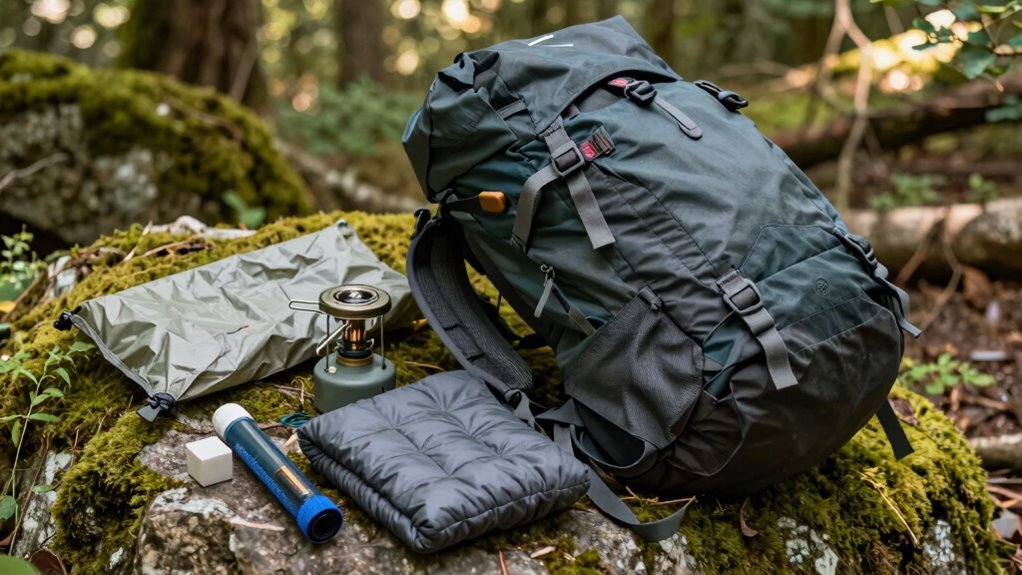
You don’t need to carry a moving truck on your back, so pick a lightweight pack like the Gossamer Gear Mariposa 60 or the nimble Framus, both light but tough.
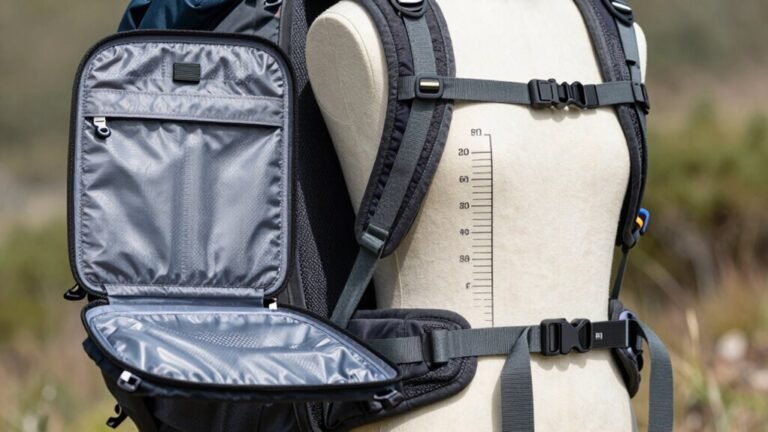
Look for adjustable straps, an S-curve harness, and a padded hip belt that hugs your hips, not your shoulders.
A good fit means less strain and more trail giggles.
Go for the smallest size that feels comfy—trust us, it’ll keep you from overpacking.
Ditch the brain if you can; every ounce counts.
And don’t forget the pivot hip belt and load lifters—they’re like tiny helpers shifting weight where it belongs.
With the right pack, you’ll move like the wind, not a creaky barn door.
Switching to a lighter pack, like the Mariposa 60, can save nearly two pounds (2.1 pounds), freeing up weight allowance for other comfort upgrades.
Prioritize Multi-Functional Clothing and Gear
When every ounce in your pack counts, choosing gear that pulls double duty isn’t just smart—it’s trail magic in action.
Swap bulky layers for thermal tops like Smartwool Intraknit, so you stay warm without packing a whole winter wardrobe.
Compression socks? They boost circulation *and* guard against spider veins—talk about a two-for-one!
Velcro or magnetic closures on clothes save weight and spare your stiff fingers from fighting tiny buttons.
Trekking poles with cork grips stay tacky even when sweaty, while padded handles and dampeners spare your joints on rocky descents.
Need night vision? A headlamp with big buttons and bright, natural-looking light (hello, Nitecore NU25!) makes reading and camp tasks a breeze.
And trust us, GPS with huge screens or an SOS button isn’t overkill—it’s peace of mind with batteries.
Health and safety considerations are paramount, so carrying extra medications and planning for conditions like sleep apnea can make a big difference—especially when you’re relying on a 3.5 lb CPAP machine.
Streamline Your Hydration and Nutrition Plan
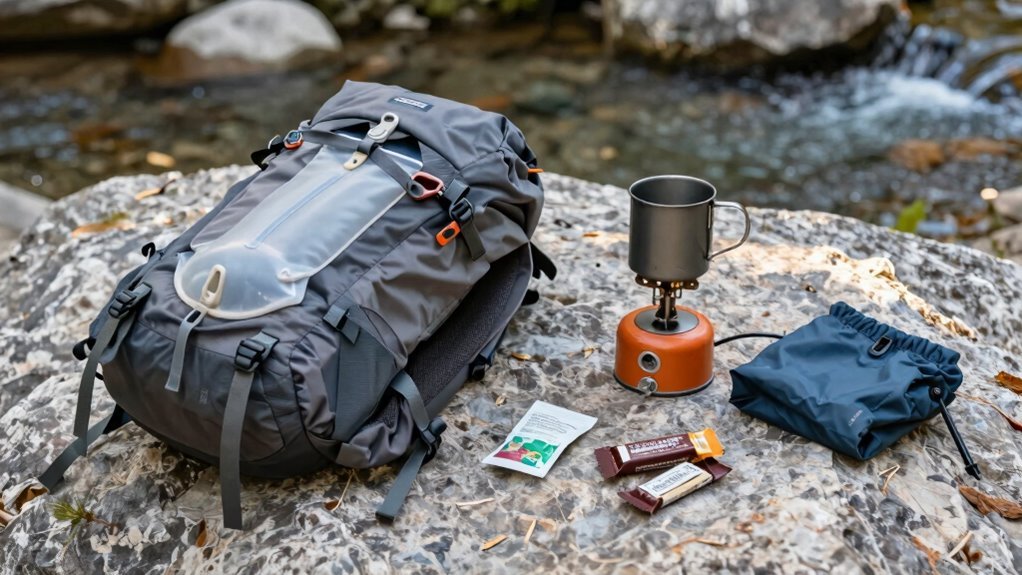
Since your body’s thirst signal fades with age—like a phone battery stuck at one percent—you’ve gotta stay ahead of dehydration like a pro hiker with a game plan.
Grab a lightweight hydration bladder or easy-access bottle so you sip often, not just when you think you’re thirsty—because by then, you’re already behind.
Aim for one liter every two hours, and carry at least two to three liters for day hikes.
Use a Nalgene or collapsible Platypus bag to save weight and spot your water levels fast.
When trails get sweaty, drop in an electrolyte tablet or grab a sports drink to keep energy up and balance salts.
Don’t forget to purify stream water on the go—fewer heavy bottles, more freedom.
And hey, keep drinking after the hike; your body’s still playing catch-up.
Recovery hydration? It’s like a cool-down stretch for your insides—smart, simple, and oh-so-satisfying.
Pre-hike hydration prevents starting with a deficit, so drink a cup or two of water before you even pack your bag.
Leave Behind Non-Essential Electronics and Luxuries
Ditch the digital drag and lighten your load by leaving behind the gadgets that aren’t pulling their weight—literally.
That extra power bank? Probably overkill. Most phones last two to three days, so unless you’re filming daily vlogs or relying on GPS for hours, skip the 6.9-ounce burden.
Swap bulky chargers for a single lightweight USB-C cable—you’ll save ounces fast.
Smartwatches are cool, but if it’s not helping you navigate, is it worth the 1.8 ounces?
Same goes for compact cameras; your phone likely takes better pics anyway.
Stick to the essentials: headlamp (under 2 oz), phone, maybe a small battery pack.
Combine tools—use your phone for GPS and ditch the standalone unit.
Every ounce counts when you’re moving all day, so ask yourself: “Do I really need this, or am I just attached?”
Lighten up, literally, and hike happier.
Practice Your Packing Strategy Before Hitting the Trail
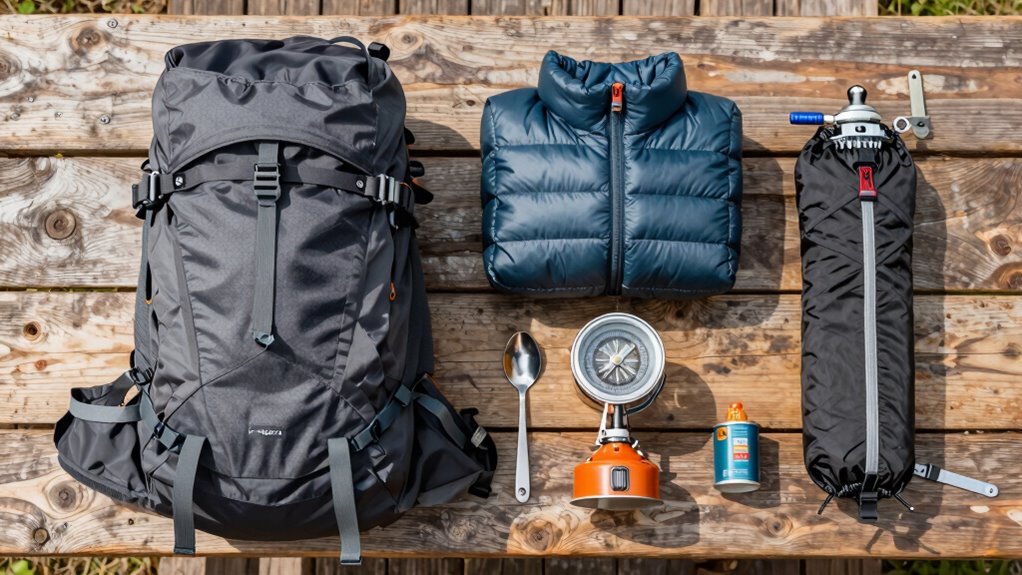
You’ve already cut the clutter by leaving behind that jungle of cords and gadgets, so why stop there?
Nailing your packing strategy before hitting the trail keeps surprises off the path and fun on track.
Here’s how to practice like a pro:
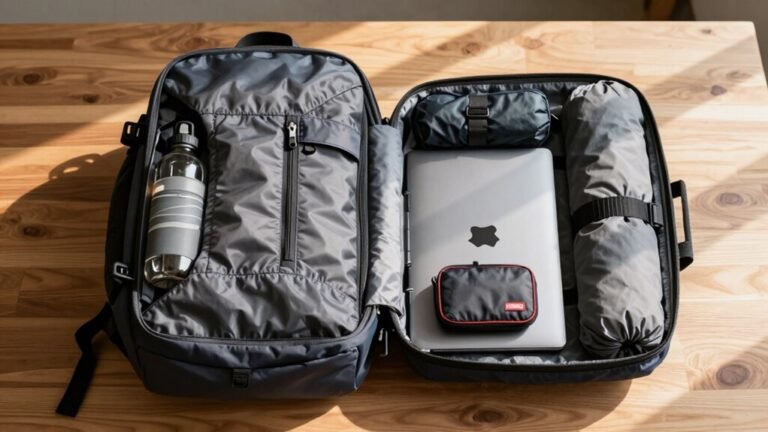
- Lay it all out – Do a flat lay of every item, from socks to water bladders, so you *see* what’s coming along and catch hidden extras.
- Test drive your pack – Strap on the full load and walk around the block or hike a nearby hill to check for rub points, weird weight shifts, or “why-did-I-pack-this?” moments.
- Prep and pack in batches – Make meals, organize gear bins, and pre-sort supplies so everything’s trail-ready with no last-minute chaos.
A little prep means fewer aches, more laughs, and way less gear regret on day one!
Frequently Asked Questions
How Can I Reduce Joint Strain While Carrying a Lighter Pack?
You reduce joint strain by loading your lighter pack smartly—keep heavy stuff centered and close to your back so it feels like it’s hugging you, not pulling you down.
Use trekking poles to turn your arms into joint-saving superheroes.
Wear a comfy hip belt to shift weight off your shoulders.
Take short, snappy steps and engage your glutes—they’ll gladly help.
Add easy strength moves, and hey, your knees will thank you like it’s their job.
What Are the Best Lightweight Hiking Boots for Older Adults?
You’ll love the Salomon X Ultra 4 and Altra Lone Peak ALL-WTHR—they’re light, comfy, and kind to aging joints.
You get sleek designs that won’t weigh you down, with bonus points for ankle support and waterproof perks.
Slip into Hoka Kaha 3s for cloud-like cushioning, or trust Keen Targhee IVs for wide-fit ease.
Your feet will thank you—imagine hiking longer, pain-free, with boots that feel like your co-pilots!
Are Trekking Poles Worth Using for Senior Hikers?
Absolutely, trekking poles are worth it—you’re basically giving yourself super-stable robot legs!
Did you know they cut knee strain by up to 16%?
That’s like turning back the clock on joint stress.
You’ll walk faster, stay balanced on tricky trails, and feel less beat up afterward.
Sure, you might accidentally poke your hiking buddy, but hey, stability’s worth a little sidearm comedy.
How Do I Prevent Fatigue on Long Hikes With Minimal Gear?
You prevent fatigue by pacing yourself and snacking every hour—don’t wait until you’re wiped!
Sip water constantly, even if you’re not thirsty, and toss electrolyte tabs in your bottle.
Use trekking poles—they’re cheat codes for tired legs.
Wear supportive boots, stretch daily, and strengthen those legs beforehand.
Oh, and napping? Totally allowed. You’ve got this, trail champ!
What Safety Items Should Never Be Left Behind Despite Packing Light?
Smart, steadfast safety staples stay supreme, even when shedding weight.
You never skip your map and compass—you’re not flying solo blind.
Tuck in that personal locator beacon, a tiny titan for trouble.
Don’t ditch the first aid kit, knee brace, or whistle—laughter’s better than limping.
And hey, a headlamp’s gotta come; stumbling in the dark isn’t part of the plan.
Safety’s no joke, but your pack sure can be light!
Conclusion
You’ve got this, trail champ! Packing light doesn’t mean skimping on fun—it means swapping that heavy towel for a quick-dry bandana, and yes, your phone stays in the tent unless you’re snapping squirrel selfies. Imagine your pack: lean, tight, humming with purpose. Less weight, more wow. You’ll hike farther, smile wider, and laugh louder at how easy it feels. Lighten up—literally!
References
- https://backpackinglight.com/comfort-vs-weight-gear-guidance-for-aging-older-backpackers/
- https://thetrek.co/appalachian-trail/appalachian-trail-gear-list-for-older-hikers-beginner-friendly/
- https://sectionhiker.com/backpacking-products-designed-for-older-hikers/
- https://www.davidonearth.com/blog/how-to-pick-the-right-backpack-for-older-hikers
- https://www.garagegrowngear.com/blogs/trail-talk/best-ultralight-backpack-ul-pack
- https://community.ricksteves.com/travel-forum/england/backpack-for-over-60
- https://www.backpacker.com/gear/backpacks/finally-backpacks-actually-designed-for-plus-sized-hikers/
- https://www.youtube.com/watch?v=qDo__Eu1PmA
- https://hikingguy.com/best-hiking-gear/
- https://www.etsy.com/listing/1623363190/multifunctional-hiking-stick-tactical