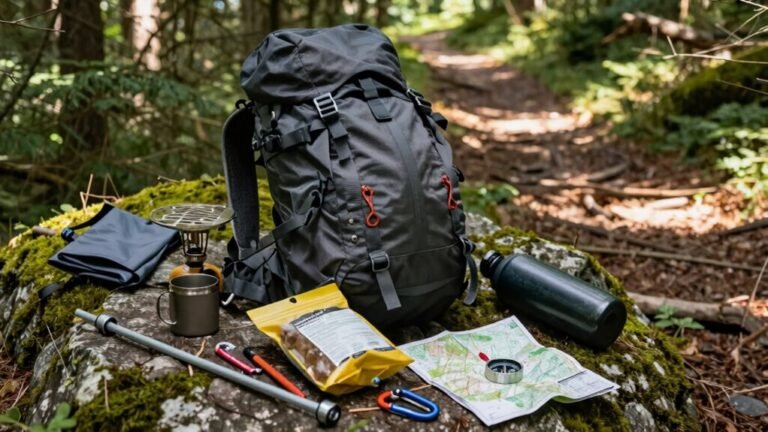
1 Best Down Jacket for Backpacking That’s Warm, Light, and Trails-Ready
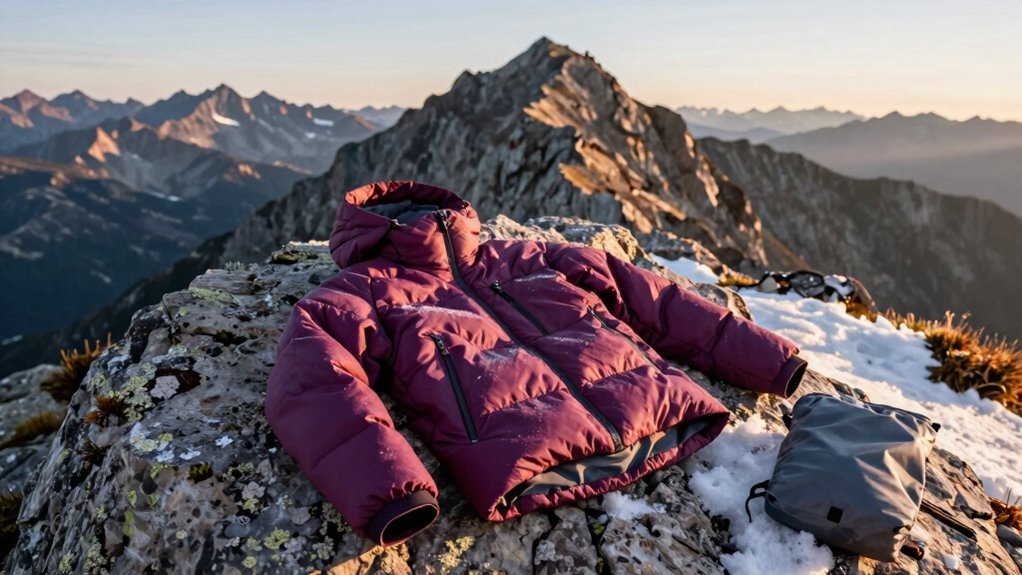
You’re crouched on a wind-scoured ridge, zipper clutched in stiff fingers, wondering if your down jacket can handle the drop to 20°F and sideways sleet—spoiler: most can’t. But what if you had one that weighs under 12 ounces, packs to the size of a grapefruit, and still traps heat like an 850-fill-power thermos?
The real question isn’t whether you need warmth or lightness—it’s how to get both without sacrificing the trail toughness you’ll actually rely on when the weather turns. A best down jacket for backpacking delivers this rare balance: ultralight construction, serious insulation, and durable fabric that won’t rip at the first brush with granite.
| Nylon Stuff Sack 5-Piece Set |  | Most Organized | Material: 100% Nylon taffeta, nylon fine mesh | Closure Type: Drawstring with cord lock | Weight: 3 oz (90 g) for full set | VIEW LATEST PRICE | Read Our Analysis |
More Details on Our Top Picks
Nylon Stuff Sack 5-Piece Set
If you’re the kind of backpacker who values both lightness and order—someone who won’t let a jumbled pack ruin a well-planned trek—then this nylon stuff sack 5-piece set might just earn a permanent spot in your gear lineup. You’re carrying just 3 oz (90 g) total, thanks to 100% nylon taffeta and fine mesh that’s soft, durable, and stitched with reinforced seams.
The set includes five sizes—small (1.4 L), medium (2.7 L), large (7.5 L), X-large (15 L), and a 3 L round mesh pouch—so you can sort clothes, gear, or fishing tackle without chaos. Drawstring closures with reliable cord locks keep things secure, while color-coding (crimson, olive, brown, navy, black) helps you find items fast.
Honestly, who wouldn’t want their socks nestled neatly in olive taffeta? These aren’t just for the trail—use them at home or for gym trips.
They’re practical, lightweight organizers that actually work, and with a one-year warranty plus lifetime customer support, you’re covered if anything goes sideways. Is that really too much to ask from a $20 sack system?
- Material:100% Nylon taffeta, nylon fine mesh
- Closure Type:Drawstring with cord lock
- Weight:3 oz (90 g) for full set
- Number of Pieces:5
- Color Options:Crimson, olive, brown, navy, black
- Use Case:Organization for travel, camping, home, gym
- Additional Feature:Drawstring with reliable cord locks
- Additional Feature:Color-coded for easy sorting
- Additional Feature:Includes round mesh pouch
Factors to Consider When Choosing Down Jackets for Backpacking
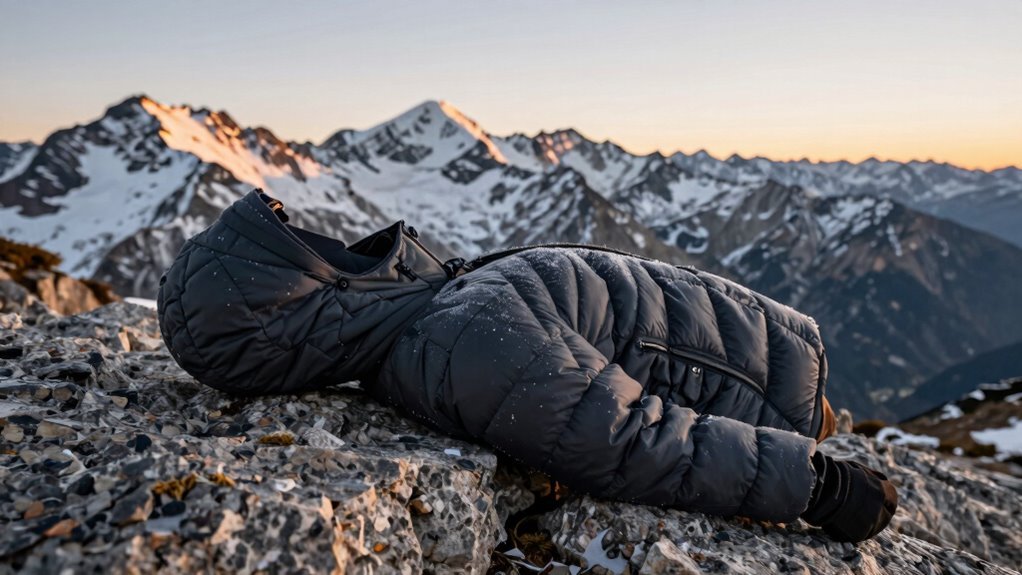
You’re out there looking for a down jacket that won’t weigh you down—literally—so you’ll want to pay close attention to fill power (think 600 to 900), packability (a 10 x 5-inch stuff sack is typical), and whether it can handle light drizzle with a DWR-treated shell. Are you really going to trust a 5-ounce jacket with lofty 800-fill down if it flats out in humidity—or worse, rides up when you reach for a trekking pole? Let’s walk through what actually matters: insulation quality, weather resistance, how it fits over layers, and whether that “ultralight” claim holds up after three days on the trail.
Fill Power Explained
Loft isn’t just fluff—it’s the heartbeat of warmth in your backpacking down jacket, and fill power tells you exactly how hard that heart is working. You’ll see numbers like 600 to 900—those are cubic inches per ounce (in³/oz)—measuring how much space one ounce of down can trap when it fluffs up.
Higher fill power (say, 800–850) means more loft, more warmth for less weight, and better compressibility—ideal for 3–4 season use. But here’s the catch: even 850 FP loses punch if your down gets wet, packed too long, or made from lower-quality clusters.
You’re paying for efficiency, sure—but also for durability and performance in real-world conditions. So while a 600-fill jacket might keep you warm, it’ll need more down (and bulk) to match the warmth of a lighter, pricier 800-fill.
Is max FP always worth it? Not if you’re hiking mostly in damp weather—unless you’re okay with careful maintenance.
Weight and Packability
Every ounce counts when your shoulders bear the load of a week in the backcountry, and that’s where a down jacket’s weight—typically 6 to 12 ounces (170–340 g)—earns its keep as a stealth MVP of your layering system. You’ll stash it in a side pocket or hip belt just above your waist, not wrestle with a bulky bundle that gobbles space like a black hole.
Most packable designs squash down to the size of a water bottle—some even smaller—thanks to high-fill-power down (600–900+) that delivers serious warmth without the heft. Sure, you *could* bring a puffy coat from home, but is it really worth losing room for two extra days of food?
Jackets with smart baffling or stitch-through construction compress well without sacrificing loft long-term, so you’re not left cold after a week crammed in your pack. Efficiency wins here—light, small, ready when you need it.
Weather Resistance Level
How often does “light drizzle” turn into a full soak by the time you reach tree line? You need a jacket that fights back—not just with warmth, but with real weather resistance.
Look for durable water-repellent (DWR) finishes that bead up rain, but know they wash out over time and need reapplication. For serious storms, aim for hydrostatic head ratings of at least 5,000mm—some go as high as 20,000mm—with fully taped seams to block leaks.
While hydrophobic down resists moisture better than standard fill, it still collapses when soaked, so a waterproof/breathable membrane (like Pertex Shield or Gore-Tex) is your best bet. Don’t skip features: storm flaps over zippers, adjustable hoods, and elastic cuffs stop wind and rain from sneaking in.
These extras turn a cozy layer into a true shell—light enough to pack, tough enough to trust when the sky turns.
Insulation Quality Check
What’s keeping you warm when the mercury drops below freezing—wishful thinking or science? It’s the down’s fill power, dummy—and you should prioritize jackets rated between 700–900, since higher fill means more warmth per ounce (a 900-fill jacket traps 900 cubic inches per ounce, after all).
But don’t ignore fill weight; a lofty 800-fill with too little down won’t cut it in -10°F storms. Check the loft—both fresh out of the bag and post-dry—because quality down should bounce back fast and rise evenly across your back and chest, no flat spots.
Skip stitched-through baffles; go for box-wall construction to stop cold leaks and down migration. And remember: wet down’s a dud—grab one with a DWR-treated shell or waterproof face fabric, and follow care rules like your warmth depends on it—because it does.
Fit and Layering Space
Why bother layering correctly if your jacket rides up every time you reach for a carabiner or shrugs off your mid-layer like a bad first date? You need about 2–3 inches of positive ease at the chest—enough to fit a base layer and mid-layer without squeezing your arms or torso.
Go for articulated or gusseted sleeves; they keep mobility sharp when you’re scrambling or adjusting your pack. A hip-length (or slightly longer) cut helps the hem stay put, so cold air doesn’t sneak in every time you lift your arms.
Make sure the sleeves cover your wrists fully—even when stretched overhead—so they don’t ride up under your shell. Adjustable cuffs and a cinchable hem let you seal out drafts without trapping bulky mid-layers in folds.
Get this balance right, and you’ll stay warm, mobile, and actually dressed—not halfway disrobed by gravity and poor design.
Durability of Fabric
You’ve nailed the fit and sorted your layers so the jacket stays put when you’re reaching for a cliff edge or shrugging on a loaded pack. Now ask yourself: will that sleek 10D shell still look intact after six months of trail scuffs, pack straps, and zipper snagging?
Probably not—stick with 20D to 70D fabrics, ideally ripstop nylon or polyester, to handle abrasion without adding weight. Look for high-tenacity fibers (like robust polyamide blends) that boost tensile strength and resist tears where your pack rubs hardest.
Reinforced shoulders, elbows, and cuffs add longevity without sacrificing mobility. And don’t overlook seams: double stitching or taped construction prevents blowouts, especially when damp.
DWR-treated surfaces help shed light rain while maintaining fabric resilience—though no shell is indestructible. You’re not just buying warmth; you’re investing in a jacket that won’t feather out after one rocky scramble or shoulder grind.
Be honest: do you really want to patch your puffer mid-trail?
Hood and Cuff Design
How’s your head staying warm when the wind whips over a ridgeline at dusk—does your hood move with you, or fight for control? Look for helmet-compatible or articulated hoods that track your head turns without gaping (a 15° blind spot can make navigation tricky).
Adjustable drawcords let you cinch the hood snug around your face—critical when icy spindrift blows sideways—while a stiffened brim (about 0.8mm laminated foam) shields your brow without collapsing into your vision. Paired with storm flaps and a zipper garage, these features cut drafts during sudden snow squalls.
At the wrists, elastic cuffs with internal grippers seal heat better than loose knits, but Velcro closures offer fine-tuned adjustment over bulky glove liners. Reinforced inner cuffs add durability when you’re shouldering a pack in sleet—because nobody wants cold seams creeping up their arms on a 4 a.m. summit push.
Frequently Asked Questions
Can I Wash My Down Jacket at Home?
Yes, you can wash your down jacket at home. Just use a front-load washer, gentle cycle, cold water, and down-specific detergent. Rinse thoroughly, then tumble dry low with clean tennis balls to restore fluff. Don’t wring it out—squeeze gently.
How Long Does a Down Jacket Last?
You think it’ll die after a few seasons? Ha—treat it right, and your down jacket lasts longer than most relationships. Wash it gently, store it loose, and avoid rips. With care, you’re looking at 10+ years of warm, toasty adventures.
Are Down Jackets Cruelty-Free?
You can’t assume down jackets are cruelty-free—many aren’t. Most down comes from birds plucked alive or slaughtered. If you care about ethics, you’ll look for certified humane labels like RDS or choose synthetic insulation instead. Read tags and do your homework.
Do Down Jackets Lose Warmth Over Time?
Yes, your down jacket can lose warmth over time if the down clumps, gets compressed too long, or absorbs moisture. You need to store it loosely and wash it properly so it keeps lofting well and traps heat like it should.
Is It Safe to Compress a Down Jacket for Long?
Yes, you can compress your down jacket long-term, but don’t leave it stuffed too long—trap air slowly returns, yet prolonged squeezing fatigues filaments. Revive it monthly; fluff and air it out. Skip vacuum bags. You’ll keep warmth alive and delay degradation others assume is inevitable.
Conclusion
You’ve got 800–850 fill power, six to twelve ounces of warmth, and a jacket that packs smaller than your trail mix—yet still fights off mountain gusts like a shield. With taped seams, DWR shell, and snug cuffs, it’s ready when the weather turns dramatic. Sure, it’s not waterproof, but do you really expect a down jacket to survive a monsoon? This one earns its place in your pack.