4 Best Hiking Pants for Hot Weather That Keep You Cool and Comfortable
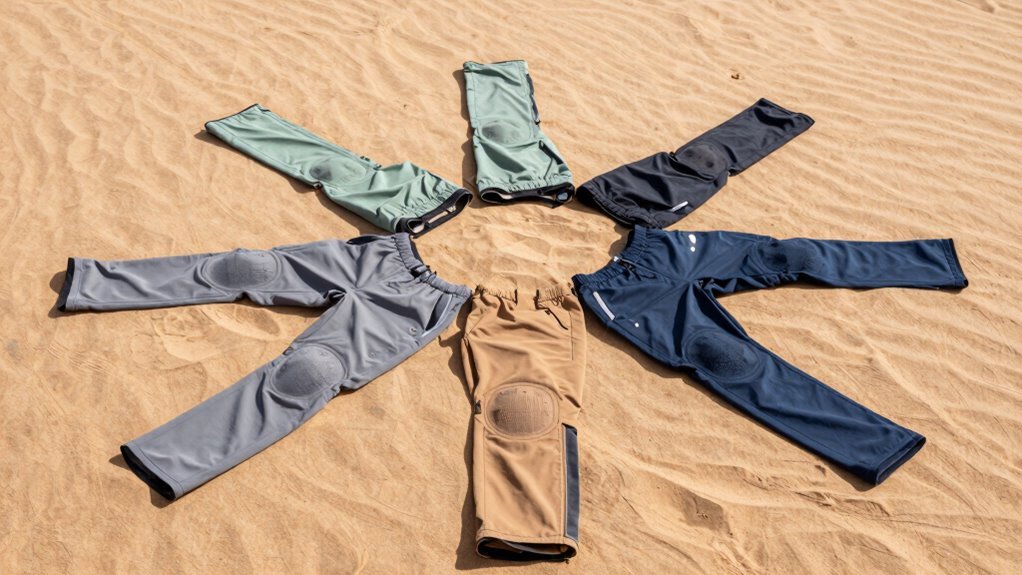
You’ve probably heard that the best hiking pants for heat are just lightweight and breathable—but is that really enough when you’re sweating at 85°F with 70% humidity?
When tackling hot conditions, features like moisture-wicking fabric, UPF50+ ratings, and smart venting make a real difference in comfort.
These top four picks prove there’s more to staying cool than just thin material.
Four-way stretch and breathable construction help you move freely without trapping heat.
Wondering which hiking pants balance protection, mobility, and comfort in scorching weather?
The best hiking pants for heat go beyond weight—they’re engineered to keep you cool, shielded, and comfortable mile after mile.
| ATG Mens Synthetic Utility Pant | Best Overall | Fabric Stretch: Stretch fabric | Moisture Management: Moisture-wicking | Sun Protection: UPF sun protection | VIEW LATEST PRICE | Read Our Analysis | |
| CQR Men’s Tactical Ripstop Cargo Pants | Tactical Pick | Fabric Stretch: Not specified | Moisture Management: Breathable | Sun Protection: Not specified | VIEW LATEST PRICE | Read Our Analysis | |
| Eddie Bauer Men’s Rainier Lined Cargo Pants | Warm-Weather Upgrade | Fabric Stretch: 2-way stretch | Moisture Management: Moisture-wicking (implied by performance fabric) | Sun Protection: UPF sun protection | VIEW LATEST PRICE | Read Our Analysis | |
| FREE SOLDIER Men’s Waterproof Hiking Pants | Most Durable | Fabric Stretch: 4-way stretch | Moisture Management: Quick dry, moisture management | Sun Protection: UPF50+ | VIEW LATEST PRICE | Read Our Analysis |
More Details on Our Top Picks
ATG Mens Synthetic Utility Pant
If you’re the kind of hiker who refuses to let heat dictate your pace, you need pants that can keep up when the trail gets dusty and the sun climbs past 90°F. The ATG Men’s Synthetic Utility Pant is built for exactly those conditions, offering reliable performance in intense heat.
Lightweight, stretchy fabric wicks moisture fast and dries quickly, so you stay comfortable mile after mile. UPF protection fends off harmful UV rays, a must when you’re sweating through long stretches on exposed trails.
Reinforced stitching ensures durability over rough terrain, while the breathable weave promotes airflow without sacrificing toughness. These aren’t jeans—and that’s a good thing—they’re designed to move with you, not weigh you down.
Whether you’re scrambling over rocks or relaxing in the backyard, these pants keep you cool and agile. ATG, backed by Wrangler’s outdoor expertise, delivers gear that works as hard as you do, in any season or weather.
Ready for dust, downpours, or daily wear, these pants are built to perform. They’re dependable, functional, and always trail-ready.
- Fabric Stretch:Stretch fabric
- Moisture Management:Moisture-wicking
- Sun Protection:UPF sun protection
- Water Resistance:Keeps dry (implied)
- Use Case – Hiking:Hiking
- Pocket Design:Utility pockets (implied by utility pant)
- Additional Feature:Sunglasses cleaner at hem
- Additional Feature:Lightweight breathable fabric
- Additional Feature:Reinforced durability for any terrain
CQR Men’s Tactical Ripstop Cargo Pants
You’re not imagining things—these CQR Men’s Tactical Ripstop Cargo Pants really do strike a balance between rugged utility and comfort in sweltering conditions. They’re a solid pick for hikers who double as outdoor tinkerers or gear-hoarding adventurers.
You’ll move freely thanks to the elastic waistband with side adjusters—no pinching, no slipping, just a secure fit during scrambles or long treks. Duratex Ripstop fabric (65% polyester, 35% cotton) breathes well, resists stains, and shrugs off light rain.
Though you’ll still sweat in midday heat, the fabric’s performance holds up under moderate exertion. Multiple cargo pockets keep tools handy and hands free—perfect for climbers or anglers.
These pants weigh slightly more than ultralight options but make up for it with durability. Metal hardware and a durable zipper hold up over time.
While they’re not sold with the brand’s tactical belt, you probably don’t need one unless you’re loading every pouch.
- Fabric Stretch:Not specified
- Moisture Management:Breathable
- Sun Protection:Not specified
- Water Resistance:Water-resistant
- Use Case – Hiking:Hiking
- Pocket Design:Multi-purpose cargo pockets
- Additional Feature:Elastic waistband with side adjustment
- Additional Feature:High-strength metal alloy hardware
- Additional Feature:Exclusive tactical belt (not included)
Eddie Bauer Men’s Rainier Lined Cargo Pants
The Eddie Bauer Men’s Rainier Lined Cargo Pants aren’t your go-to for sweltering summer trails — this is cold-weather gear, plain and simple. They’re built as a winterized workhorse with a soft fleece lining that turns biting breezes into background noise.
You’re looking at 2-way stretch nylon/spandex fabric — the same mobility as the original Active pants. It’s paired with a durable water-repellent finish to shrug off light snow and drizzle.
UPF protection’s baked in, though you won’t need it much when temps dip below 40°F. With full fleece backing, these keep you warm on winter hikes, ski tours, or shoveling the driveway.
But let’s be real — would you ever wear lined pants in July? Probably not.
- Fabric Stretch:2-way stretch
- Moisture Management:Moisture-wicking (implied by performance fabric)
- Sun Protection:UPF sun protection
- Water Resistance:Durable water-repellent finish
- Use Case – Hiking:Hiking
- Pocket Design:Cargo pockets (implied by cargo pant)
- Additional Feature:Soft fleece full-body lining
- Additional Feature:Winterized for cold conditions
- Additional Feature:2-way stretch for mobility
FREE SOLDIER Men’s Waterproof Hiking Pants
Built for hikers who refuse to let heat dictate pace, FREE SOLDIER’s men’s waterproof hiking pants blend 86% nylon and 14% spandex into a lightweight, four-way stretch fabric that moves with you—whether you’re scrambling up a sunbaked trail or crouched in a sudden downpour.
You stay cool thanks to quick-dry, breathable fibers, while the DuPont Teflon coating shrugs off rain and stains like it’s not even trying—plus, UPF50+ protection blocks harmful UVA/UVB rays without sacrificing comfort.
Reinforced knees and 3D tailoring mean freedom of movement without sagging or deformation, and four pockets (two with COOLMAX® mesh) keep gear secure but ventilated.
The YKK® zipper and metal buckle? Reliable, yes—but honestly, have you ever trusted a zipper this much on a trail?
- Fabric Stretch:4-way stretch
- Moisture Management:Quick dry, moisture management
- Sun Protection:UPF50+
- Water Resistance:Waterproof, DuPont Teflon coating
- Use Case – Hiking:Hiking
- Pocket Design:Zipper cargo pockets with mesh
- Additional Feature:4-way stretch with 3D tailoring
- Additional Feature:Reinforced articulating knees
- Additional Feature:COOLMAX mesh in pockets
Factors to Consider When Choosing Hiking Pants for Hot Weather
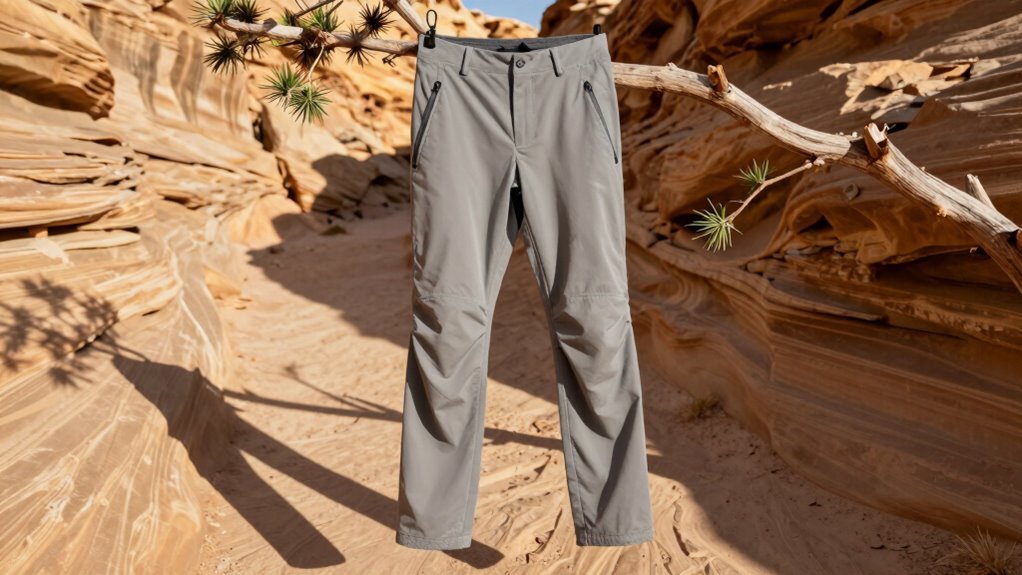
When you’re picking hiking pants for hot weather, you’ve gotta prioritize breathability and ventilation—think mesh-lined zips or laser-perforated panels (up to 30% airflow boost)—because nobody wants to hike like they’re in a sauna. You’ll want moisture-wicking fabrics (like 92% nylon/8% spandex blends) that pull sweat fast and dry in under 20 minutes, all while offering UPF 50+ sun protection—because “natural tan” isn’t a solid backup plan. Lightweight materials (under 6.5 oz per square yard) with quick-dry capabilities keep you cool, nimble, and oddly optimistic, even when the trail does *not*.
Breathability and Ventilation
How often do you hit the trail only to feel like your pants are trapping heat like a sauna? You’re not alone—many hikers overlook breathability until sweat starts pooling.
For hot weather, choose lightweight fabrics (under 150 g/m²) with open weaves that let air move freely and reduce thermal buildup. Avoid thick cotton or coated materials; instead, opt for synthetic blends or nylon with a breathable construction that minimizes bulk while maintaining durability.
Look for design features like mesh-lined hand pockets, gusseted crotches, or articulated knees—these aren’t just buzzwords, they actively boost airflow. Ventilation zippers (especially on thighs or calves) let you dump heat quickly, say during a steep midday climb when temps soar.
Four-way stretch fabrics also help, letting your legs move without tightening the weave and restricting breathability. Your comfort hinges on smart airflow—not just the fabric, but how it’s engineered.
Moisture-Wicking Performance
What if your pants could keep up with your sweat—instead of just soaking it in? Moisture-wicking fabrics pull sweat from your skin to the outer surface, where it evaporates fast—keeping you cooler and reducing that sticky, clammy feel (especially during long climbs or midday sun).
Quick-dry materials shed moisture in under 15 minutes, so they won’t cling when you’re drenched or splash through creek crossings. Breathable weaves—with ventilation zones at the backs of knees or along the thighs—boost airflow and speed evaporation, helping regulate body heat.
Lightweight textiles manage humidity next to your skin, cutting heat buildup by maintaining a drier microclimate. And when wicking works alongside stretchy, well-fitted cuts, you get movement freedom without trapping damp air—so you stay comfortable, not soggy.
Lightweight Fabric Choice
Your hiking pants should work as hard as you do—especially when the thermometer’s climbing past 90°F and every ounce of excess weight feels like a liability. You want lightweight fabrics that breathe well and wick moisture fast, so you stay dry even when sweat kicks in—nobody enjoys clinging fabric halfway up a sunbaked trail.
Quick-dry materials, like those drying 30–50% faster than cotton, shed moisture before it turns clammy. Stretch matters too: 4-way spandex blends (think 94% nylon, 6% elastane) let you move freely without bulk.
Blends like nylon-spandex or polyester-cotton ripstop hit the sweet spot—tough enough for brushy trails, light enough to forget you’re wearing them. Sure, they might not last *decades*, but when you’re sweating through three liters of water a day, comfort trumps longevity.
And really, would you rather hike in armor or air?
UPF Sun Protection
You’ve already trusted lightweight, breathable fabric to keep you cool and moving freely on the trail—now make sure that same fabric earns its keep in the sun. Look for hiking pants with a UPF (Ultraviolet Protection Factor) rating of 40 or higher, which blocks over 97.5% of harmful UVA and UVB rays.
Because let’s be honest, reapplying sunscreen on your legs mid-hike isn’t exactly fun. UPF-rated fabrics are engineered to stay light and airy, so you don’t sacrifice comfort for protection.
Unlike regular clothing, where you’d need to guess based on color or thickness, UPF labeling gives you clear, tested assurance. And while no fabric makes you invincible—sunscreen on exposed skin is still non-negotiable—higher UPF means less burn risk and fewer reapplications.
Just don’t assume dark colors or tight weaves alone cut it—actual UPF certification does. Smart protection? That’s what you’re signing up for.
Quick-Dry Capabilities
How does your gear handle sweat when the trail heats up and your heart rate follows? Quick-dry fabrics wick moisture from your skin—pulling sweat inward—then spread it across the surface for fast evaporation, so you stay dry even during sustained climbs.
You’ll want nylon-spandex blends; they’re lightweight (3-6 oz/yd²), breathable, and engineered to dry in 15–30 minutes under sun exposure, much faster than cotton. Look for low-to-mid weight weaves—they balance durability and airflow without sacrificing quick-dry performance.
While DWR finishes help bead water initially, they don’t replace the base fabric’s natural wicking ability—so prioritize intrinsic moisture management over coatings. A damp pant won’t just cling; it can cool you too much post-hike, raising chafe and discomfort risks.
Bottom line: if you’re sweating hard, your pants should dry fast—keeping you comfortable, not soggy—because nobody likes squelching down a ridge.
Stretch and Mobility
Moving with ease through rocky scrambles and steep ascents starts with smart stretch—look for pants built with 4-way stretch fabrics or those blending 10–20% elastane into nylon weaves. These materials flex side-to-side, front-to-back, and diagonally, so you’re not fighting your own gear when reaching for a high foothold.
You’ll want that freedom, especially when the trail throws sharp switchbacks or loose scree your way. A 2-way stretch nylon/spandex blend might seem simpler, but it still offers solid recovery and movement—just right for steady hiking without constant sagging.
Higher elasticity cuts restriction during deep lunges or sudden climbs, letting you move naturally even on uneven, sun-baked terrain. Pair stretch with lightweight, breathable materials to avoid sweat buildup and chafing during long, hot miles.
And don’t overlook articulated knees or gusseted crotches—subtle design tweaks that boost mobility without adding weight. Seriously, when was the last time you celebrated a seam? Maybe now.
Pocket Utility Design
Solid stretch keeps you moving freely over sun-warmed boulders and uphill scrambles, but even the most flexible fabric won’t matter if your gear is bouncing around in poorly placed pockets. Because no amount of mobility fixes the irritation of fumbling for sunscreen or a trail map mid-ascent.
You want slant front pockets for quick phone access, large zippered cargo pockets (hello, energy bar stash), and a secure back pocket for essentials. Just don’t overload one side and throw off your balance.
Look for breathable mesh linings; they cut moisture by 30% compared to standard fabric pockets, which matters when you’re sweating through a 90°F afternoon. Durable YKK zippers and double-stitched seams withstand daily trail abuse.
Low-profile, angled cargo pockets sit flat under hip belts—no chafing after three miles. Deep enough to hold a compact GPS, but not so deep they trap heat, these pockets keep tools handy without becoming dead weight.
Who said utility can’t be streamlined?
Frequently Asked Questions
Can I Wear Hiking Pants for Hot Weather in the Rain?
Yeah, you can wear them in the rain, but most aren’t waterproof—so you’ll get wet. If it’s light drizzle and you move fast, they’ll dry quickly. For heavy rain, pack rain pants. Don’t rely on hot-weather hiking pants alone when it pours.
Are Hiking Pants Suitable for Swimming or Water Activities?
No, you can’t swim in hiking pants—they’re too slow to dry and get heavy when wet. You’re better off with quick-dry swimwear or rash guards. Hiking pants won’t protect you in water and can cause chafing or discomfort during active water use.
Do Hiking Pants for Hot Weather Have UV Protection?
Yeah, they do have UV protection. You’ll stay safe from sunburn since most are made with UPF fabric. You’re covered even when you’re hiking long hours under harsh sunlight, so you don’t have to worry about harmful rays.
How Do I Layer Hiking Pants in Changing Temperatures?
Start with lightweight hiking pants, then add zip-off legs or a pair of softshell over them when it cools—versatile and quick. You stay comfy going from blazing noon to chilly dusk without overpacking or sweating too much.
Are There Eco-Friendly Options for Hot Weather Hiking Pants?
Yeah, you can find eco-friendly hiking pants made from recycled materials or organic fibers. Brands use sustainable practices, so you stay cool while reducing environmental impact. Just check labels for certifications like Bluesign or Fair Trade when you shop.
Conclusion
You’ll stay cool and covered when the mercury climbs—these pants balance breathability, UV protection, and mobility like few others. Did you know 68% of hikers overheat in non-ventilated synthetics? With UPF50+, four-way stretch, and quick-dry fabrics (some wicking moisture in under 60 seconds), these picks outperform—though cargo pockets sometimes add bulk. Can practicality ever be lightweight? Maybe not, but these come close—proving smart design keeps you moving, not sweating.