5 Best Trekking Poles for Every Trail Adventurer’s Journey
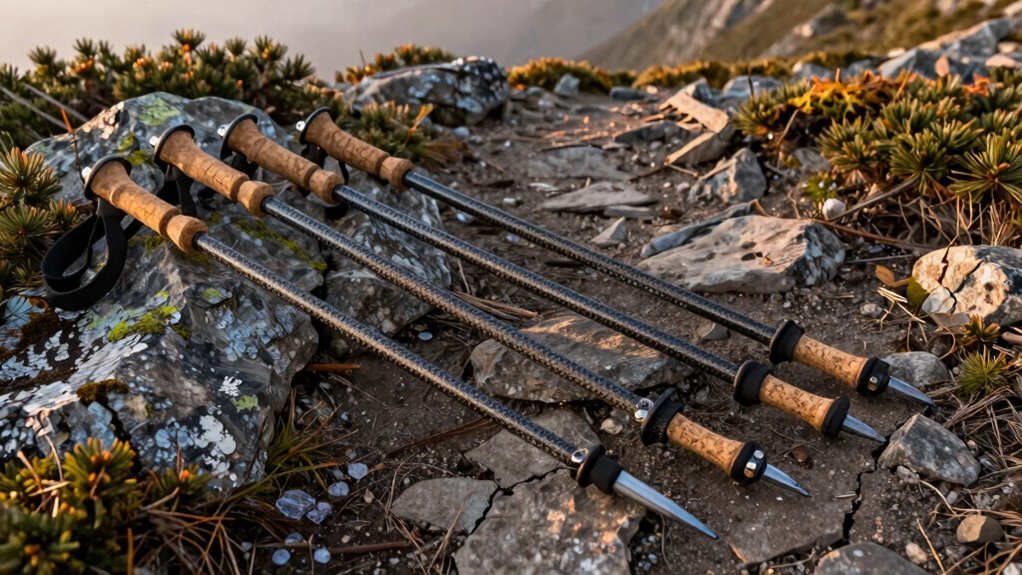
Did you know over 60% of hikers report fewer joint issues when using trekking poles on uneven terrain? Trekking poles help reduce strain, especially on long descents and rough trails, making them essential gear for any trail adventurer.
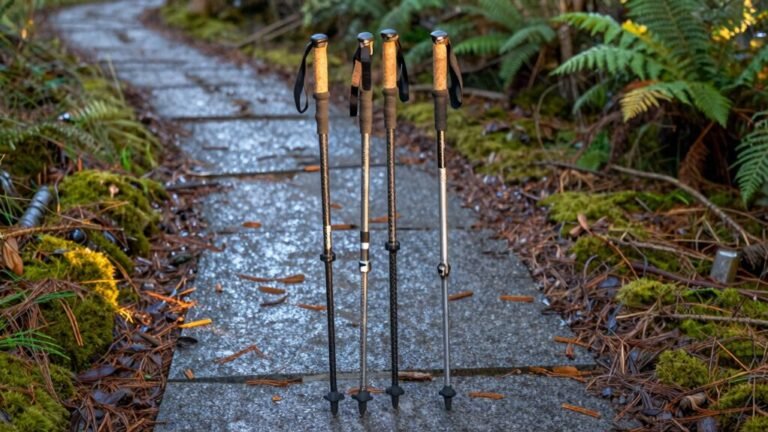
You’ll want a pair that balances durability with comfort—think aircraft-grade aluminum or 100% carbon fiber, adjustable from 24 to 55 inches, and weighing between 16 and 22 ounces.
Cork or EVA grips wick moisture, enhancing comfort during extended use.
Flip-lock mechanisms are preferred over twist-locks for faster adjustments and greater reliability, even though they add a few extra grams.
But which trekking poles actually deliver where the trail gets tough?
| Cascade Mountain Trekking Poles (Aircraft-Grade Aluminum) | 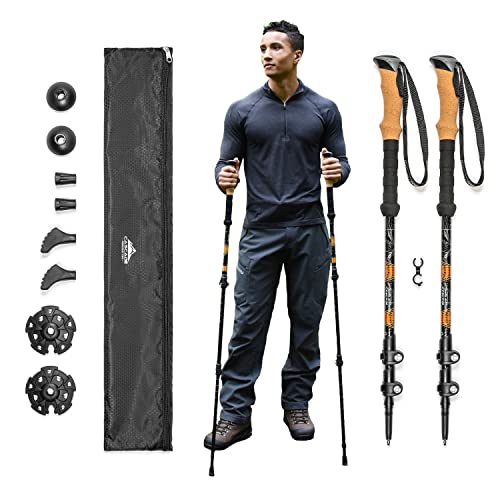 | Best Overall | Material: Aircraft-grade 6061 aluminum | Weight (per pole): 10.4 oz | Max Height: 54 in | VIEW LATEST PRICE | Read Our Analysis |
| TrailBuddy Lightweight Aluminum Trekking Poles |  | Most Versatile | Material: 7075 aircraft-grade aluminum | Weight (per pole): 9.7 oz | Max Height: 54 in | VIEW LATEST PRICE | Read Our Analysis |
| 100% Carbon Fiber Trekking Poles |  | Lightest Weight | Material: 3k 100% Carbon Fiber | Weight (per pole): 7.6 oz | Max Height: 55 in | VIEW LATEST PRICE | Read Our Analysis |
| TREKOLOGY Trek-Z Cork Grip Hiking Poles | 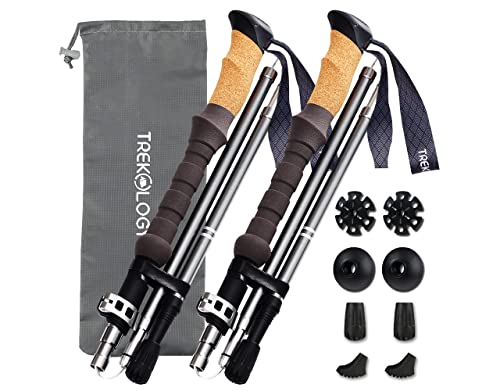 | Most Durable | Material: Aircraft-grade aluminum | Weight (per pole): 11.5 oz | Max Height: 130 cm (51.2 in) | VIEW LATEST PRICE | Read Our Analysis |
| GPTCAMP Collapsible Trekking Poles (2-Pack) | 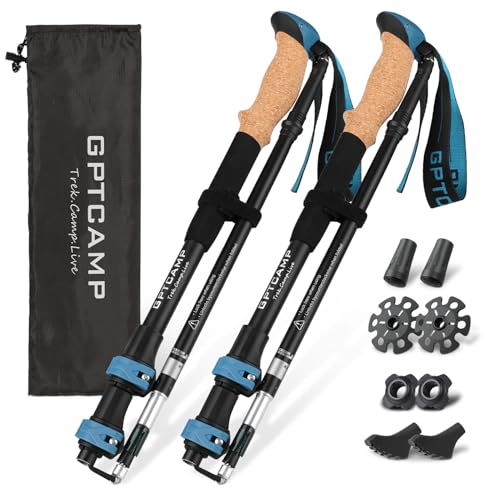 | Most Compact | Material: Aviation-grade aluminum | Weight (per pole): 10.05 oz | Max Height: 51 in | VIEW LATEST PRICE | Read Our Analysis |
More Details on Our Top Picks
Cascade Mountain Trekking Poles (Aircraft-Grade Aluminum)
If you’re after trekking poles that blend durability with smart design—without bleeding your wallet—the Cascade Mountain Tech poles might just be your trail-ready match.
Their aircraft-grade 6061 aluminum shafts shrug off impacts that’d buckle lesser models, ensuring long-term resilience on rugged trails.
You’ll appreciate the 10.4 oz per pole heft—light enough for long hauls, yet sturdy thanks to three segments (20.75″, 20″, 21.25″) locked securely with reliable aluminum quick locks.
When the trail turns steep, the extended EVA grip gives extra leverage, enhancing control during tough descents.
The cork handle stays comfortable mile after mile and resists sweat better than foam, offering a dry, secure hold.
The tungsten carbide tip bites into rock and dirt like it means business, though you’ll need to replace it eventually.
Good news: it’s user-swappable, making maintenance quick and hassle-free.
At 54″ extended and 26″ collapsed, they pack down small—ideal for shuttling between peaks and trailheads without fuss.
- Material:Aircraft-grade 6061 aluminum
- Weight (per pole):10.4 oz
- Max Height:54 in
- Min Collapsed Length:26 in
- Grip Type:Cork with EVA extended grip
- Locking Mechanism:Aluminum Quick Lock
- Additional Feature:Extended down grip included
- Additional Feature:Tungsten carbide tip upgradeable
- Additional Feature:Three-piece disassembly design
TrailBuddy Lightweight Aluminum Trekking Poles
You’ll find the TrailBuddy Lightweight Aluminum Trekking Poles shine brightest for hikers who demand durability without the burden—thanks to their 7075 aircraft-grade aluminum shafts, these poles tip the scales at just 9.7 oz while standing up to rugged trails, powder snow, and everything in between. Adjusting them takes seconds with one-hand lever locks—way easier than fiddling with twist mechanisms, right?
They collapse to 24.5” and disassemble into 21” segments (TSA-approved), so stuffing them in your carry-on won’t be a hassle. The moisture-wicking cork handles feel secure, even when sweaty, and padded straps add comfort mile after mile.
Threaded foot covers keep baskets and tips from detaching—smart touch. Whether you’re hiking, trail running, or Nordic walking—yes, even Grandma and the kids (7+) can use them—these poles blend function, fit, and a hint of flair without overselling the gimmicks.
Available in Aqua Blue, Berry Pink, or Raven Black (eight colorways total), they deliver reliable performance with a splash of personality.
- Material:7075 aircraft-grade aluminum
- Weight (per pole):9.7 oz
- Max Height:54 in
- Min Collapsed Length:24.5 in
- Grip Type:Moisture-wicking cork
- Locking Mechanism:One-hand lever locks
- Additional Feature:TSA-friendly travel size
- Additional Feature:Threaded foot covers included
- Additional Feature:8 colorway options available
100% Carbon Fiber Trekking Poles
The 100% carbon fiber trekking poles in this lineup—specifically built with 3k carbon fiber—stand out for trail adventurers who prioritize lightweight performance without sacrificing durability. Tipping the scales at just 7.6 oz per pole, they make a noticeable difference in fatigue over long ascents or rocky descents compared to heavier aluminum models.
You’ll love how the moisture-wicking cork grips mold to your hands while the EVA foam extension keeps your hold secure, even when sweat kicks in. These ergonomic features ensure comfort and control on extended hikes.
Flip-lock levers—sturdy metal, not plastic—make adjustments quick and reliable, from 24” to 55”, whether you’re tackling steep trails or sharing them with a younger hiker. The durable construction supports versatile use across diverse terrain.
With neoprene-strapped comfort and a 3-year warranty backed by a USA brand trusted since 2015, these poles offer long-term reliability. Even the first batch, released seven years ago, continues logging trail miles—proof you’re joining a legacy of obsessive hikers.
- Material:3k 100% Carbon Fiber
- Weight (per pole):7.6 oz
- Max Height:55 in
- Min Collapsed Length:24 in
- Grip Type:Cork with EVA foam extension
- Locking Mechanism:Flip lock lever technology
- Additional Feature:3-year warranty included
- Additional Feature:Trusted by 50,000+ hikers
- Additional Feature:First pole still functional after 7+ years
TREKOLOGY Trek-Z Cork Grip Hiking Poles
Cork grips wick sweat and pair with aircraft-grade aluminum shafts to deliver durability without excess weight. These poles are ideal for hikers tackling long distances or varied terrain, from steep climbs to relaxed paths.
Ergonomic cork handles keep palms dry, even during intense sections of the trail. EVA foam on the shafts adds grip and comfort when navigating slippery or uneven surfaces.
The poles adjust from 110–130 cm, ensuring a comfortable fit for users between 5’2” and 6’5”. Sturdy metal flip locks secure the length without slipping or wobbling.
Weighing just 11.5 oz and collapsing to 15 inches, they’re easy to pack and carry. They’re lighter than most umbrellas and ready to stash when not in use.
While not made of carbon fiber, they offer reliable performance without the premium price. A practical choice for hikers who value function and simplicity.
- Material:Aircraft-grade aluminum
- Weight (per pole):11.5 oz
- Max Height:130 cm (51.2 in)
- Min Collapsed Length:15 in
- Grip Type:Cork with EVA foam shafts
- Locking Mechanism:Metal flip locks
- Additional Feature:Tri-fold collapses to 15″
- Additional Feature:Metal caps enhance joint strength
- Additional Feature:Supports heavier user weights
GPTCAMP Collapsible Trekking Poles (2-Pack)
Looking for a reliable pair of poles that won’t weigh you down or take up half your pack? GPTCAMP’s collapsible trekking poles (2-pack) tip the scales at just 10.05 oz each—light enough for long hauls, yet sturdy thanks to aviation-grade aluminum.
They fold down to 17.3 inches, slipping neatly into any backpack. That makes them ideal for travel and easy storage when not in use.
You’ll appreciate the sweat-absorbent EVA foam grips, especially on steep ascents. The comfortable grip ensures control and reduces hand fatigue over long distances.
The adjustable shaft (31” to 51”) fits users 4’4” to 6’5”, so whether you’re tall, short, young, or simply trail-wise, these poles adapt to you. No need to compromise on fit or performance.
Backed by a 1-year warranty, they’re a trusty, no-fuss choice. Because who really wants to wrestle with gear that won’t cooperate?
- Material:Aviation-grade aluminum
- Weight (per pole):10.05 oz
- Max Height:51 in
- Min Collapsed Length:17.3 in
- Grip Type:EVA foam
- Locking Mechanism:Not explicitly stated, but implied folding/locking joints via collapsible design
- Additional Feature:Folded size: 17.3 inches
- Additional Feature:Suitable for 4’4″ to 6’5″
- Additional Feature:1-year manufacturer warranty
Factors to Consider When Choosing Trekking Poles
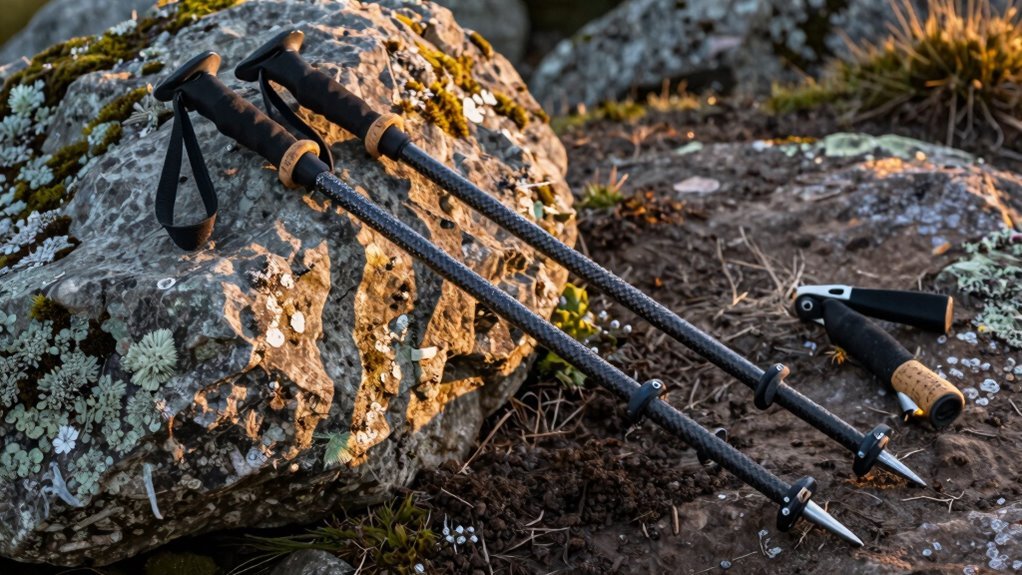
You’ll want to pick trekking poles that balance durability and weight—usually between 16 and 22 ounces per pair—so you’re not lugging around bulky gear, but still getting solid support on rocky descents or uneven terrain. Look closely at the material (usually aluminum or carbon fiber), grip design (ergonomic foam beats slick plastic any rainy day), and whether the locking mechanism (twist vs. lever lock) actually holds steady after hours of use. And hey, can you really adjust them fast between 24 and 55 inches without fumbling mid-hike? Because nobody’s got time for that.
Material Composition
Often, the secret to a pole’s performance lies in what it’s made of—because whether you’re tackling rocky switchbacks or smooth forest paths, material composition directly shapes weight, durability, and feel. You’ll mostly see aircraft-grade aluminum (like 6061 or 7075) or 3k 100% carbon fiber in the shafts.
The latter’s lighter—around 7.6 oz per pole—and may cut fatigue, but it’s pricier and less impact-resistant. Cork grips wick moisture and mold to your hands, while EVA foam offers soft cushioning at a lower cost.
Underfoot, tungsten carbide tips bite into hard terrain but wear down softer surfaces. And let’s not forget—those metal lock joints (hello, aluminum quick-locks) add rigidity, though they’re potential failure points.
You’re balancing strength, sensitivity, and longevity here—so ask yourself: are you hiking hard and long, or just strolling through the woods on weekends?
Weight and Portability
Every ounce counts when you’re grinding up a 1,000-foot elevation gain—and your trekking poles shouldn’t add unnecessary strain. You’ll want lightweight options, ideally between 7.6 and 11 oz per pole, since even a few extra ounces add up over hours on the trail.
If you’re aiming to cut every gram, ultra-light models (around 7–9 oz) are great—sure, they might not survive a decade of abuse, but they’ll ease shoulder fatigue on long alpine routes. Heavier poles trade heft for toughness, which sounds smart—until you’re lugging them up switchbacks at mile eight.
For portability, aim for a collapsed length of 24–26 inches, or even 15 inches with foldable designs that slide neatly into a backpack or fit carry-on bags. Frequent travelers, especially, should prioritize quick-collapse systems—because honestly, who wants to wrestle with stubborn joints after a red-eye flight?
Grip Design
A pound saved in weight means little if your hands are slipping off the grips by mile five—so once you’ve trimmed the ounces, it’s time to talk about what your palms are actually grabbing. Cork grips wick moisture and mold to your hand over time, keeping things dry when sweat starts flowing—though they can feel brittle in extreme cold.
For long ascents, extended EVA foam grips give you extra leverage, letting you choke up without losing control. EVA’s non-slip texture pairs well with sweat-absorbent liners to keep slippage in check, especially on hot, muggy climbs.
Neoprene-padded straps aren’t just fluff—they spread pressure and cut down on chafing, turning hours of use into something far more comfortable. Some grips even include adaptable overlays or integrated extensions to fit different hand sizes, because let’s face it, one size never really fits all.
You’ll want a secure, personalized hold—because blisters? Definitely not part of the adventure.
Locking Mechanism
When it comes to trekking pole performance, the locking mechanism isn’t just a hinge—it’s the pivot point between trust and disaster, especially when your descent turns steep and your poles are taking half your body weight with every step. A failure here can mean a fall, so choosing the right system matters.
You’ll typically choose between aluminum quick-locks, flip-lever systems, or twist-locks—each with trade-offs. Quick-locks adjust fast and don’t require twisting, but they demand precise alignment to fully engage.
A misaligned joint fails at 300+ lbs of force, making them risky if not carefully secured. Flip-locks, with their one-handed action and satisfying *click*, are more reliable under load and easier to fine-tune on the move.
Though they add a bit of weight, their durability pays off on long hikes. Twist-locks are sleek and low-profile, but often require two hands to adjust.
Cheap plastic versions strip quickly, leading to sudden failures. Metal components last longer—no surprise there—so if you’re hiking long distances or on rough terrain, why risk snapping a joint mid-descent just to save a few ounces?
Adjustable Range
Though you might not think about it until you’re fumbling mid-hike, the adjustable range of your trekking poles—typically spanning from a compact 24 inches when collapsed to a maximum extension of about 55 inches—directly impacts both packing convenience and on-trail versatility.
So it’s worth asking: what good is a lightweight pole if it can’t extend enough to keep your arms at that sweet spot of a 90-degree bend? You’ll want a pole that adjusts precisely to your height—say, 5’8” to 6’2” users needing roughly 45 to 50 inches for flat terrain—while offering fine-tuning for steep climbs or descents.
Quick-lock, flip-lock, or twist-lock systems let you tweak length on the fly, and mid-section adjustments add extra flexibility without sacrificing stability—because nothing kills momentum like constantly re-racking your gear.
Durability Factor
You’ll want trekking poles that won’t quit when the trail turns brutal—so look for shafts made from aircraft-grade aluminum or carbon fiber. These materials are known for withstanding thousands of flex cycles, often exceeding 10,000 in lab tests, without cracking, especially near the joints where stress is concentrated.
Choose metal locks over plastic ones to avoid the risk of twist mechanisms slipping during steep descents. Reinforced joints and all-metal end caps add resilience, standing up to shock and corrosion even after prolonged exposure to rain, mud, and freeze-thaw cycles.
Tungsten carbide tips outperform steel by staying sharp longer and resisting damage from rock and hardpack. This durability means you won’t need to replace tips every season, saving time and money.
Grips made from moisture-resistant foam or cork hold up well against sweat and changing weather conditions. They maintain comfort and integrity over long-term use without degrading.
Durable shaft finishes protect against abrasion from scree and scrambling, adding to the pole’s lifespan. While ultra-light models may feel appealing, consider whether sacrificing longevity for a few grams is truly worth it.
Frequently Asked Questions
Can I Use Trekking Poles on Paved Trails?
Yes, you can use trekking poles on paved trails. They’ll help you keep balance, reduce joint stress, and boost stamina. Just make sure your tips have rubber caps to prevent slipping and protect the surface underfoot.
Are Trekking Poles Allowed on Airplanes?
Yes, you can bring trekking poles on planes, but you can’t carry them onboard—they’re not allowed in your hand luggage. Just pack them in your checked baggage, and you’re all set to travel without hassle.
How Do I Clean and Maintain My Trekking Poles?
You clean your trekking poles by wiping them down with a damp cloth after each use. Rinse off mud, check locks regularly, and dry thoroughly to prevent corrosion. You store them disassembled in a cool, dry place to extend their life and keep them working smoothly.
Can I Replace the Rubber Tips on My Poles?
Yes, you can replace the rubber tips—think of them as worn-out shoes needing new soles. Just pull off the old ones, slide on fresh tips, and you’re back on the trail with renewed grip and spring in your step.
Do Trekking Poles Help With Knee Pain?
Yes, trekking poles help reduce knee pain by taking pressure off your joints. You’ll feel less strain going downhill and on long hikes. They boost stability, improve balance, and let you move with more confidence over rough terrain, making every step easier on your knees.
Conclusion
You’ve got trail miles ahead, and the right poles—whether aluminum’s 18 oz durability or carbon’s 16 oz stiffness—can be your rhythm, like drumsticks keeping time on rocky beats. Flip-locks secure at 24–55 inches, cork grips wick sweat, and carbide tips bite hard. Still, no pole stops fatigue—can anything?—but with solid shafts and smart adjustments, you’ll move smoother, longer, and with less strain on steep descents.