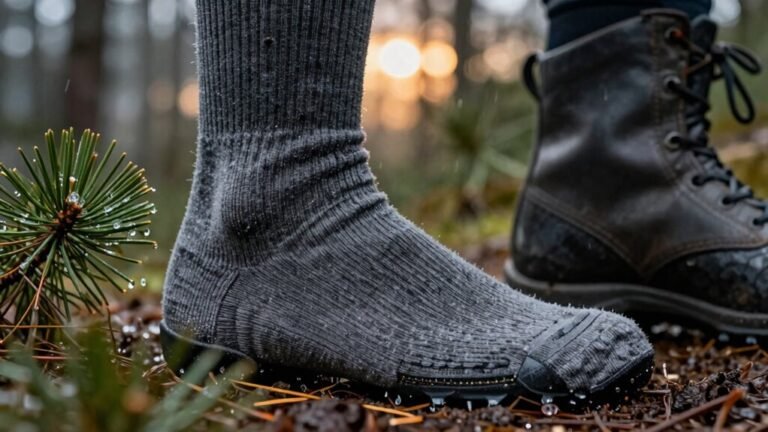
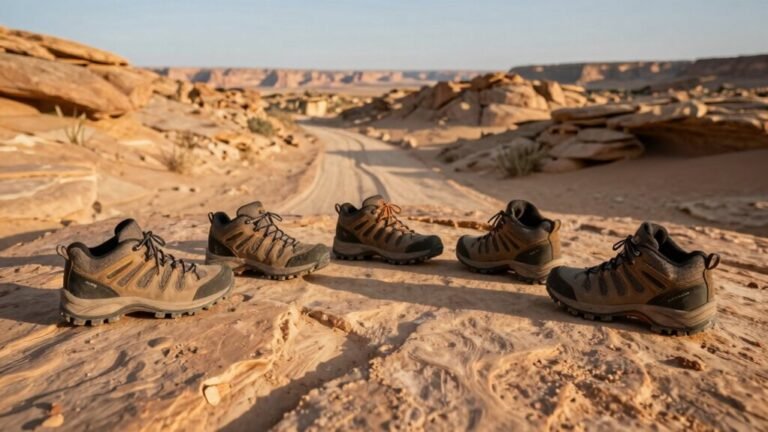
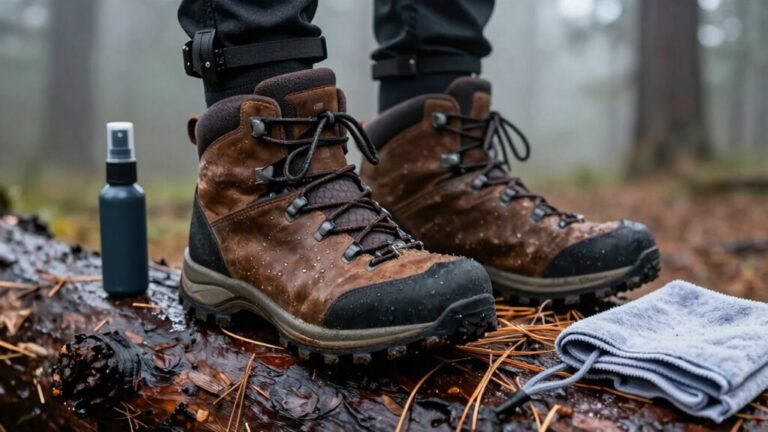
Trail Runners Vs Boots: Quick Decision Guide
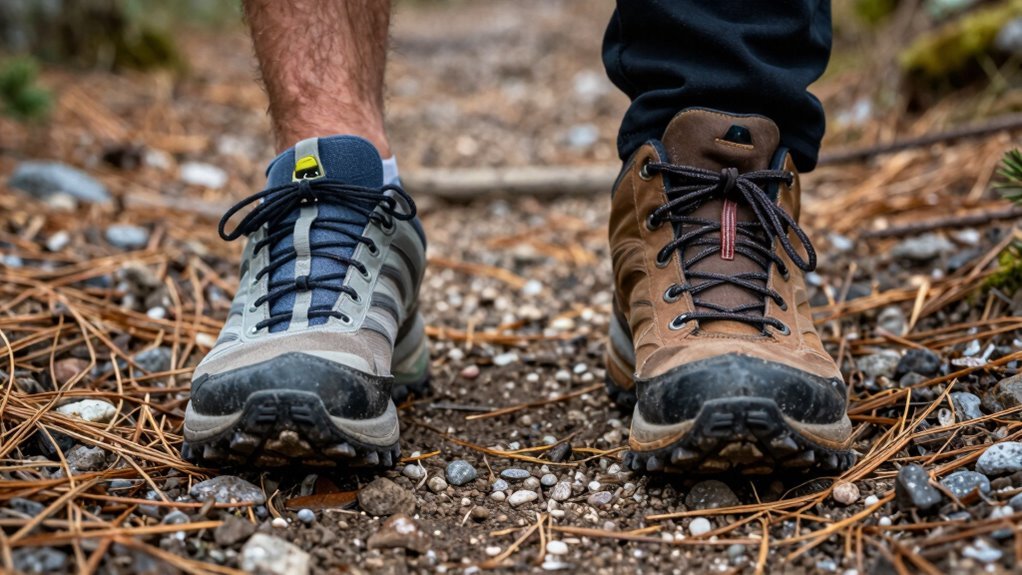
You want speed and freedom? Trail runners are your go-to—light, breathable, and springy on smooth trails. These trail runners offer quick movement and comfort when you’re covering dry, well-maintained paths.
But rough, rocky, or slippery terrain? Boots have your back with rugged support, grip, and ankle armor. When trail runners aren’t enough, boots step in with superior protection and stability.
Think mud, scrambles, or heavy loads—boots dominate. For quick hikes and dry paths, runners win. If your adventure’s wilder, you’ll want that tough tread and protection.
When Trail Runners Shine
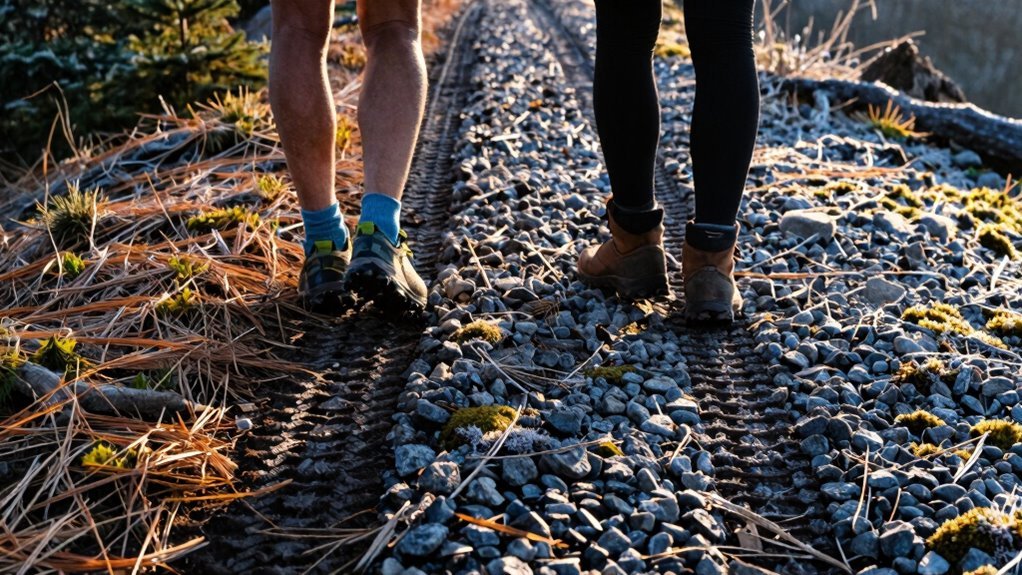
When the trail calls and you’re itching to move fast, trail runners are your go-to—light as a feather and ready to fly.
You’ll zip over roots and rocks with barely a bounce, thanks to their nimble, flexible build.
They’re so light you’ll forget you’re wearing them—like your feet are wearing sneakers, not shoes.
When the sun’s out, breathable mesh keeps your toes cool and happy, not sweaty and stewing.
On rugged or slick ground, chunky lugs grip like tiny mountain claws, so you won’t slip when things get spicy.
Plus, they flex with the terrain instead of fighting it.
Long days? No problem—plenty of cushioning and roomy toe boxes keep your dogs fresh.
You stay comfortable, stable, and quick, whether you’re jogging a smooth path or dancing through technical sections.
Trail runners don’t just work—they make trail time *fun*.
Who said hiking gear can’t be a blast?
reinforced toe caps protect your feet from stubs and impacts on technical terrain.
Where Boots Take the Lead
While trail runners are great for zipping down sunny paths, it’s time to lace up something tougher when the going gets rough—hiking boots were built for exactly this.
You’ll love how the high collar hugs your ankle, keeping it safe on wobbly boulders and steep slopes—no more awkward twists!
When you’re hauling a pack or learning the trail game, that extra stability is a total game-changer.
Boots come loaded with thick lugs that laugh at mud, snow, and slick rocks, and their rugged soles shield your feet from sharp debris like nature’s little landmines.
Made from tough leather and often waterproof with Gore-Tex, they laugh off puddles, snowbanks, and surprise stream crossings.
They’ll last twice as long as trail runners, surviving 1,000 muddy, rocky miles.
Let’s be real—when the trail fights back, boots don’t flinch.
This durability comes at a cost, though: boots can exceed 1.5 kg / 3.3 lb per pair, making them significantly heavier than trail runners full-grain leather models.
Comparing Weight and Mobility
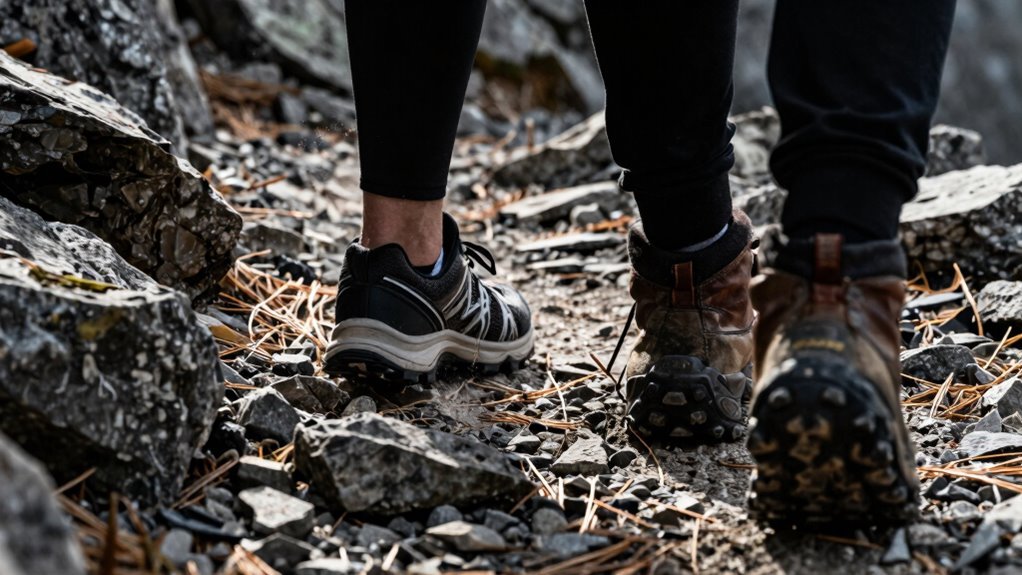
Ever wonder why some hikers fly down the trail like they’ve got springs in their shoes while others trudge like they’re dragging tree stumps?
It’s all about weight and mobility.
Trail runners usually weigh just 20-25 ounces per pair—some as little as 1.6 pounds—while hiking boots often exceed 3 pounds, with heavy leather ones tipping scales at over 3.3 pounds.
That extra weight on your feet feels like five times more on your back, so boots tire you faster.
Trail runners are light, flexible, and free-moving, letting you zip over roots and rocks with a natural stride.
Their low-cut design and bendy soles boost agility, while boots?
They’re like wearing tiny anchors.
If you value speed, bounce, and covering ground with less effort, lightweight trail runners give you serious freedom—and way more fun.
This added fatigue is why a pound on feet can significantly increase overall energy expenditure.
Assessing Ankle Support Needs
You might love how light and zippy trail runners feel on flat ground, but what happens when the trail gets rowdy and your ankles start begging for backup?
If you’re hiking steep, rocky slopes or hauling a heavy pack, boots offer mid-to-high collars, stiff soles, and snug lacing that keep your feet locked in place.
They’re great if you’ve had ankle issues before—think of them as a trusty co-pilot. But don’t count trail runners out!
They let your ankles work naturally, which can actually build strength over time. Plus, they’re lighter and way more fun on smooth trails.
Just know: under 30 pounds and mellow terrain? Runners shine.
Over that, or on sketchy ground? Boots earn their keep.
It’s not about fear—it’s about matching support to your mission.
After all, nobody wants to hobble back like a wobbly giraffe.
Traction on Different Terrains
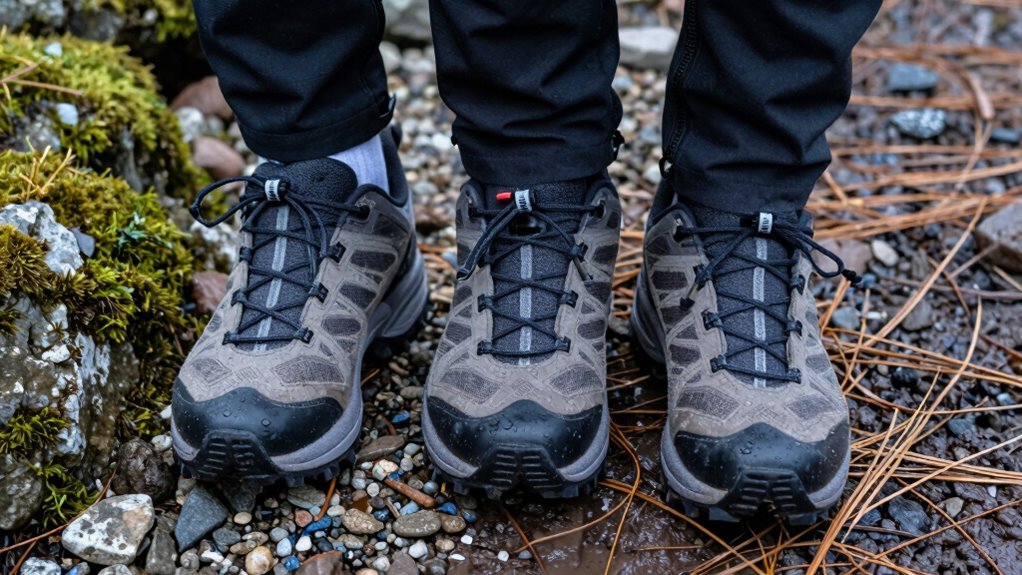
When the trail throws down a challenge, your shoes better rise to meet it—especially when slick mud, loose gravel, or jagged rocks try to throw you off your groove.
On dry dirt paths, trail runners grip well and feel snappy, giving you a connected, natural stride.
But when the terrain turns rocky or uneven, hiking boots take the win with deep lugs and serious bite.
Muddy slopes? Boots dominate with sturdy rubber and extra tread—runners tend to slip when things get sloppy.
Wet, slippery surfaces also favor boots, thanks to grippy outsoles like Vibram and better stability.
Runners work fine on moderate trails but struggle in extreme muck.
On loose gravel, boots hold their ground like a pro, while runners can skitter like a kid on ice.
If you’re scrambling up craggy bits, consider approach shoes—they’re the trail runner’s tough cousin.
Durability in Harsh Conditions
While trail runners may feel like clouds on your feet, they don’t stand a chance when the going gets rough—think sharp rocks, relentless scree, and miles of unforgiving terrain.
If durability’s your game, hiking boots are your MVP.
They’re built like tiny tanks, ready to crush harsh conditions without breaking a sweat (or a seam).
Here’s why boots dominate in the wild:
- Full-grain leather and stitched welts laugh in the face of abrasion.
- Reinforced rubber outsoles with deep lugs chew up sharp rocks and keep going.
- They regularly clock 800+ miles—twice what trail runners manage.
- With toe caps, rugged midsoles, and armor-grade soles, boots take the hits so your feet don’t have to.
Trail runners are fun for the weekend, but when Mother Nature turns grumpy, you’ll want boots laced up and ready.
Trust us, your future self (and sore feet) will thank you.
Comfort Over Long Distances
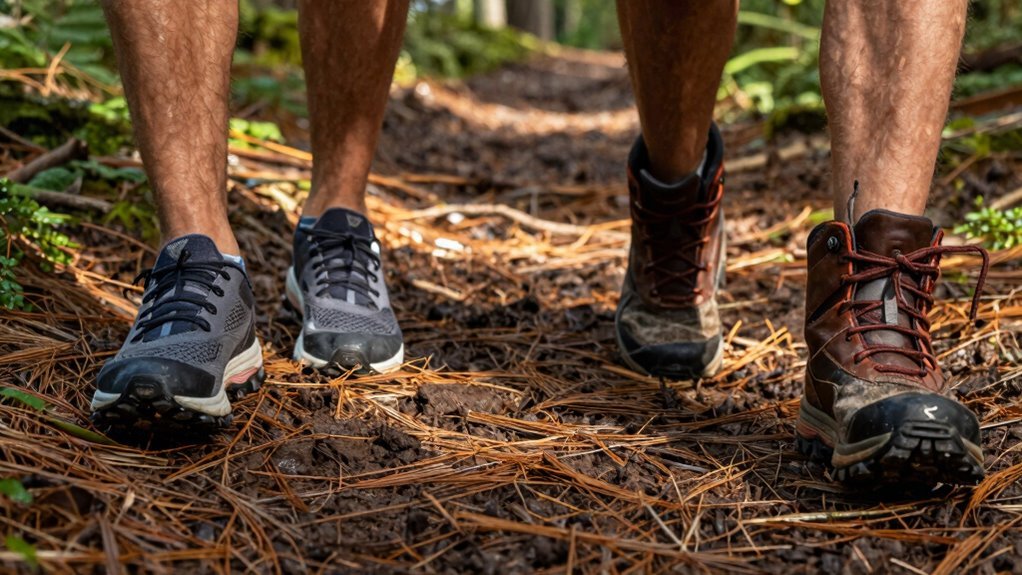
Often, the secret to going the distance isn’t just grit—it’s gear.
Trail runners are your best buddy when miles pile up fast.
They’re way lighter than boots, so your legs won’t scream at you by mile ten.
With flexible soles and low-cut designs, they move *with* you, giving you a natural stride and killer agility.
No awkward stomping here—just smooth, efficient motion.
Plus, breathable mesh uppers keep your feet cool and dry, so sweaty socks won’t stage a mutiny.
Cushioned midsoles, like in Altra Lone Peaks, eat up impact and cut fatigue.
You’ll feel springy, not spent.
On mixed terrain or flatter trails, their grip and ground feel help you adapt without slowing down.
Sure, boots have brawn, but when you’re chasing comfort mile after mile, trail runners just make life more fun.
Who knew happy feet could go so far?
Weather Resistance Showdown
You’ve got the miles down, your stride feels like second nature, and your feet are still smiling—nice work!
But when weather turns nasty, things get real quick.
Let’s break it down:
- Stay Dry? Boots with Gore-Tex laugh at rain and puddles—trail runners with it can too, but most mesh ones don’t stand a chance.
- Sweat It Out? Boots trap moisture like a sauna, while trail runners breathe easy and dry fast—your feet won’t feel soggy.
- Snow & Slush? Boots win with warmth and waterproof armor; trail runners chill out—literally.
- Drying Time? Soak your shoes? Trail runners bounce back in an hour; boots take ages, holding water like grumpy camels.
Rain or shine, pick your fighter—just don’t let soggy socks ruin the fun.
Lacing Systems and Fit Differences
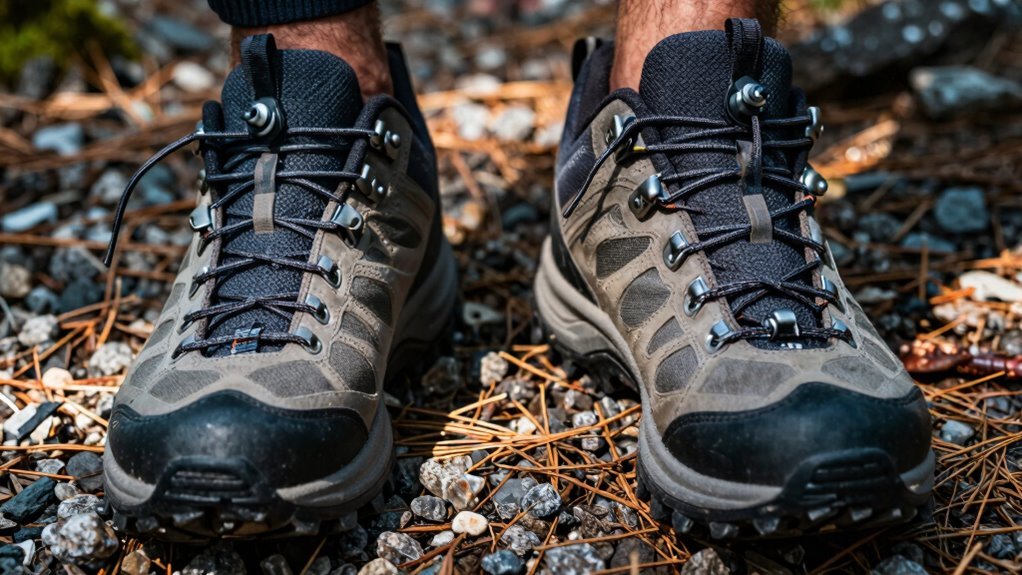
How’s your foot feeling halfway through that muddy trail—like it’s hugging your shoe or doing an escape act?
Trail runners love flat laces—they spread pressure evenly and stay tied, so your fit stays snug mile after mile.
Need extra hold? Lock in with a runner’s loop to stop heel slippage and skip the blisters.
Hiking boots, though, pack round laces for rugged dependability, holding knots tight on steep drops.
Use a surgeon’s knot for extra stability when things get dicey.
Got high arches? Try parallel lacing.
Overpronate? Go for high midfoot tension.
Wrap closures boost heel contact and cut foot roll better than laces, studies say—but laces let you tweak tension just right.
Double-knot those suckers in wet muck, and laugh as friends’ laces flop like loose spaghetti.
Your feet aren’t guessing—they’re grinning.
Choosing Based on Trail Difficulty
Your laces are locked in tight, your heel’s snug, and now it’s time to chat about where those miles will take you—because not all trails are created equal.
Choosing the right footwear keeps your feet happy and your stride strong.
Here’s how to pick based on trail difficulty:
- Easy trails? Trail runners fly—light, breathable, and zero break-in time.
- Moderate paths? You’ve got options—runners for speed, boots for muck and rocks.
- Tough terrain? Boots win with ankle support, thick soles, and rugged durability.
- Technical or extreme? Stick with boots—waterproof, stable, and built to survive abuse.
Frequently Asked Questions
Can Trail Runners Be Repaired When Worn Out?
Yeah, you can repair trail runners when they’re worn out, but it’s trickier than boots.
Uppers tear easily, and mesh won’t hold up long under repair.
You’ve got DIY tricks though—glue, patches, even sewing with dental floss (seriously!).
Outsoles can get a second life with bike tire scraps or Shoe-Goo.
Just don’t expect miracles—duct tape’s a hiker’s joke for a reason!
Are Boots Worth the Break-In Period?
Yeah, boots are totally worth the break-in—you’ll thank yourself later.
Think of it like training a loyal pup: a little effort upfront, big rewards on the trail.
They mold to your feet, prevent blisters, and handle rough terrain like champs.
Sure, it’s not instant, but neither’s anything worth having.
Skip it? That’s like hiking barefoot through a cactus patch—ouch.
Spend the time, save your feet, and crush those miles in comfort.
Do Trail Runners Work for Hiking Uphill?
Yeah, trail runners work great for hiking uphill—you’ll love how light they feel and how quick they respond with each step.
You get killer grip on gravel and loose terrain, plus cushy soles that soften the climb.
Models like the Speedcross or Akasha dig in tight, while lightweights like the Zegama fly up trails.
No bulky break-in, just zip—your legs will thank you!
Can I Wear Boots for Long Trail Runs?
Yes, you can wear boots for long trail runs, but you’ll feel every ounce—literally.
At over 3 pounds a pair, they’re like strapping small bricks to your feet, burning way more energy with each step.
You’ll plod instead of fly, and after 10 miles, your legs will beg for mercy.
Sure, they’re tough and supportive, but unless you’re plowing through bogs or rocks, you’ll probably be over-dressed—like wearing a winter coat in July.
Trail runners? They’re your speed-demons in featherweight sneakers.
Are Trail Runners Good for Rocky Trails?
Yeah, trail runners handle rocky trails like a champ!
You’ll love how the grippy lugs bite into uneven ground, keeping you steady.
They cushion your steps without slowing you down, and the tough soles shrug off sharp rocks.
Sure, they’re not boots, but with features like rock plates and reinforced toes, you’ll scamper over boulders like a mountain goat on espresso—confident, light, and ready for adventure!
Conclusion
So, you’re at the trailhead, boots on one foot, runners on the other—like a mountain and a meadow having a tug-of-war! Boots? They’re the sturdy old oak, guarding your ankles through mud and mayhem. Trail runners? The nimble deer, dancing over rocks with barely a crunch. Pick your trail, pick your tale, and let your feet write it—with grit, grin, and a little dirt on your soles!
References
- https://www.runnersneed.com/expert-advice/gear-guides/why-trail-running-shoes-are-essential.html
- https://www.rei.com/learn/expert-advice/road-running-vs-trail-running-shoes.html
- https://www.nike.com/a/trail-running-shoes-stability
- https://rununited.com/blog/5-key-features-to-look-for-when-choosing-trail-running-shoes/
- https://coloradotrailhiking.com/blog/15268/Why-Trail-Running-Shoes-are-Ideal-for-Hiking-A-Comprehensive-Look
- https://www.roadrunnersports.com/blog/trail-running
- https://www.brooksrunning.com/en_gb/blog/advice-tips/advantages-of-trail-running.html
- https://www.thehikinglife.com/2020/08/trail-runners-vs-hiking-boots-a-30-year-perspective/
- https://www.overlookboots.com/blogs/boots/hiking-boots-vs-trail-shoes
- https://activetraveladventures.com/hiking-boots-shoe-buyers-guide/