Warm-Up Routine for Older Hikers (5 Minutes)
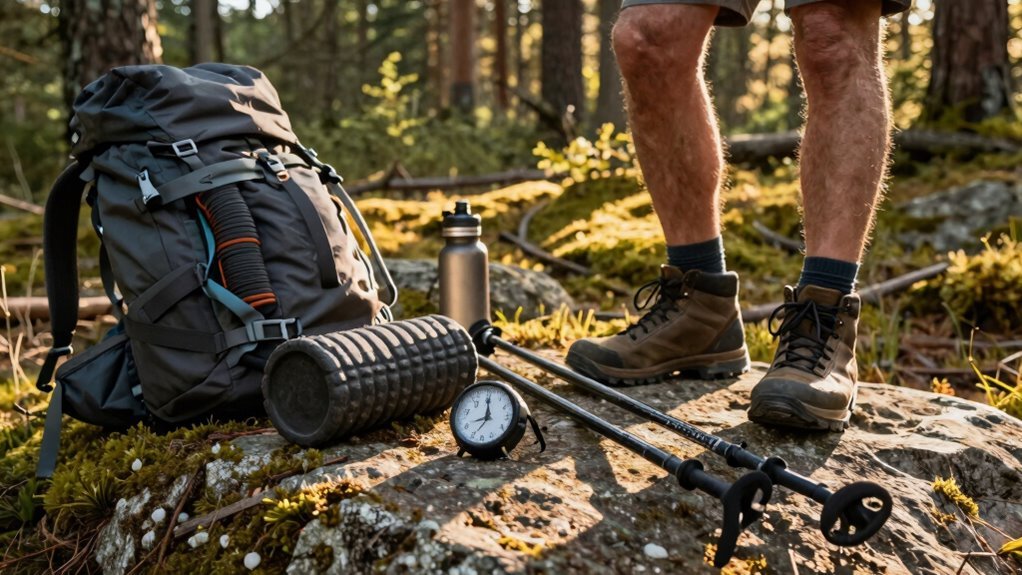
You’ve got this—start with arm circles to loosen those shoulders, then roll your neck and shoulders like you’re shrugging off Monday morning. These simple movements are part of a warm-up routine for older hikers that prepares your body gently.
Add some gentle leg swings and ankle rotations to wake up wobbly joints. These dynamic stretches increase circulation and enhance joint mobility.
Toss in standing side bends and lunges to fire up your core and legs. Breathe deep like you’re sipping mountain air—this mindful movement boosts energy and focus.
It’s quick, it’s fun, and it makes trail time feel easier. Stick with it, and you’ll discover how good a little prep can make you feel out there.
Why Warming Up Matters for Older Hikers
Ever wonder why your knees creak like an old wooden door the first few steps on the trail?
That’s your body saying, “Hey, I could’ve used a warm-up!”
As you age, muscles stiffen and joints lose lubrication, making those early strides feel like breaking ice.
But here’s the good news: a quick warm-up gets blood flowing, loosens tight hips and knees, and preps your legs for twists, climbs, and rocky paths.
It cuts your injury risk, especially on tricky terrain where balance matters.
Think of it as hitting the “easy” button for your joints and muscles.
You’ll move better, hike stronger, and feel more like *you* out there.
And who doesn’t want to swap stiffness for smooth strides and trail confidence?
Five minutes now saves hours of ache later—plus, you’ll actually enjoy the view instead of grumbling at your body! Properly warming up hips and knees ensures they’re ready to handle the demands of the trail.
How to Prepare Your Body Before Hitting the Trail
While your boots are lacing up and your pack is settling in, your body’s already waiting for the go signal—so don’t just leap into the trail like a deer in headlights.
Start smart: march in place, lifting knees high to fire up your hips and calves.
Throw in heel walks for a few steps—yes, it looks silly, but your toes will thank you uphill.
Pop in some butt kicks to wake up those quads, and swing each leg front, side, and back to loosen hamstrings and hips.
Do split squats with a step or rock to warm knees and glutes, 10 reps per side.
Circle your ankles like you’re drawing clock faces—those rocky switchbacks won’t stand a chance.
Add lunges and standing leg curls to prep for roots and drops.
Finish with 30 seconds of jumping jacks or mountain climbers to get the blood pumping.
Improved heart rate comes with fresh air exposure, enhancing your body’s readiness for the trail.
You’re not stalling—your’re building a smoother, safer hike from step one.
Arm Circles to Loosen Shoulder Joints
Loosen up those shoulder joints with a move as fun as it’s effective—arm circles are here to save your shoulders from turning into rusty hinges.
You’ll boost flexibility, fire up circulation, and grease those joints with natural synovial fluid, all while standing in place.
- Picture yourself as a windmill—arms out wide, turning slowly like gentle gears warming up for a long hike.
- Imagine tiny raindrops on your shoulders, starting with small circles that grow bigger, smoothing out every stiff spot.
- Visualize spinning clock hands—smooth, steady, and controlled in both directions, keeping your posture tall and proud.
Keep your feet shoulder-width apart, shoulders down, and move for 30 seconds each way.
Start small, build up, and never push through pain.
It’s a cheerful, no-equipment-needed boost that keeps your upper body ready for whatever the trail throws your way.
Simple arm circles enhance shoulder mobility by promoting controlled articulation through the full range of motion, supporting joint health and functional movement.
Neck and Shoulder Rolls for Upper Body Mobility
When you’re gearing up for a trail adventure, don’t let stiff shoulders and a stiff upper lip—well, neck—slow you down.
Roll those shoulders gently back and up toward your ears, hold 10–15 seconds, then release like you’re letting go of Monday’s stress.
Move slow—one vertebra at a time—so your spine stays in the loop without spiking your heart rate.
This isn’t just flailing; it’s smart motion that eases tension, boosts mobility, and tells your nervous system, “Hey, relax.”
You’ll improve range of motion, feel less sore later, and stand taller under your pack.
Just keep neck and shoulder movements separate—no lazy anchoring—and skip repetitive moves that do more harm than good.
Perfect for older hikers fighting age-related stiffness or guarding against falls.
Do it right as part of your 5-minute warm-up, not solo heroics.
Your body (and hiking buddy) will thank you.
Standing Side Bends to Activate the Core
You’ve untangled the kinks in your neck and shoulders, so now let’s wake up the rest of your core with a move that’s as simple as it’s effective—standing side bends. Stand tall, feet hip-width apart, core gently engaged like you’re zipping up a favorite pair of jeans. Inhale, lengthen your spine; exhale, and lean gently to one side, hand drifting down your leg while the other brushes toward your hip. You’re not reaching for your toes—think graceful sway, not emergency grab. This wakes up your obliques, hugs your spine with love, and keeps your balance sharp.
- Imagine a beam of light stretching from your fingertips to the sky, tilting gently with you.
- Picture a ribbon pulling your waist sideways, smooth and controlled.
- Feel like a reed bending in a calm breeze—flexible, strong, unshaken.
Forward and Backward Leg Swings for Hip Flexibility
Gently swinging your leg like a pendulum sets the stage for limber hips and smooth strides. Stand tall, hold onto a wall or chair, and swing one leg forward and back—easy does it! You’ll warm up your hip flexors, hamstrings, glutes, and even your core without turning into a pretzel. This move boosts hip mobility, eases stiffness, and gets blood flowing faster than a morning coffee.
Plus, it’s low-impact and kind to creaky joints—great for hikers who’ve seen a few trails (and seasons).
Aim for 10–12 swings per leg, keeping your chest proud and movements controlled. Think pendulum, not power kick!
Doing this before hitting the trail helps prevent strains and keeps your hips happy. It’s like oil for your body’s hinges. Ready to move freely? This simple swing’s got you covered—no dance skills required!
Gentle Walking Lunges to Engage Leg Muscles
Though you’re not training for a lunging marathon, these gentle walking lunges wake up nearly every major muscle in your legs and core like a sunrise stretch for your lower body.
You’re firing up glutes, quads, hamstrings, and hip flexors while quietly building balance and stability—perfect for hiking prep.
Plus, they’re low-impact and kind to aging joints when done right.
Think of each step as a warm conversation between your muscles and gravity.
- Imagine stepping over a small log on a trail, hips sinking just enough to feel the burn without the drama.
- Picture your core quietly bracing, like an invisible belt holding everything steady.
- See yourself moving smoothly, one lunge at a time, ready to conquer hills without the wobble.
With every step, you’re building strength, symmetry, and confidence—no gym required.
Ankle Rotations to Improve Stability and Balance
As you step onto the trail, your ankles are already hard at work—navigating twists, turns, and unexpected dips like tiny navigators steering you through the wild.
Give them some love with ankle rotations!
Circle each foot slowly, clockwise and counterclockwise, to wake up the joints and boost stability.
These mini-movements improve balance, slash fall risks, and sharpen your body’s awareness—super helpful when rocks decide to play hide-and-seek.
They also prep your ankles to handle uphill climbs, downhill drops, and sneaky side slopes without straining.
Just two smooth sets per direction take less than a minute—easier than brushing your teeth, and honestly, just as important for staying trail-ready.
Over time, you’ll notice better control, less wobble, and way more confidence underfoot.
Think of it as tune-up time for your treads.
Your future self (and shaky roots) will thank you!
Deep Breathing and Mindful Movement to Start Strong
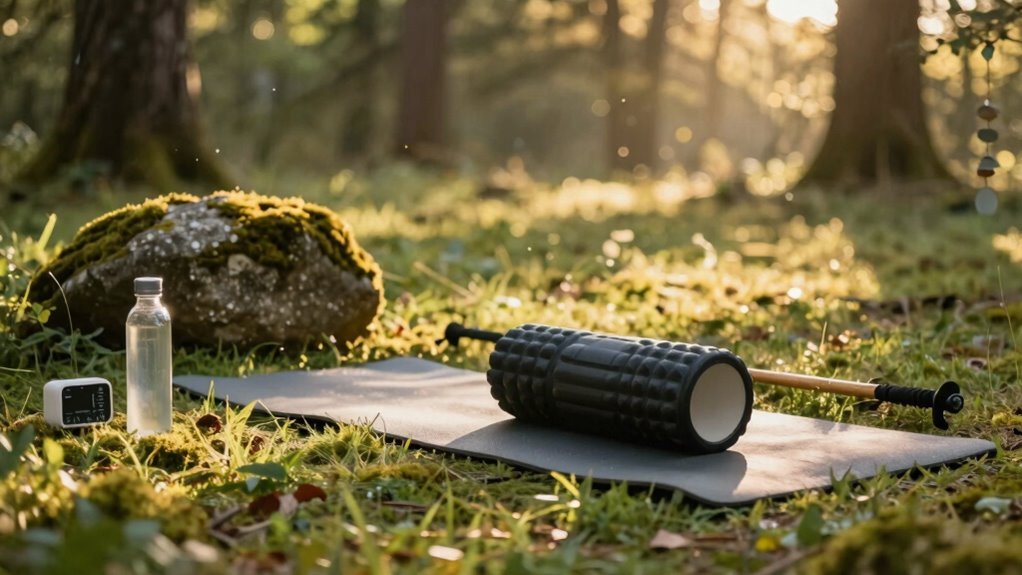
Feeling the trail’s rhythm start in your breath? You’re not just hiking—you’re tuning your body like a pro.
Begin with deep breathing: inhale through your nose, letting your belly rise, then exhale slowly through pursed lips to clear out stale air and supercharge oxygen flow.
It’s like hitting a reset button for your lungs.
Pair this with mindful movement to wake up stiff muscles and prep for the path ahead.
- Inhale deeply as you stretch into Child’s Pose, feeling your lower back and calves release like melting snow.
- Flow into Downward Dog, heels reaching for the earth, each breath smoothing out tension like warm butter.
- Hold and breathe, imagining your diaphragm growing stronger with every sip of air.
You’re not just ready—you’re raring to go, breath by breath.
Frequently Asked Questions
Can I Warm up if I Have Arthritis in My Knees?
You absolutely can warm up with arthritis in your knees—and you should!
Gentle moves like leg swings, mini squats, and high knees get blood flowing and lubricate your joints.
Think of it as waking up your knees with a warm hug, not a cold splash.
These dynamic stretches ease you in, reduce pain, and make hiking way more fun.
Skipping it? That’s like hiking in flip-flops—possible, but ouch!
Should I Stretch Before or After the Warm-Up Routine?
You stretch *before* the warm-up, right when you roll out of your tent or car, mind still foggy, muscles stiff like rusty hinges.
Picture yourself moving like water, not stone—dynamic stretches wake them up.
You’re not holding poses yet; you’re flowing: leg swings, hip circles, gentle lunges.
It’s like telling your body, “Hey, we’re hiking now!”
No cold squats or static holds—that comes later, when you’re toast.
Is This Routine Safe for Hikers With High Blood Pressure?
Yes, you’re good to go—this routine’s safe for most hikers with high blood pressure.
You’re easing into movement, not shocking your system, which keeps your heart happy.
Just start slow, breathe like you mean it, and skip the strain.
Think “glide,” not “grind.”
Your doctor’ll probably give you a high-five—especially if you follow their advice and sip water like it’s your job.
Stay cool, stay calm, and hike on, superstar!
Can I Do These Exercises Seated if Standing Is Difficult?
You bet, you can absolutely do these seated—if standing’s tough, no problem!
These moves are designed to keep you stable while warming up every muscle you’ll use on the trail.
Just stay comfy in your chair, breathe deep, and move with control—no bouncing or rushing!
You’ll get great circulation, flexibility, and strength without ever needing to stand.
It’s like hiking prep that comes to you!
How Soon After Waking up Can I Start Hiking?
You shouldn’t hit the trail right after waking—give yourself at least 30 to 60 minutes to wake up fully.
Your body’s still waking up too, and jumping into hiking is like asking a sleepy bear to dance—it’s just not ready!
Drink water, eat a light snack, and let your temperature rise.
That way, you’ll feel stronger, safer, and way more alive when you finally step onto the trail.
Conclusion
You’re not getting older, you’re upgrading—like a classic trail-tested boot with fresh laces. A few minutes of moving and breathing isn’t just prep, it’s your secret trail magic. Loosen up, wake up, and step out feeling springy, steady, and silly in the best way. Ready? Nature’s waiting, and your body’s already saying, “Let’s do this!”
References
- https://www.youtube.com/watch?v=49nbduSmCD8
- https://houghtonphysicaltherapy.com/get-fit-to-hike-everything-seniors-must-know/
- https://sectionhiker.com/exercise-aging-hikers/
- https://www.backpacker.com/skills/backpacking-fitness/the-hike-forever-fitness-plan/
- https://backpackinglight.com/forums/topic/a-strategy-for-older-people-for-thru-hiking/page/2/
- https://www.summitstrength.com.au/blog/training-for-trekking-warming-up
- https://www.youtube.com/watch?v=9eJOkHe4cfw
- https://www.wta.org/news/magazine/features/at-home-exercises-for-hiking
- https://www.backpacker.com/skills/backpacking-fitness/fitness-special-mdash-hike-forever-age-65-up/
- https://www.youtube.com/watch?v=RMv8xI8B9hQ